
Powermax Size 312 Brown, 60 Count
4.0Editor score
Large 60-battery pack
Zinc-air power technology
Mercury and cadmium free
Hearing Aid Batteries guide comparing 10 trusted options for size 312 and size 10, including pack size, shelf life, installation ease, and performance.
Hearing aid batteries are small but essential components in daily hearing care, and choosing the wrong size or format can interrupt an otherwise routine replacement. The best options offer dependable zinc-air power, clear color coding, secure packaging, and tabs that make installation easier, especially for users with limited dexterity.
This guide compares ten hearing aid battery options based on the available product information, including battery size, quantity, voltage, chemistry, packaging features, shelf-life claims, installation design, and suitability for different usage patterns. It also considers factors such as accessibility, portability, child-resistant packaging, and compatibility with power-hungry features.
The list highlights a durable all-around size 312 option, convenient choices for travelers, high-quantity packs for frequent users, and size 10 batteries for compatible hearing aids. Product ratings and availability can change over time, and prices fluctuate, so readers should confirm the current listing details before ordering.
4.0Editor score

4.6Editor score
3.9Editor score
The table below compares the ten options by size, pack quantity, installation or storage features, and other stated specifications, making it easier to identify the battery format that best matches a hearing aid and replacement routine.





This Duracell Size 312 pack combines a 4.6 rating with installation features that are especially useful for anyone who struggles with small components. Its extra-long tab is designed to make the battery easier to handle, and the product is Ease of Use Certified by the Arthritis Foundation, giving it a practical distinction beyond ordinary color coding.
We may earn a commission when you buy through this link, at no additional cost to you.
The 32-battery format offers a sensible middle ground between compact travel packs and large replacement inventories. Duracell guarantees these batteries for four years in storage, so buyers can keep a reserve without treating the pack as an immediate-use product. The brown coding also helps users identify the correct 312 size quickly, reducing the chance of opening the wrong battery.
The main limitation is quantity. Those who replace batteries every few days or manage multiple hearing aids may work through a 32-count pack relatively quickly. There is also no choice of alternative size within this particular package, although the broader Duracell range includes size 10, 13, and 675 batteries for compatible devices.
It is a strong recommendation for users who value easy handling, dependable storage, and a moderate number of batteries. A person with limited hand strength will benefit from the longer pull tab, while travelers can keep the compact pack accessible. For most size 312 users, the balance of convenience, storage assurance, and pack size is particularly well balanced.
The extra-long EasyTab is the defining feature of this package. It gives users a larger surface for gripping and pulling, which can make a routine hearing aid task easier for people with reduced dexterity. The Arthritis Foundation Ease of Use certification also adds a formal accessibility credential to the design.
A four-year storage guarantee makes this pack useful for households that want to keep spare batteries on hand. Because unused zinc-air batteries are intended to be stored for later use, that guarantee provides added confidence and complements the moderate 32-battery quantity.
We may earn a commission when you buy through this link, at no additional cost to you.
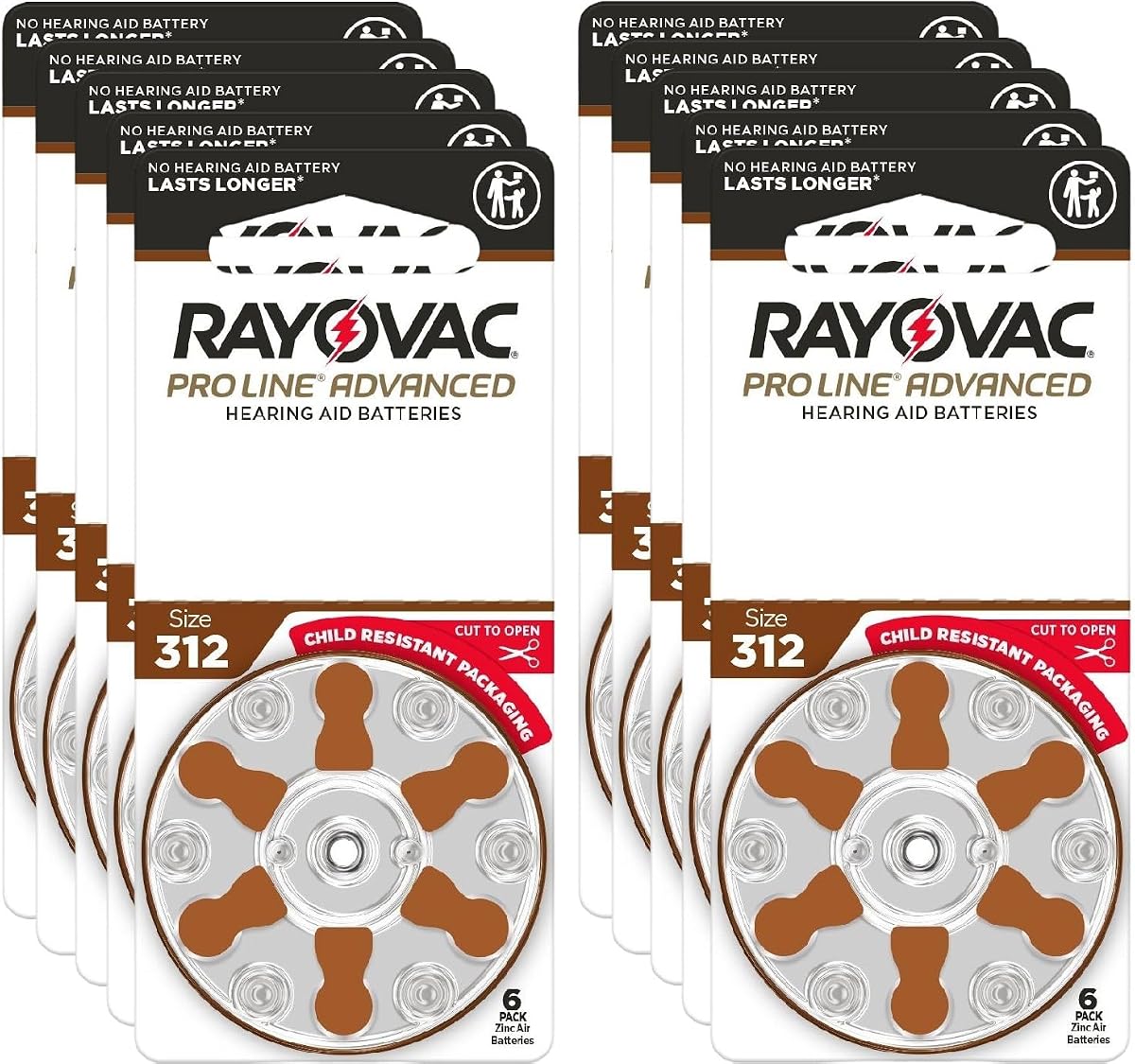
The Rayovac Proline Advanced package earns attention through unusually complete specifications. It is a 60-count set of size 312, 1.45-volt zinc-air cells with a listed capacity of 170 to 180 mAh, making its size, chemistry, and electrical output unusually easy to verify before purchase. Its 3.9 rating is lower than several other selections in this list.
We may earn a commission when you buy through this link, at no additional cost to you.
Its construction details are the main attraction. The product description identifies a refined alloy and electrolyte mixture designed to improve electronic consistency under fluctuating current demand, including during wireless streaming. High-grade anti-corrosion protection is also stated, with the goal of preventing swelling or leaking that could affect delicate hearing aid hardware.
Some claims require careful interpretation. The phrase “world's longest lasting battery” is a broad marketing claim, and actual runtime depends on the hearing aid, its settings, battery age, and how demanding its features are. The 3.9 rating may also reflect mixed experiences, so buyers should consider the full published feedback rather than relying on a single performance claim.
Despite those caveats, this is a compelling premium choice for informed buyers who value disclosed dimensions, capacity, chemistry, and corrosion protection. The 60-battery count is substantial, and the child-resistant packaging adds safety. It is particularly suitable for users with feature-rich hearing aids, provided they verify their size and understand that no universal runtime can be guaranteed.
Listing the cell diameter, height, weight, nominal voltage, and capacity makes this one of the most transparent options in the guide. Those figures are helpful for compatibility checks and give buyers more than the generic promise of long-lasting power.
The stated anti-corrosion seal focuses on a practical concern: battery leakage can damage a hearing aid. Although no disposable battery can eliminate every risk, the added protection makes careful storage and timely replacement especially important for costly devices.
We may earn a commission when you buy through this link, at no additional cost to you.
This 80-battery Rayovac package is a practical choice for frequent users, professional caregivers, and households maintaining several hearing aids. It carries a 4.4 rating and uses a mercury-free Extra Advanced design intended to deliver energy where it is needed while supporting consistent listening across a battery’s service life.
We may earn a commission when you buy through this link, at no additional cost to you.
The manufacturer specifically positions the batteries for high-use devices and advanced features such as streaming video, audio, and phone calls. Those functions can place greater demand on a hearing aid than standard listening, making this a more relevant option for people who regularly connect their devices to other equipment.
Child-resistant packaging is the principal inconvenience. The instructions recommend sitting down with scissors and carefully cutting open the pack to access batteries one at a time. That approach improves safety around children, but it is less convenient for anyone who needs an immediate replacement while away from home.
The large count makes this a strong option for someone who wants fewer restocking interruptions. Its 4.4 rating supports the appeal of the product line, while the mercury-free construction aligns with modern hearing aid battery standards. Keep scissors nearby, store the unused pack dry, and replace batteries promptly after installation.
The product information specifically calls out streaming video, audio, and phone calls. That makes the pack relevant to users who regularly activate wireless features and need batteries designed for more demanding operating conditions.
An 80-count quantity can substantially reduce shopping frequency. It is a sensible format for frequent daily users, caregivers, or anyone who prefers maintaining a larger reserve of correctly sized replacements.
We may earn a commission when you buy through this link, at no additional cost to you.
This 16-count Duracell Size 312 pack is a compact alternative for travelers, occasional hearing aid users, and anyone who wants only a small number of spares. Its 4.2 rating reflects a broadly positive reception, while the familiar brown color coding makes it straightforward to select the correct battery size.
We may earn a commission when you buy through this link, at no additional cost to you.
Duracell’s extra-long EasyTab remains the most useful practical feature. It helps with the tiny, flat nature of hearing aid batteries and can make opening, positioning, and removing a cell more manageable. The batteries are also guaranteed for four years in storage, an appealing benefit for a compact emergency supply kept at home or in a travel kit.
The trade-off is that sixteen batteries may not last long for someone who changes them frequently. The packaging is also child-secure and described as nearly impossible to open without scissors, which improves safety but can be inconvenient when a battery is needed right away.
This pack is best for light users, short trips, and backup purposes rather than high-volume daily consumption. Buyers who regularly replace batteries may prefer one of the 60- or 80-count options. For the right user, however, the combination of a small footprint, long tab, and four-year storage assurance is compelling.
Sixteen batteries occupy relatively little space, making the pack convenient in a carry-on, drawer, or hearing aid maintenance case. The four-year guarantee also means a compact reserve can remain ready without short-term urgency.
The extra-long tab is valuable because hearing aid batteries are extremely small and easy to drop. A wider pull target gives users a better chance of handling each cell confidently, which is particularly helpful for those with visual or motor challenges.
We may earn a commission when you buy through this link, at no additional cost to you.
The Powermax Size 312 pack is a high-volume option with a 4.0 rating, 60 batteries per pack, and a 1.4-volt zinc-air format. It is aimed at frequent hearing aid users and medical professionals, making it a practical choice when maintaining a dependable replacement supply matters more than using the smallest possible package.
We may earn a commission when you buy through this link, at no additional cost to you.
Its long brown tab and smooth handling design support easier changes, while the zinc-air construction is intended to provide clear sound throughout the battery’s service life. The cells contain no cadmium or mercury, and the large count reduces the likelihood of running out between regular restocking periods.
The product description candidly notes that updated packaging may be more challenging to open. This change follows Reese’s Law and its child-safety requirements, including clearer warnings about choking hazards and improved battery compartments. Users should therefore allow more time and effort to open a fresh pack, and travel with a battery already accessible when possible.
This is a strong budget pick for daily users, clinics, caregivers, and households that want a substantial quantity without moving to an 80-battery package. The 4.0 rating is respectable, though not the highest in the guide. The decisive advantages are the large count, broad stated compatibility, accessible tab, and focus on economical routine replacement.
Sixty batteries create a useful middle ground between small travel packs and the largest options. They can serve one regular user for an extended period or cover several compatible hearing aids without requiring constant replenishment.
The updated packaging reflects current child-safety requirements for small batteries. Although that makes the initial opening less convenient, it also demonstrates attention to safer household storage and clearer communication of choking risks.
We may earn a commission when you buy through this link, at no additional cost to you.
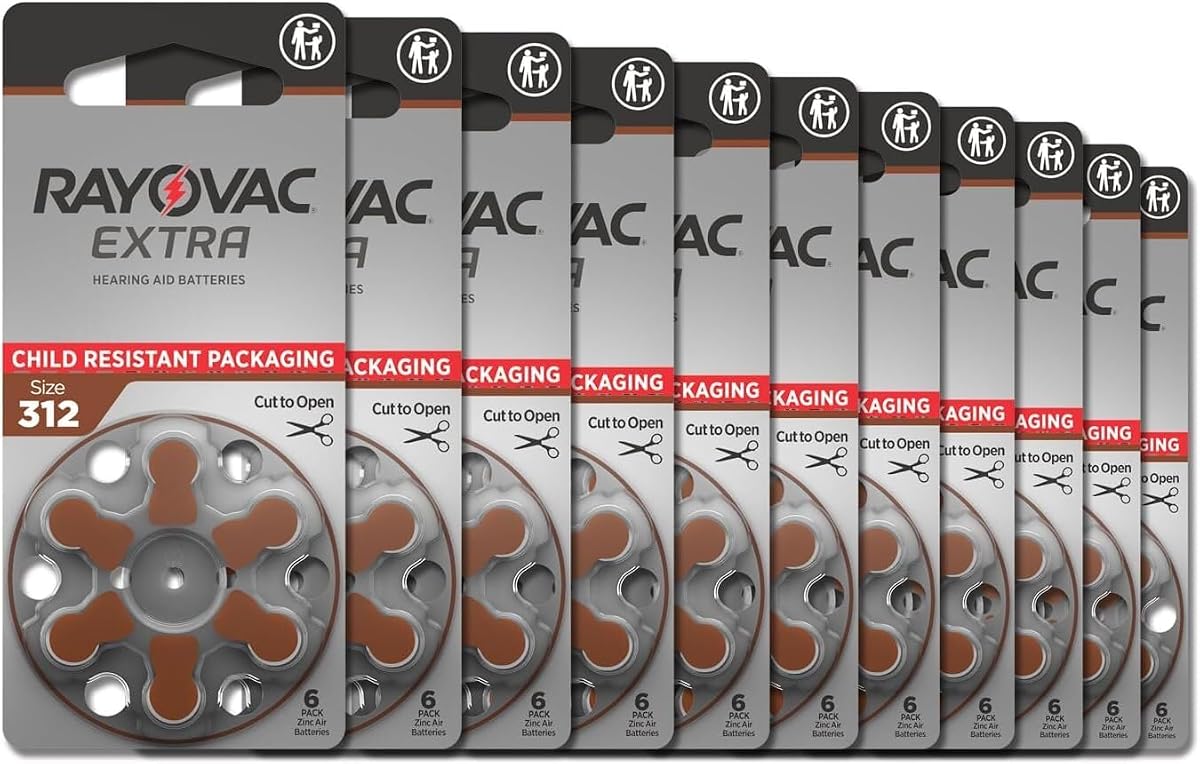
This 60-count Rayovac Extra Advanced package is a straightforward option for users who want a large supply of size 312 batteries. Its 4.2 rating provides a favorable customer-history signal, and the made-in-USA claim gives buyers a specific production detail that can help distinguish it from less clearly documented alternatives.
We may earn a commission when you buy through this link, at no additional cost to you.
The 312 size and 60-battery quantity make this pack suitable for regular users, caregivers, and households managing more than one compatible hearing aid. The format balances bulk capacity with more portability than an 80-battery pack, while color coding helps keep the battery size visible in a maintenance kit.
The supplied information is limited compared with the more technical Rayovac Proline listing. It does not state a shelf life, capacity, voltage, tab design, or specific child-resistant opening method here. Buyers who require those details should inspect the current package and listing before making a final decision.
For people prioritizing a sizable pack, a recognized Extra Advanced product, and a stated domestic manufacturing origin, this is a solid choice. It is less compelling for shoppers who need exhaustive technical specifications, but it covers the essential requirements of correct size and generous quantity without unnecessary complexity.
Sixty batteries are easier to store than a much larger pack while still supporting relatively infrequent restocking. This makes the format useful for daily wearers who do not want to maintain only a small travel reserve.
The made-in-USA statement is a meaningful point of differentiation in the product data. For buyers who value transparent sourcing information, it is a notable advantage over options whose descriptions provide less detail about origin.
We may earn a commission when you buy through this link, at no additional cost to you.
This Duracell Activair Size 10 pack is the leading choice in the guide for anyone whose hearing aid uses the smaller size 10 cell. It combines a 4.6 rating with an 80-battery quantity, and the 1.45-volt zinc-air format provides clear, widely useful specifications for compatible devices.
We may earn a commission when you buy through this link, at no additional cost to you.
The compact EasyTab packaging is designed to protect unused batteries while remaining discreet. That matters because hearing aid users often carry spares in a pocket, bag, or small care case. The product also emphasizes reliable, long-lasting power, making it suitable for regular daily use by people who do not want to reorder size 10 batteries frequently.
It is important to confirm that the hearing aid specifically accepts size 10 batteries. Size 10 cells have a different shape from the more common size 312 option, and the color distinction is yellow rather than brown. The listing does not state a four-year storage guarantee, even though other Duracell options in this guide do.
This package is ideal for a high-volume size 10 user who values a strong rating, plentiful supply, and compact storage. It also suits caregivers or households with multiple compatible devices. For anyone still deciding between battery sizes, the original hearing aid manual or battery compartment is the safest source for confirmation.
A 4.6 rating across an 80-battery purchase is encouraging, particularly for a product where consistent performance matters daily. The quantity also minimizes the likelihood of an emergency replacement shortage.
The compact EasyTab package is intended to protect batteries without taking up excessive room. Users can keep a portion in a dedicated hearing aid case and the rest in a secure household storage location.
We may earn a commission when you buy through this link, at no additional cost to you.
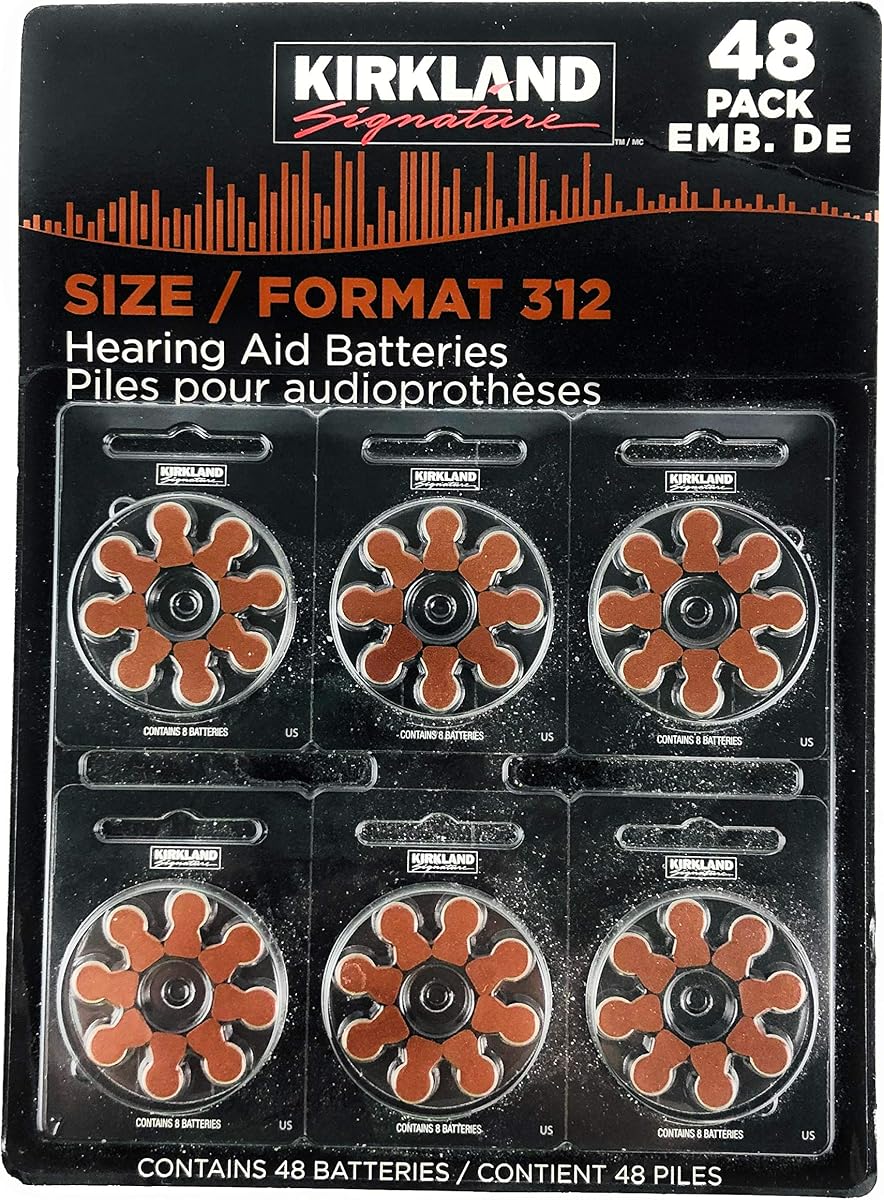
The Kirkland Signature 48-pack offers a balanced middle ground between small backup options and large 60- or 80-battery packs. It contains 1.45-volt, mercury-free size 312 hearing aid batteries and carries a 4.2 rating, making it a sensible general-purpose selection for compatible devices.
We may earn a commission when you buy through this link, at no additional cost to you.
Forty-eight batteries can be easier to store and divide across locations than an oversized pack. Users might keep some at home, some at work, and a smaller group in a travel case. This flexibility is useful for people who do not want to carry an entire high-volume battery package every day.
The available product information is comparatively limited. It identifies the voltage, mercury-free formulation, quantity, and size, but does not provide a storage guarantee, detailed tab design, or a specific child-resistant opening method. Those omissions are worth considering if easy installation is the highest priority.
This product is a good choice for a size 312 user who wants a moderate inventory without committing to a very large pack. The 1.45-volt zinc-air specification and mercury-free formula cover the essentials, while the 4.2 rating supports a generally favorable buying experience. Confirm packaging details on the current listing before purchasing.
The 48-battery count is easy to divide into a home reserve, workplace kit, and travel supply. That flexibility is more useful than keeping every spare in one location, especially for users who regularly replace batteries away from home.
The 1.45-volt zinc-air specification gives buyers a clear technical format, while the mercury-free statement confirms the chemistry category. The size remains the decisive compatibility point, so the hearing aid model should always be checked first.
We may earn a commission when you buy through this link, at no additional cost to you.
This Rayovac package is notable for its organization: it contains seven groups of eight size 312 batteries, creating a total of 56 cells. The 4.5 rating is among the stronger results in the guide, and the reclosable storage door helps organize batteries while reducing the chance of loose cells or accidental exposure.
We may earn a commission when you buy through this link, at no additional cost to you.
Long, wide tabs support installation and storage, while the stated four-year shelf life makes the pack suitable for advance planning. The product is positioned for advanced hearing aid devices and claims strong performance under ANSI and IEC performance tests, which gives technical-minded users more context than a generic longevity promise.
The multi-pack format may be less convenient for travelers than a single compact group. The available information also does not explicitly state that the packaging is child-resistant. Even with a reclosable door, batteries are small enough to require storage away from children and pets, and a separate secure location may be appropriate.
This is a strong recommendation for users who want organized access, long tabs, and a high rating without moving to an 80-count battery pack. The reclosable door is particularly useful for home or workplace storage. For travel, buyers can keep one eight-count group accessible while storing the remaining packs securely.
The reclosable door provides a more structured way to keep batteries together between changes. Grouping them in sets of eight also makes it easier to monitor use and carry only the quantity needed for a trip.
Long, wide tabs make the tiny cells easier to grasp, while the four-year shelf-life claim gives buyers confidence that unused stock will be ready later. Together, these features support both routine changes and advance purchasing.
We may earn a commission when you buy through this link, at no additional cost to you.
This Duracell size 10 listing is sold as six packs of ten, for a total of 60 batteries. It carries a 4.4 rating and provides a substantial supply for compatible hearing aids. The cells are 1.45-volt zinc-air batteries, and the listing emphasizes reliable, long-lasting power.
We may earn a commission when you buy through this link, at no additional cost to you.
Its compact EasyTab packaging is designed to protect the batteries and make them easier to handle. The multi-pack format is useful for users who want to store batteries in more than one place, divide a larger reserve among multiple compatible devices, or reduce the frequency of replenishment.
The size restriction is the main concern. These batteries cannot replace size 312 cells, even if both are zinc-air and use similar nominal voltage. As with other options in the guide, the supplied information does not state a storage guarantee, so buyers should review the package and expiration information when it arrives.
The product is a solid choice for a size 10 user who wants a middle-sized bulk supply. Its 4.4 rating and convenient packaging are stronger points than the modest count compared with the 80-battery Duracell option. It is particularly useful for daily users, caregivers, and households with several compatible hearing aids.
Six separate groups of ten allow easy allocation between a home cabinet, work bag, and travel case. This avoids carrying all 60 batteries while still keeping a meaningful reserve available in each location.
The EasyTab format is designed for easier opening and compact protection. For a size 10 user, that familiar handling feature is valuable because the smaller cell can be difficult to grip during a quick replacement.
We may earn a commission when you buy through this link, at no additional cost to you.
The right hearing aid battery depends first on exact device compatibility, followed by capacity, packaging, accessibility, and the user's replacement frequency. These factors help narrow a large catalog of nearly identical-looking cells to a practical and dependable choice.
Hearing aid batteries look similar, so matching the exact size is more important than choosing a familiar brand. Size 312 batteries in this guide are brown, while size 10 batteries are yellow, but color coding can be lost after batteries leave their package. Check the hearing aid manual, inspect the battery compartment, or consult an audiologist if the size is not clearly marked. Never force a battery into a compartment, and do not assume that similar voltage means two sizes are interchangeable.
A small pack is convenient for occasional users, travelers, and emergency backups. A 60- or 80-count pack is more practical for daily users, caregivers, clinics, and households managing multiple hearing aids. Estimate consumption by noting how often batteries are currently changed, then choose a quantity that balances storage convenience with fewer restocking interruptions. A moderate pack can also be split among home, work, and travel locations, provided every group is stored securely away from children and pets.
The small, flat shape of a hearing aid battery can make it difficult to handle, especially for users with arthritis, limited vision, or reduced dexterity. Extra-long and wide pull tabs can provide a larger gripping target and help prevent dropped cells. Accessibility certification is another useful signal. Duracell's Size 312 option is Ease of Use Certified by the Arthritis Foundation, while several competitors emphasize long tabs. Buyers should consider both the tab and the packaging because the battery must also be removed from its pack safely.
Zinc-air hearing aid batteries are designed to be purchased before they are needed, and many carry multi-year shelf-life claims. A longer stated storage period gives users more flexibility when maintaining a backup supply. Duracell's 32-count and 16-count Size 312 packs are guaranteed for four years in storage, while the Rayovac 56-count option states a four-year shelf life. Warranty terms can differ from guaranteed shelf life, so consumers should read both the product claim and the seller's terms before purchasing.
Nominal voltage, chemistry, and physical dimensions help confirm that a battery is appropriate for a device. The products in this guide predominantly use zinc-air chemistry, with listed voltages of 1.4 or 1.45 volts. The Rayovac Proline package offers especially detailed information, including cell diameter, height, weight, and a capacity range of 170 to 180 mAh. For most users, size compatibility remains the essential specification, while the additional measurements are useful when comparing technical claims or confirming fit.
Hearing aids that stream calls, music, or video may place different power demands on their batteries than devices used only for standard listening. The Rayovac Extra Advanced 80-count listing is specifically positioned for high-use devices and streaming features, while the Proline package discusses stable performance under fluctuating current demands. Users with active wireless features should follow their hearing aid manufacturer's battery recommendations and monitor replacement intervals rather than assuming every battery has an identical service life.
Hearing aid batteries are small enough to pose a serious choking risk to children, and many manufacturers now use child-resistant packaging. Duracell describes its 16-count Size 312 pack as nearly impossible to open without scissors, while Rayovac's 80-count and Powermax options also discuss child-resistant design or updated safety requirements. These features can make a pack less convenient, but they are valuable safeguards. Buyers should never leave opened cells accessible and should follow all instructions printed on the package.
The most expensive or technically detailed listing is not automatically the right choice for every person. A plain 48-pack can be highly practical for a moderate user, while a large 80-count pack may be unnecessarily bulky for occasional wear. Compare the stated features against actual needs: long tabs if dexterity is a concern, technical specifications if compatibility is complex, larger quantities if travel is difficult, and child-resistant packaging if children live in the home. Product ratings can also provide useful context, but they should supplement rather than replace a careful compatibility check.
Before replacing a battery, wash and dry your hands so moisture or dirt does not interfere with the contacts. Switch off the hearing aid if its manual recommends doing so, remove the old cell, and inspect the compartment. A clean, dry brush can help remove debris, but do not use moisture unless the hearing aid manufacturer specifically permits it.
Store hearing aid batteries in their original packaging, away from heat, humidity, direct sunlight, and metal objects. Keep the package closed, and do not combine loose cells with loose coins, keys, or other metal items. For travel, carry only the batteries needed for the trip, keep them in a secure case, and consider bringing a separate accessible pack because child-resistant packaging may require scissors.
Remove a new battery only when you are ready to install it. Confirm the size and positive orientation, then remove the protective tab and insert the cell without touching the flat surfaces. After installation, close the compartment and test the hearing aid. If a new battery produces no sound, switch to another fresh battery before assuming the hearing aid is faulty, and seek professional help if the problem continues.
No. Size 10 and size 312 batteries have different physical dimensions even though both may use zinc-air chemistry and have similar nominal voltage. The correct battery must fit the hearing aid compartment without force and match the size shown in the device manual or on the existing battery. Using the wrong size can prevent the hearing aid from turning on or closing properly.
The options in this guide associate size 312 with brown coding and size 10 with yellow coding. Color is a useful initial check, but it should not be the only check because loose cells can become mixed together. Verify the number printed on the battery, the manual, or the compartment itself before installation.
Many zinc-air hearing aid batteries are designed for multi-year storage, and two products in this guide state a four-year shelf life or storage guarantee. Storage conditions still matter. Keep batteries sealed in their original packaging, away from heat, moisture, direct sunlight, and metal objects, and never remove the protective tab until the battery is needed.
First, confirm that the battery is the correct size and has been inserted in the proper direction. Next, check that the pull tab was removed completely and that the contacts are clean and dry. Try another fresh battery from the same pack, because a faulty cell or a partially depleted spare can create the impression that the hearing aid has failed.
They can be. Several products in this guide use packaging that is intentionally difficult to open without scissors, and newer packaging may include additional warnings and battery compartments. Follow the printed directions, use scissors carefully, and keep loose batteries away from children immediately after opening. Prioritizing a secure household storage location is still essential.
Not necessarily, but wireless features can increase energy demand. Some manufacturers specify particular performance characteristics or recommend certain battery types. Review the hearing aid manual and follow its battery guidance, especially if runtime is shorter than expected. The Rayovac options discussed here are particularly positioned for advanced devices and streaming use.
A small number of correctly sized spares is useful for travel, but the case should be secure and should not allow loose batteries to be accessed by children. Keep unused cells in their original packaging when possible and avoid mixing them with coins or other metal objects. At home, a locked drawer or dedicated battery organizer is safer.
Shelf life describes how long an unused battery can be stored while remaining ready for use. Runtime describes how long a battery powers the hearing aid after installation. Actual runtime varies with battery age, hearing aid model, volume, listening environment, and active features such as streaming, so a long shelf-life claim does not guarantee identical daily performance for every device.
The strongest overall recommendation is the Duracell Size 312, 32-count pack because it combines a 4.6 rating, an extra-long EasyTab, accessibility certification, and a four-year storage guarantee. The Powermax 60-count option stands out as the budget choice for frequent users, while the technically detailed Rayovac Proline package represents the premium pick.
Compatibility should always come first. Once the correct size is confirmed, prioritize the installation design, quantity, and packaging that best match the user’s routine. Long tabs help with dexterity, large packs reduce restocking, and child-resistant packaging improves safety, but none of those benefits can compensate for choosing the wrong battery size.
Ratings, packaging, and availability can change, and prices also fluctuate. Before ordering, verify the current product listing, quantity, size, technical specifications, expiration information, and any current storage guarantee. Checking those details helps ensure that the selected hearing aid batteries fit the device and suit the buyer’s replacement routine.