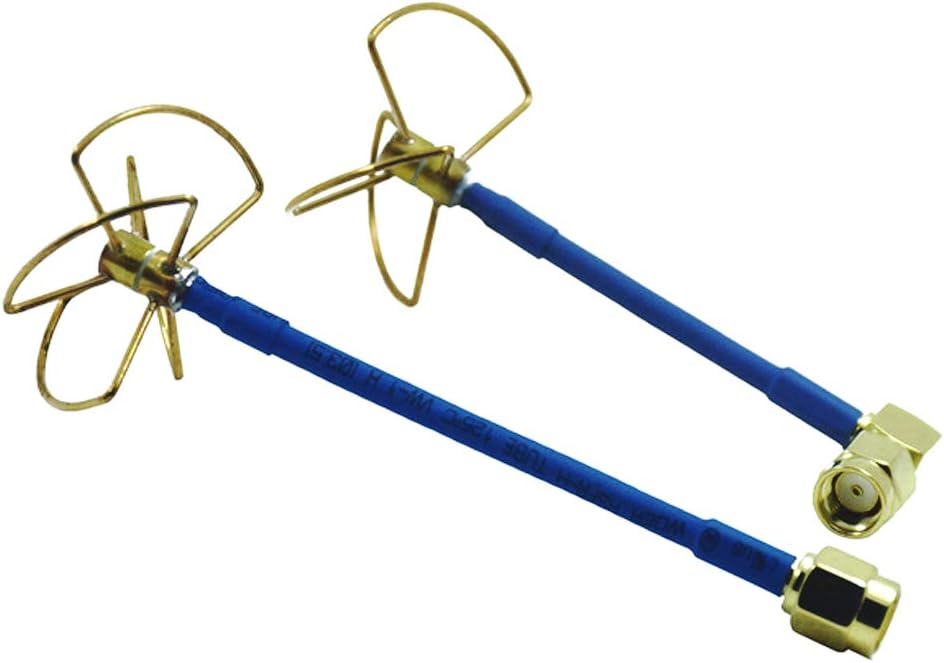
Anbee 5.8Ghz Circular Polarized Clover Leaf Antenna Set
4.3Editor score
5.8 GHz FPV operation
Dual RP-SMA female antenna set
Omnidirectional clover-leaf design
Our Circular Polarized Antennas guide compares ten options for FPV flying, radio transmission, and RF testing, highlighting compatibility, gain, construction
Circular polarized antennas are engineered to receive or transmit signals with a rotating field, helping users maintain dependable links in environments where reflections, multipath interference, or changing orientation can disrupt conventional antennas. Their usefulness spans FPV drones, FM broadcasting, UWB testing, positioning, and spectrum analysis.
We compared these ten antennas by examining their operating frequencies, polarization, radiation patterns, gain, connector arrangements, physical construction, intended applications, and stated compatibility. The list covers broadcast antennas, FPV accessories, wideband test equipment, and directional RF products rather than treating every circular polarized antenna as interchangeable.
Each review explains where the antenna fits, which users are most likely to benefit, and what trade-offs come with its design. The leading choices balance range, link resilience, installation convenience, and application-specific performance. Product listings and prices can change, so confirm current specifications and connector requirements before purchasing.
4.3Editor score

4.3Editor score

5.0Editor score
This side-by-side overview highlights each antenna's frequency coverage, polarization, application, and connector design, making it easier to identify the correct option for an FPV build, broadcast installation, or professional RF workflow.


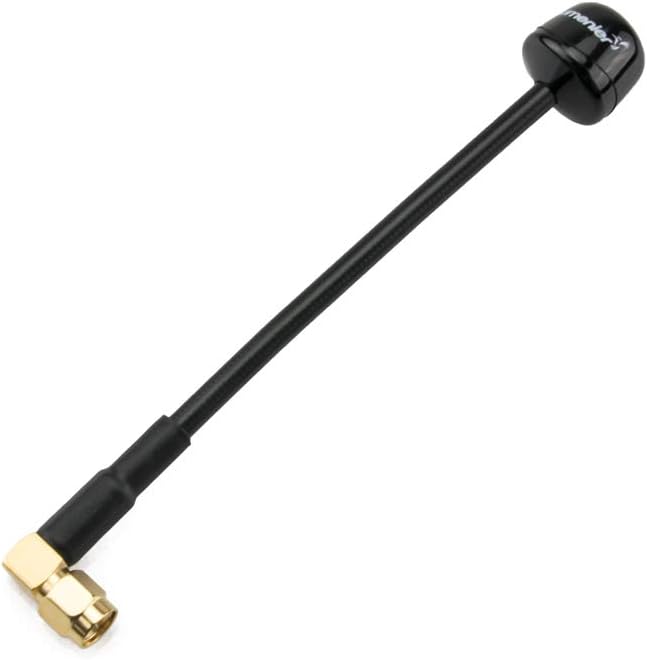


The CP200 is a purpose-built circular polarized FM transmitter antenna for stations operating from 88 to 108MHz. It carries a 4.3 rating and distinguishes itself through its double-crossed dipole design, which supports both vertical and horizontal polarization to improve penetration and coverage in dense environments.
We may earn a commission when you buy through this link, at no additional cost to you.
Its engraved vibrator includes visible frequency values, making it easier to tune the antenna to a particular FM transmitter. The stated 3dB gain is modest by general antenna standards, but its intended 350W maximum input capacity and low VSWR across the FM band make it much more relevant to broadcast installations than to low-power hobby equipment.
Construction is based on heavy-duty aluminum alloy with a waterproof design intended for prolonged outdoor exposure. Installation is described as straightforward and suited to getting a broadcast online quickly. The trade-off is specialization: its FM frequency range, higher-power construction, and mounting requirements make it unsuitable for a standard 5.8GHz FPV system.
This is the most appropriate choice for community FM stations, event broadcasters, and users who need a weather-resistant circular polarized transmitting antenna across the complete FM broadcast band. It also earns the Best Budget distinction here because it combines specialized high-power capability without moving beyond the supplied product family.
Unlike the FPV antennas in this guide, the CP200 is engineered around 88–108MHz FM broadcasting. Its ability to handle up to 350W makes it suitable for users who need a dedicated external transmitting antenna rather than a lightweight drone accessory.
The aluminum body and waterproof construction support regular outdoor use. Clear frequency engravings help installers match the antenna to their transmitter and tune it with greater confidence.
We may earn a commission when you buy through this link, at no additional cost to you.
The Anbee set is a compact circular polarized clover-leaf solution for 5.8GHz FPV systems. It includes two antennas, each with an omnidirectional radiation pattern, and carries a 4.3 rating. The set is listed for RC cars, FPV racing drones, and FPV multicopters, making it a versatile option for common video-link applications.
We may earn a commission when you buy through this link, at no additional cost to you.
Circular polarization is the central advantage. By reducing sensitivity to interference caused by signal reflections and polarization changes, it can improve the stability of a video link in crowded frequencies or reflective surroundings. The stated 3dBi gain is modest, but omnidirectional operation means the user does not need to aim a narrow beam or constantly reposition the antenna.
The supplied description specifies RP-SMA female connectors for both receiver and transmitter, while the product title includes the wording RP-SMA Male Plug. Because these phrases can be confusing when different cable ends are involved, buyers should verify the connector arrangement shown in the current listing and compare it with their radio and video equipment.
This set is most attractive to FPV pilots seeking an inexpensive matched pair for drones, racing, or ground stations. It is less compelling for long-range links where a higher-gain directional antenna is needed, but its simplicity, circular polarization, and ready-made pair make it a sensible entry point for common FPV configurations.
Receiving two antennas in one package is useful for a drone and a compatible ground station or for maintaining a spare. It also reduces the need to source matching circular polarized units separately.
The clover-leaf geometry offers omnidirectional coverage while circular polarization addresses multipath interference. That combination is practical for racing courses, urban areas, and other cluttered RF environments.
We may earn a commission when you buy through this link, at no additional cost to you.
The JeeFly patch antenna targets FPV pilots who want more directional reach than a clover-leaf antenna can provide. It operates across 5.5 to 5.8GHz, uses right-hand circular polarization, and has a stated 11dBi gain. The product information also identifies compatibility with Fat Shark, Skyzone, EV200D, and other 5.8GHz systems.
We may earn a commission when you buy through this link, at no additional cost to you.
Its beam pattern is specified as 75 degrees horizontally and 40 degrees vertically in the E-plane, balancing near-field and far-field performance. That makes it relevant to racing, freestyle, and cinematic work where the user can maintain a useful orientation between the antenna and the remote transmitter.
The antenna weighs only 20.7 grams and measures 82 by 42 by 24mm, so it is compact enough for a drone or goggle installation. Its Teflon-based high-frequency PCB is described as resistant to temperature extremes and corrosion. The main limitation is the absence of a customer rating, which leaves less direct feedback to help buyers judge real-world consistency.
Choose this antenna when a high-gain directional beam and low weight are priorities. It is a strong candidate for pilots who understand aiming and can keep the patch pointed toward the receiver or drone. It may be less convenient for beginners who want unrestricted 360-degree coverage.
The stated 11dBi gain can help increase link margin where a conventional omnidirectional antenna becomes marginal. Users should orient the patch to exploit the directional pattern rather than expecting coverage in every direction.
At 20.7 grams and with a compact profile, the antenna is easy to carry without adding unnecessary bulk. Its stated support for several popular FPV goggle systems simplifies system planning.
We may earn a commission when you buy through this link, at no additional cost to you.
The Triple Feed Patch Antenna is a 5.8GHz directional unit designed for FPV racing drones and compatible goggles. It has a 4.3 rating, a stated 9.4dBi gain, and a triple-feed structure associated with good radiation efficiency, axial ratio, and manufacturing accuracy.
We may earn a commission when you buy through this link, at no additional cost to you.
A major distinguishing feature is its ability to operate as either LHCP or RHCP. The package includes a semi-rigid SMA male-to-male coaxial cable, an SMA connector, and a 50-ohm dummy-load terminator. The terminator is important because the instructions call for it to be installed on an unused connector to preserve intended performance.
This design gives experienced users flexibility, but it also demands more attention than a simple ready-to-use clover leaf. Directional radiation concentrates energy toward the intended receiver, and polarization must match the rest of the system. Incorrect connector handling, poor orientation, or omitting the terminator can undermine the installation.
The product is best suited to FPV builders who want high-gain patch performance and understand coaxial routing. It suits racers with a repeatable flight path and technical users who appreciate a kit with the necessary cable and termination hardware.
Supporting both LHCP and RHCP allows the unit to work with more than one system arrangement. This flexibility is useful when components, test equipment, or user preferences differ across projects.
The included coax, connector, and 50-ohm terminator cover the essential connection details. Installing the terminator on the unused port helps prevent leakage and maintains the antenna's intended operating condition.
We may earn a commission when you buy through this link, at no additional cost to you.
The UWB Antenna Module is a professional-oriented circular polarized ultra-wideband spiral helical antenna. Its 5.0 rating reflects a strong reception among available customer feedback, and its intended uses include positioning, communication, broadband testing, directional radio work, and coverage analysis.
We may earn a commission when you buy through this link, at no additional cost to you.
Its defining benefit is wideband operation. Rather than restricting the user to one narrow FPV channel band, it is designed to maintain a stable signal across common ultra-wideband frequencies. Circular polarization minimizes signal loss and multipath interference, while the directional form factor supports targeted coverage analysis and measurement work.
The module uses robust materials and is described for both indoor and outdoor applications. Integration is straightforward when the radio or UWB equipment is compatible with its interface. Compared with consumer drone antennas, however, the supplied specifications are less detailed about exact impedance, connector type, and frequency-specific gain, so buyers with strict technical requirements should confirm those details.
This antenna is a strong fit for RF engineers, technical testers, and advanced users who need one circular polarized module across several UWB tasks. It is less compelling for a simple FPV build, but its flexibility makes it valuable within a professional lab or measurement setup.
Ultra-wideband support reduces the need to change antennas as the user moves among different signal tasks. That makes the module practical for communication testing, positioning, and coverage analysis.
Circular polarization helps control multipath interference, while the directional pattern focuses reception toward the region under examination. These properties are valuable when reflections are common.
We may earn a commission when you buy through this link, at no additional cost to you.
The Lumenier AXII 2 Diversity Bundle combines two of the brand's established 5.8GHz antenna approaches in one package: the AXII 2 and an AXII patch. Both use left-hand circular polarization, and the bundle carries a 4.3 rating.
We may earn a commission when you buy through this link, at no additional cost to you.
The AXII 2 is presented as providing clear and even signal with near-perfect circularity, while the patch contributes stronger directional range and penetration where it is aimed. Together, they create a practical diversity arrangement for FPV goggles or a ground station, allowing the installer to balance broad reception with focused coverage.
The main requirement is compatibility. LHCP antennas do not automatically work with an RHCP setup, so the radio, video transmitter, receiver, and both antennas must share the correct polarization. Users should also account for the bulkier goggle arrangement created by a patch antenna compared with a pair of compact cylindrical antennas.
This bundle is well suited to pilots who want two distinct antenna characteristics without selecting components separately. It is especially attractive for ground-station use, where one antenna can preserve general coverage while the other can be pointed toward the aircraft for stronger link performance.
The two antennas solve different coverage problems. The AXII 2 favors even omnidirectional reception, while the patch concentrates energy and can penetrate more effectively when correctly aimed.
Bundling the antennas makes it easier to establish a matched setup for goggles or a ground station. Users still need to confirm that left-hand circular polarization aligns with every other component in the video link.
We may earn a commission when you buy through this link, at no additional cost to you.
The TrueRC X-AIR 5.8GHz MK II is a two-antenna set made specifically for HDZERO FPV goggles. It has a 5.0 rating, right-hand circular polarization, and a stated 10dBic gain for each antenna. Custom knurled SMA connectors secure the antennas to the goggle module's rails.
We may earn a commission when you buy through this link, at no additional cost to you.
Each antenna uses a 120-degree beam, which the product information says combines to create a 135-degree beam width. The result is intended to provide a useful balance between long-range reach, signal penetration, and a beam wide enough to remain practical during normal flight. Large SWR and axial-ratio bandwidth add flexibility beyond the primary 5.8GHz band.
The antennas are only 15mm thick, making them easy to store and less intrusive during transport. Slide-on mounts support quick installation, while the stated durable construction is designed for regular use. The main constraint is system specificity: the custom mounting arrangement is intended for HDZERO goggles rather than being a universal antenna connector solution.
This is the most refined premium option for an HDZERO pilot who values native integration, compact construction, and high stated gain. The 5.0 rating and detailed feature set make it stand out, but its RHCP and custom mounting system mean it is not the right choice for an LHCP setup or arbitrary goggle models.
The slide-on rails and custom knurled connectors create a straightforward installation with a secure physical connection. This focused design removes the need for generic brackets when using the intended goggle system.
A 120-degree beam gives each antenna meaningful directional concentration without reducing coverage to a narrow spotlight. The listed combined beam of 135 degrees supports practical long-range and penetration performance.
We may earn a commission when you buy through this link, at no additional cost to you.
The Lumenier AXII 2 Right-Angle antenna is a 5.8GHz RHCP model for lightweight racing drones, freestyle quads, and FPV goggles. It carries a 5.0 rating and builds on the original AXII with claimed improvements to range, bandwidth, and durability.
We may earn a commission when you buy through this link, at no additional cost to you.
The right-angle configuration is particularly relevant to drone frames, where a straight connector can consume vertical clearance, create an awkward aerodynamic profile, or complicate placement around the camera and frame components. By moving the connection orientation, the antenna can sit more naturally in a compact airframe while preserving circular polarized reception.
Its main limitation is that the title identifies a pack of one, so a complete matched installation may require a second compatible unit. The antenna also uses RHCP, meaning it must match the rest of the FPV link. As with any directional or compact RF accessory, mounting and orientation can influence real-world consistency.
This antenna is a strong pick for racers and freestyle pilots who value a proven AXII design in a right-angle package. It is less convenient for users who specifically need a matched two-antenna set or an LHCP configuration.
The connector orientation helps antennas fit around tight drone frames. This can make installation cleaner and avoid forcing the antenna into an unnatural position.
The stated range, bandwidth, and durability improvements modernize the earlier design. Those qualities make the right-angle model relevant to current lightweight racing and freestyle builds.
We may earn a commission when you buy through this link, at no additional cost to you.
The Zopsc equiangular spiral antenna is a wideband circular polarized device designed for spectrum analysis, direction finding, signal analysis, navigation, positioning, and broadband measurement. It covers 0.51 to 10GHz, making it substantially broader than the FPV-focused products in this guide.
We may earn a commission when you buy through this link, at no additional cost to you.
Its directional gain is listed at 3 to 6dBi, and it can be offered in left- or right-hand circular polarization to suit the user's receiving and testing requirements. The spiral PCB structure incorporates a gradient feed line intended to support impedance matching and broad ultra-wideband performance.
The approximately 10cm diameter keeps the antenna reasonably compact, while the SMA female interface provides a familiar RF connection method. Because the connector is female and the system is connector-free, users must select an appropriate cable and accessory. As with the other wideband professional products, the absence of a current customer rating makes real-user feedback less available.
This antenna is ideal for RF technicians who need one unit to cover numerous frequencies, including 915MHz, 1090MHz ADS-B, GPS bands, 2.4GHz, and 5.8GHz video transmission frequencies. It is less relevant for an ordinary FPV pilot who only needs a compact 5.8GHz patch.
The 0.51–10GHz range allows the antenna to serve diverse analysis tasks without repeated connector and antenna changes. It is particularly useful for users who regularly move between aviation, GPS, communications, and video-link frequencies.
Polarization flexibility allows the antenna to match different test environments. The directional spiral structure also supports tasks where identifying signal direction or location is more important than uniform coverage.
We may earn a commission when you buy through this link, at no additional cost to you.
The Fat Shark and ImmersionRC SpiroNet is a 5.8GHz circular polarized antenna intended for FPV reception. It uses RP-SMA and carries a 4.2 rating. The SpiroNet name is closely associated with the compact, helically wound style commonly seen on FPV goggles and receivers.
We may earn a commission when you buy through this link, at no additional cost to you.
Its major appeal is familiarity. Pilots already using RP-SMA-equipped FPV equipment may appreciate a straightforward circular polarized antenna without navigating unusual mounting hardware or complex accessories. The helical construction also differentiates it from patch antennas, which usually require more careful directional aiming.
The supplied product information is much less detailed than for most entries in this guide. It does not state a numerical gain, beam width, impedance, or included accessory list, so users must rely on connector compatibility and the established antenna format. That limits the precision of a technical purchasing decision compared with the more fully specified models above.
The SpiroNet is best for an FPV setup that specifically uses RP-SMA connections and needs a compact circular polarized receiving antenna. It can serve as a familiar replacement or supplementary antenna, although users seeking documented gain, detailed radiation performance, or a matched multi-antenna package should consider one of the more fully specified alternatives.
The RP-SMA interface is common across FPV receivers and goggles. That familiarity makes the antenna convenient for users who know their existing cable and connector arrangement.
The SpiroNet design provides circular polarized reception without the bulk of a large patch. Its helical shape is well suited to goggle and receiver placements where compactness matters.
We may earn a commission when you buy through this link, at no additional cost to you.
The right circular polarized antenna depends on frequency, radio power, radiation pattern, connector type, and the environment in which it must operate. Reviewing these factors before buying helps prevent a mismatched polarization, incompatible connector, or unsuitable antenna pattern from undermining the system.
Frequency is the first non-negotiable specification. FPV systems typically use 5.8GHz, while the CP200 serves the 88–108MHz FM broadcast band. The JeeFly and Zopsc antennas cover broader ranges, but a wide frequency specification does not guarantee identical performance at every point. Check that every channel used by the transmitter, receiver, video system, or test equipment falls within the antenna's stated operating range.
Choose a model whose stated range directly covers your intended use. A 5.8GHz clover leaf will not serve an FM broadcast installation, and a broadcast antenna is not a substitute for an FPV patch.
RHCP and LHCP are not interchangeable across a complete link. The transmitter, receiving antenna, and often the drone or goggle antenna must use matching circular polarization. Several products offer selectable or dual-polarization arrangements, but users should still verify the configuration included in the package and the instructions for setting it correctly.
Match the antenna's polarization to every other device in the chain. If a system supports multiple modes, confirm the selected mode before installation rather than relying on the connector shape alone.
Omnidirectional antennas distribute energy in multiple directions and are forgiving when the aircraft moves or changes orientation. Directional patch antennas concentrate energy toward a target and can provide greater reach with a stable flight path or fixed ground station. Their trade-off is reduced sensitivity when the antenna points away from the other end of the link.
Choose omnidirectional coverage for general flying, beginners, or moving receivers. Choose a directional patch for long-range links, racetrack layouts, or setups where the operator can maintain alignment.
Gain indicates how strongly an antenna concentrates energy, but higher gain is not automatically better. A highly directional antenna can lose the link quickly when its orientation changes. Beam width describes the angle over which that concentration remains useful, so gain and beam width should be evaluated together.
Prioritize a product that offers enough gain for the intended distance without making the required aiming impractical. For agile freestyle flying, a broader pattern often provides more useful reliability than maximum gain on paper.
Connector terminology can be confusing because it may describe both ends of a cable or the antenna socket. RP-SMA, SMA, and female variants have different gender arrangements and interface details. The Anbee listing, for example, contains potentially conflicting connector wording, making the current product image and description especially important to check.
Match the connector physically, not just by the frequency and polarization labels. Confirm whether the antenna includes a cable or requires one, and ensure that any included adapter or terminator is compatible with the transmitter and receiver.
Power handling is especially important for broadcast transmitters. The CP200 is specified for up to 350W, making it a fundamentally different class of product from a lightweight FPV antenna. Exceeding an antenna's voltage or power rating can cause arcing, overheating, damaged matching components, or an unstable signal.
For high-power FM transmission, review the stated power capacity and weatherproof construction. For low-power FPV equipment, concentrate on gain, pattern, and compatibility rather than treating maximum power capacity as the primary specification.
Outdoor broadcast equipment should be able to tolerate weather, while FPV antennas need to be light enough for a drone and durable enough for repeated handling. Wideband measurement antennas need stable materials and repeatable integration. The relevant definition of rugged therefore differs by application.
Match construction to the installation. Prioritize weather resistance for exposed broadcast sites, low weight and compactness for drones, and stable PCB or professional construction for laboratory and field measurement work.
The best antenna is one that fits the complete setup without unnecessary adapters or special installation procedures. The TrueRC X-AIR uses slide-on mounts and custom knurled connectors for HDZERO goggles, while the Lumenier bundle combines two antenna formats for goggle or ground-station use. Integrated systems can simplify setup but may be less flexible.
Check all mounting and connection details before buying. If a model requires specialized hardware, directional placement, or additional cables, include that setup work in the decision rather than focusing only on gain.
Before installation, confirm the antenna's frequency range, connector type, and polarization against every device in the signal chain. Mount it in the intended orientation without forcing connectors or bending coax sharply. For directional patches, align the antenna toward the expected receiver or transmitter and avoid placing it directly against metal components that could distort its radiation pattern.
Secure cables with strain relief so movement does not pull on the antenna socket. When using a triple-feed patch, install the supplied 50-ohm terminator on any unused connector. For the CP200, tune the vibrator to the relevant FM frequency using the engraved markings and follow the transmitter manufacturer's grounding and mounting instructions.
Inspect outdoor connectors, seals, mounting hardware, and antenna surfaces periodically. Remove accumulated dirt or moisture with appropriate nonabrasive methods, and replace damaged cables or loose connectors before operating. FPV users should check that patch antennas remain firmly attached before aggressive maneuvers, while laboratory users should verify connector cleanliness and calibration whenever measurements change unexpectedly.
Circular polarized antennas are commonly used with FPV video systems, radio transmitters, drones, wireless links, positioning equipment, and RF test systems. They can reduce multipath interference and maintain a more dependable connection when signals reflect from buildings, terrain, vehicles, or other structures. Their exact suitability depends on frequency, polarization, gain, and connector compatibility.
No. RHCP and LHCP antennas generally need to be used with matching equipment throughout the link. Pairing opposite polarization can severely reduce signal strength or prevent reliable reception. Some antennas support a selectable configuration, but users must verify which mode is installed and configure every connected device consistently.
No. Higher gain usually comes with a narrower radiation pattern, which requires more accurate aiming. That can benefit long-range or fixed installations but may reduce reliability during fast maneuvers or when the aircraft changes orientation. A moderate-gain antenna with a wider beam is often better for general FPV flying.
Not safely or effectively. FPV antennas are designed for the much higher 5.8GHz band, while FM broadcast systems operate from 88 to 108MHz. Their physical dimensions and electrical characteristics are fundamentally different. Use an antenna explicitly specified for the broadcast frequency and transmitter output.
Choose the connector that physically matches your receiver, transmitter, goggles, or video system. RP-SMA and SMA are common in FPV equipment, but male and female arrangements vary. Check the antenna's current listing carefully because descriptions may refer to the cable, socket, or included plug rather than a single consistent endpoint.
Interference can result from polarization mismatch, an obstructed antenna, poor connector contact, incorrect terminator installation, or congestion on the selected channel. Directional patch antennas may also be pointed away from the other end of the link. Checking mount position, connector seating, polarization, and channel selection can resolve many common problems.
Mount it where it has an unobstructed view of the other antenna and is not pressed against carbon fiber, metal, batteries, or the drone frame. Maintain the orientation for which its radiation pattern was designed. On a ground station, the patch can often be aimed toward the flight area to maximize gain.
They need ordinary RF equipment care rather than specialized servicing. Keep connectors clean and dry, avoid twisting or sharply bending coax, check mounting tension, and inspect weather seals on exposed installations. FPV antennas should also be checked after crashes, while outdoor broadcast antennas should be inspected periodically for corrosion and loose hardware.
The CP200 leads for high-power FM broadcasting across 88–108MHz, while the Anbee set offers an affordable, simple pair for common 5.8GHz FPV systems. For users seeking a more specialized premium antenna, the TrueRC X-AIR MK II combines 10dBic gain, a practical 120-degree beam, and purpose-built HDZERO integration.
Most buyers should begin with three non-negotiables: the correct operating frequency, matching polarization, and a compatible connector. After that, select a radiation pattern suited to movement and range. Omnidirectional antennas are easier to use, directional patches provide focused reach, and wideband spirals serve measurement tasks that span many frequencies.
Finally, review the current listing before ordering because connector descriptions, included accessories, ratings, and prices can change. Confirm the model's current specifications, mount the antenna correctly, and preserve unused ports as directed. Those small checks can make the difference between a reliable circular polarized link and an installation that falls short of its potential.