
G-PLUG 15FT RG8X Cable
4.5Editor score
Compact 15-foot length
Pure copper RG8X core
Dual-shielded cable design
Our guide compares the best coax cables for ham radio, covering loss, shielding, connectors, length, durability, and suitability for common amateur radio
Coax cables for ham radio carry signals between radios, antennas, tuners, analyzers, and other 50-ohm equipment, so their construction can materially affect a station’s performance. A quality cable should combine low loss, dependable shielding, secure connectors, manageable flexibility, and enough conductor size for the intended power and frequency.
This guide compares ten current options based on the supplied specifications, including cable type, center conductor, shielding, jacket, connector design, length, and stated operating capabilities. The list covers preassembled PL259 jumpers, longer RG8X and LMR400-style runs, flexible RG58, and a thin bulk RG316 option.
The recommendations reveal where each cable fits: compact RG8X jumpers suit close installations, heavy 400-style cables favor longer runs, RG58 remains useful where routing space is tight, and RG316 is intended primarily for custom-built interconnections. Ratings and product details reflect the supplied listings, while prices can change.
4.5Editor score

4.7Editor score
4.7Editor score
The comparison below highlights the major differences in length, cable class, conductor construction, connector arrangement, and intended use, helping readers match each cable to a specific station requirement.



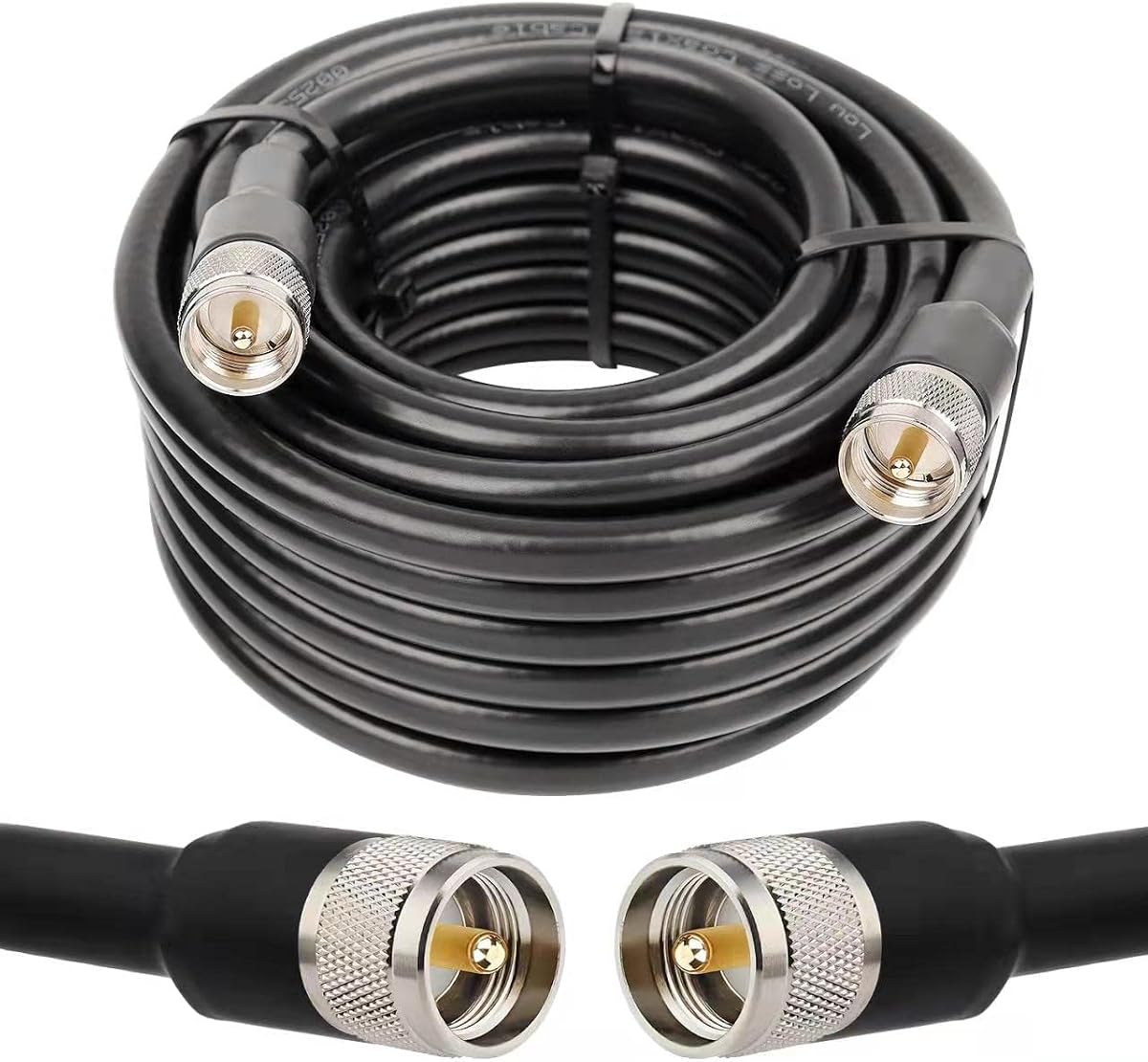

This RG8X cable earns a 4.6 rating and offers a balanced combination of conductor size, shielding, and connector quality. Its 50-foot length fits many permanent installations without the added bulk of a 100-foot cable. The 17AWG pure copper center is a notable step above the smaller conductor used in RG58, while the stated 50-ohm impedance suits standard ham radio and CB systems.
We may earn a commission when you buy through this link, at no additional cost to you.
Double shielding is designed to reduce signal leakage and external interference, which can be important near transmitters, computers, automobiles, and other noisy electronics. The fully molded nickel-plated brass PL259 connectors include gold-plated center pins, creating a durable RF connection with less corrosion concern. The strong, flexible PVC jacket is specified for both indoor and outdoor use.
The practical limitation is size. RG8X is less flexible than RG58 and may take more effort to route through a narrow window, dashboard, or crowded vehicle cavity. Its fixed length also may not match a short bench connection or a long elevated antenna feedline. For those situations, another cable in the list may offer a better physical fit.
This is a strong general recommendation for a home station, CB installation, antenna analyzer, SWR meter, tuner, or dummy load when a 50-foot run is appropriate. Choose it when a pure copper center and a 17AWG conductor are priorities, and when the extra diameter of RG8X will not complicate routing.
The 17AWG pure copper center provides a more substantial conductor than lightweight RG58. That difference can matter in higher-powered applications or whenever reducing avoidable loss is a priority.
Double shielding helps limit signal leakage and outside interference. The molded, plated connectors also resist the oxidation and mechanical wear that commonly affect exposed RF connections.
We may earn a commission when you buy through this link, at no additional cost to you.
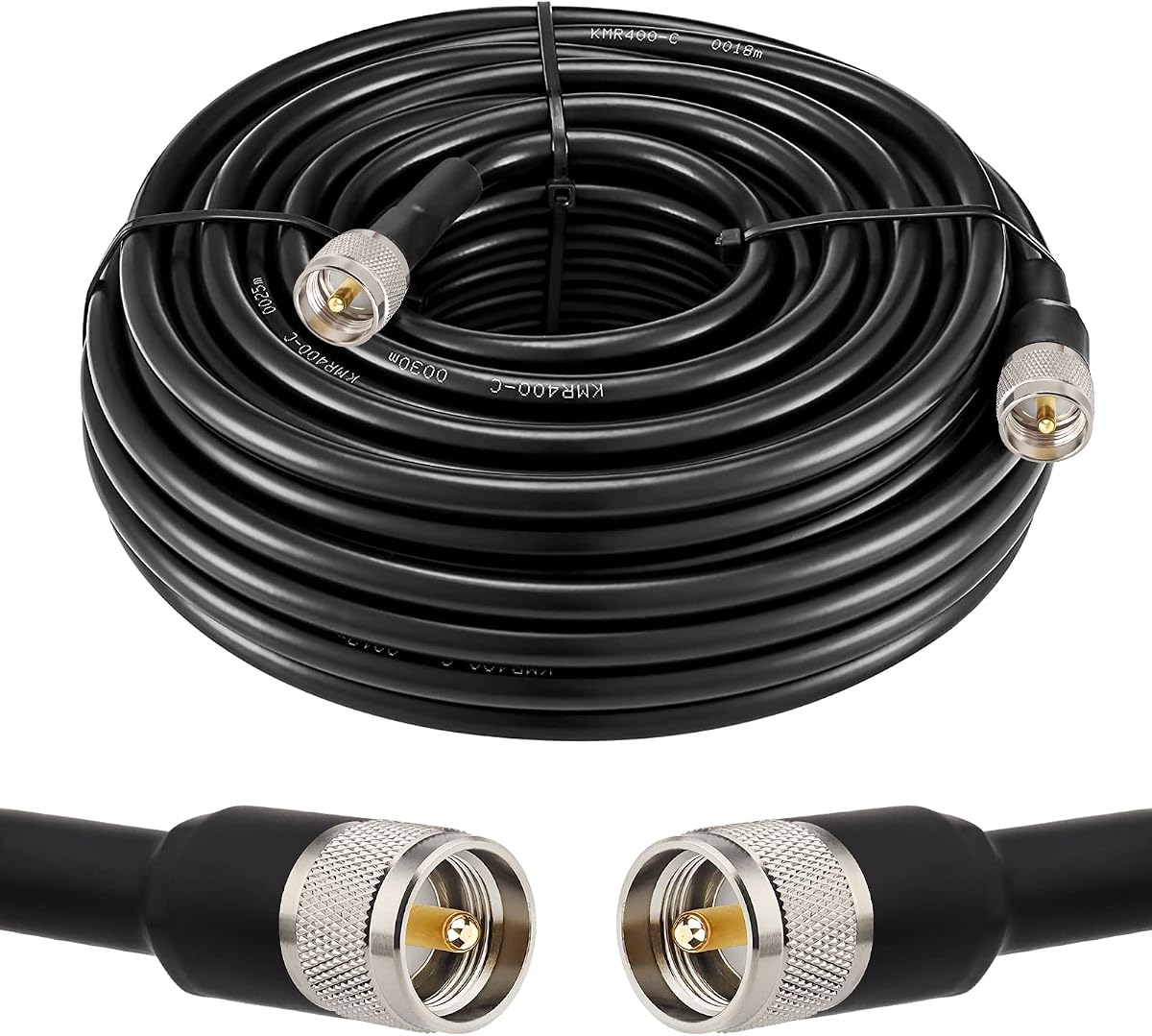
This MOOKEERF KMR400 cable has a 4.7 rating and stands out for its low-loss design, substantial construction, and carefully sealed connector transitions. It is a 50-foot, 50-ohm cable intended for ham radio, VHF radio, SWR meters, antenna analyzers, marine equipment, and other RF applications. Its KMR400 format provides a useful middle ground between lightweight RG58 and larger 400-class cables.
We may earn a commission when you buy through this link, at no additional cost to you.
The listed performance is particularly useful for comparison: loss below 2.8 dB at 450 MHz across 50 feet, with SWR stated at or below 1.25. The center conductor uses copper-clad aluminum, while aluminum foil and tinned copper braid provide dual-element shielding. A high-quality PVC jacket and nickel-plated copper connector shells are designed to withstand outdoor exposure and resist oxidation and corrosion.
Its most thoughtful detail is the connector strain relief. A 2.2-inch adhesive-backed heat-shrink section gives the molded connector and cable transition more reinforcement than a short ordinary sleeve. This helps reduce connector pull-out risk, although buyers should still avoid pulling on the cable itself when disconnecting equipment.
This cable is best suited to operators who want low-loss performance in a permanent 50-foot installation without moving to the largest cable in the guide. It works particularly well for elevated antenna feedlines, VHF and UHF systems, or bench connections involving an analyzer or SWR meter. The decisive advantage is its balanced size, shielding, and connection durability.
The listing specifies loss under 2.8 dB at 450 MHz over 50 feet and SWR no greater than 1.25. These stated figures make the cable easier to assess for longer VHF and UHF feedline applications.
The extended adhesive-lined heat shrink supports the joint between each connector and the cable. Nickel-plated shells and tinned copper braid also add useful corrosion resistance for outdoor installations.
We may earn a commission when you buy through this link, at no additional cost to you.
STEREN’s 50-foot RG8X cable carries a 4.7 rating and presents a versatile option for CB, ham radio, HF antennas, tuners, switches, meters, and two-way radio equipment. Its 50-ohm RG8X format is a familiar choice for operators who want more conductor capacity than RG58 without moving to the largest cable class in this roundup.
We may earn a commission when you buy through this link, at no additional cost to you.
The main attraction is the fully molded PL259 connector design. Molding helps maintain a consistent relationship between the connector and cable while reducing opportunities for connector separation. Nickel plating improves durability and resistance to environmental exposure. The cable is also positioned as a step up from RG58 for high-powered stations, base antennas, and mobile applications.
The supplied description places particular emphasis on versatility. It identifies the cable for base station antennas, HF antennas, 10-meter antennas, firestick antennas, antenna tuners, antenna switches, SWR meters, and portable radios. That broad device list suggests it is most useful for operators running a varied collection of 50-ohm equipment rather than a single specialized setup.
The trade-off is that buyers cannot select another length, and RG8X remains less flexible than a thin RG58 installation. Despite those limitations, the 4.7 rating, molded connectors, and broad equipment support make this an easy recommendation for a conventional 50-foot station feedline.
The cable is listed for radios, antennas, tuners, switches, and meters throughout a 50-ohm system. This makes it a practical central jumper for varied amateur radio stations.
Fully molded PL259 connectors support consistent alignment and a secure mechanical connection. Nickel plating supports durability in indoor and outdoor service.
We may earn a commission when you buy through this link, at no additional cost to you.
The G-PLUG 15-foot RG8X cable provides a compact option for short-distance connections, carrying a 4.5 rating. It is particularly appropriate for bench testing, a nearby CB antenna, an indoor radio, or an SWR meter positioned close to the transceiver. The 15-foot length makes it easier to manage than the longer 50- and 100-foot choices in the guide.
We may earn a commission when you buy through this link, at no additional cost to you.
Its electrical design is more substantial than the length may initially imply. A pure copper center supports efficient signal transfer, while dual shielding reduces signal leakage and helps reject electronic noise. The PL259 connectors use nickel-plated brass bodies and gold-plated center pins, combining mechanical strength with corrosion resistance at the connection points.
A flexible, weather-resistant PVC jacket allows the cable to be used indoors or outdoors and to be repositioned as needed. The stated compatibility includes CB radios, ham radios, SWR meters, antenna analyzers, and other 50-ohm RF systems, which gives the short cable more versatility than a simple fixed bench lead.
The central limitation is reach. A 15-foot cable cannot serve most rooftop or tower antennas without an extension, and adding a less capable extension may not be desirable. For short, clean installations, however, it offers a focused package of pure copper, dual shielding, and plated connectors in a manageable size.
Fifteen feet is sufficient for many radios, analyzers, and SWR meters kept close together. It reduces excess cable clutter and makes temporary testing simpler.
Pure copper, dual shielding, and gold-plated center pins make this more than a basic convenience lead. The construction suits a range of indoor and outdoor 50-ohm connections.
We may earn a commission when you buy through this link, at no additional cost to you.
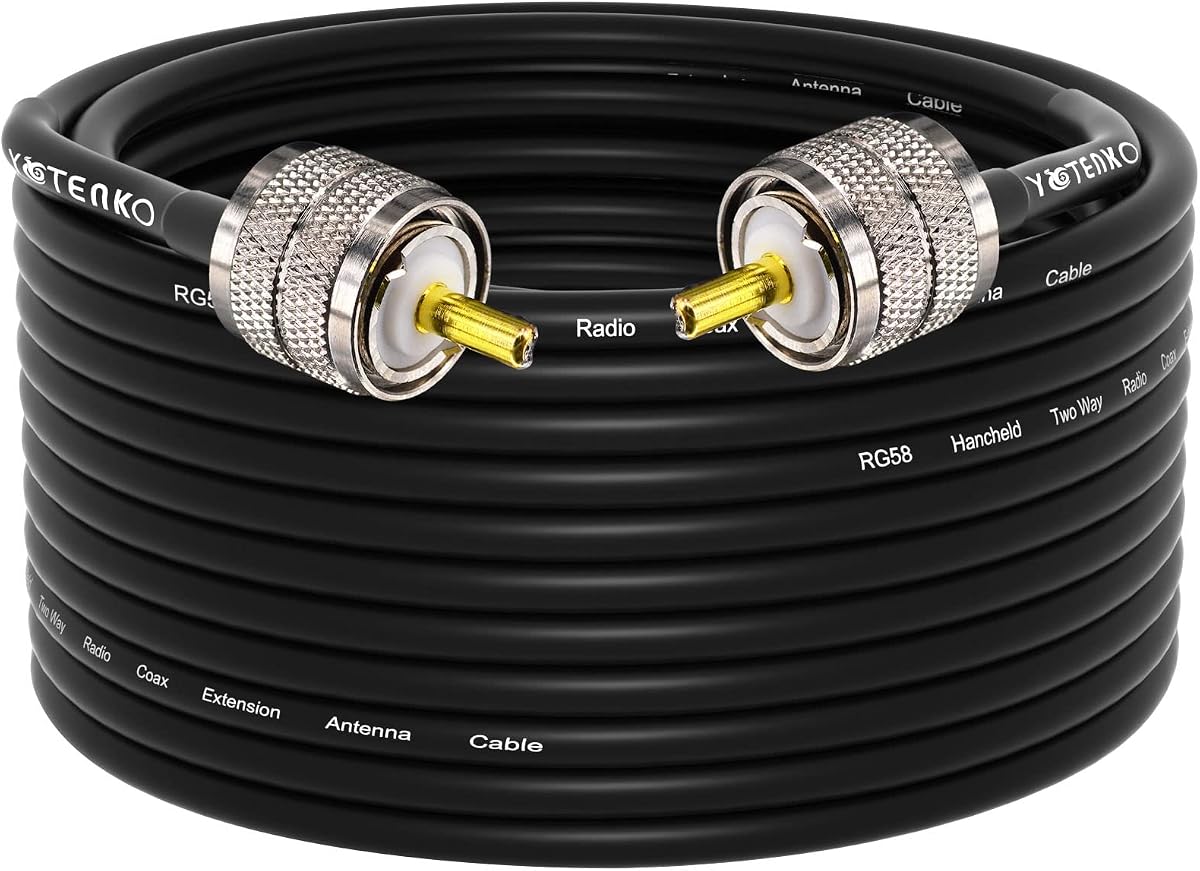
This YOTENKO RG58 cable has a 4.6 rating and focuses on flexibility, routing ease, and mobile-radio practicality. At 49.2 feet, it is close to 15 meters, a length explicitly intended for base stations, large RVs, temporary field-day setups, and installations that need additional reach. Its 0.195-inch diameter makes it considerably easier to pass through tight spaces than RG8X.
We may earn a commission when you buy through this link, at no additional cost to you.
The bare copper braid is an important construction detail. According to the supplied information, it is not copper-clad aluminum, and its soldering properties and oxidation resistance make it useful for DIY work. The cable is also optimized for amateur radio use across the 10-meter and 2-meter bands, along with CB radio operation within the stated 1–300 MHz range.
A six-centimeter strain-relief section distinguishes this cable from options with only about two centimeters of protection. Longer reinforcement helps distribute bending stress away from the solder points, reducing the chance of a connector failure after repeated movement. That feature is especially relevant in cars, trucks, RVs, and portable installations where the cable may shift regularly.
The unavoidable trade-off is performance headroom. RG58 has a smaller center conductor and lower loss capacity than RG8X or KMR400, so operators seeking the lowest loss over long runs should look elsewhere. For flexible routing, mobile work, and moderate-distance installations, though, this is a highly practical and well-reasoned choice.
The slim 0.195-inch RG58 profile can pass through window frames and tight vehicle conduits. It is a better fit where stiff RG8X or 400-class cable would be inconvenient.
Six-centimeter strain relief spreads stress away from the connector solder points. That mechanical support is useful during repeated installation, removal, and field operation.
We may earn a commission when you buy through this link, at no additional cost to you.
This 100-foot RG8X cable has a 4.6 rating and addresses stations that need more reach than a standard jumper provides. Its 16AWG center conductor uses 19 strands of 0.3-millimeter tinned pure copper, a larger and more substantial conductor than many conventional RG8X products. That makes it a logical option for elevated antennas, base stations, and other longer feedline arrangements.
We may earn a commission when you buy through this link, at no additional cost to you.
The cable uses double shielding to reduce signal leakage, interference, and loss. Its strong yet flexible PVC jacket is specified for indoor or outdoor use. At the connector ends, fully molded nickel-plated brass PL259 plugs with gold-plated center pins provide a robust interface for radios, tuners, analyzers, SWR meters, dummy loads, and other 50-ohm equipment.
The included two-year warranty adds a visible support commitment, while the product is also described for Jeep Wrangler CB installations. A 100-foot length creates room for routing around walls, across roofs, or from elevated antennas without immediately requiring another cable. It can also be used for multiple temporary station configurations.
Buyers should account for the cable’s size and the effort required to route it neatly. A 16AWG-centered RG8X is not the most flexible option, and a full 100 feet may be unnecessary for a bench or compact base station. For a long, permanent installation that benefits from a heavy conductor, it remains a strong selection.
The 16AWG stranded pure copper center is heavier than a standard RG8X core. The additional conductor size can help reduce loss in extended installations.
A strong PVC jacket can be bent and secured while remaining suitable for outdoor use. The waterproof-oriented jacket helps protect the cable in exposed installations.
We may earn a commission when you buy through this link, at no additional cost to you.
The XRDS 100-foot KMR400 cable has a 4.7 rating and represents the most substantial long-run option in the guide. Its 0.41-inch diameter and copper-clad aluminum center are intended to retain signal more effectively than RG58 or 240-type coax. It is aimed at operators who want lower loss and greater installation durability over a long feedline.
We may earn a commission when you buy through this link, at no additional cost to you.
Unlike conventional crimp-style endings, the PL259 connectors use a clamp design intended to resist coming off. The nickel-plated RF Industries connectors provide a secure mechanical interface, while adhesive-lined heat shrink extending up to 2.2 inches seals the cable-to-connector transition. These details make the assembly particularly relevant where movement, weather, and long-term outdoor exposure are concerns.
The flexible UV-resistant RF-PVC jacket is designed for up to 20 years of outdoor exposure in harsh environments, according to the supplied listing. The cable is listed for ham and amateur radio, CB, VHF, HF, marine antennas, surge protectors, tuners, dummy loads, analyzers, SWR meters, scanners, and walkie-talkies, giving it unusually broad utility.
The tradeoff is physical bulk. At 100 feet and 0.41 inches in diameter, it is much less convenient for a car, compact radio box, or crowded workbench. It also costs more to route and secure than lighter alternatives. For a permanent tower, rooftop, or base-station feedline, however, this is the most purpose-built premium option here.
The large copper-clad aluminum center distinguishes KMR400 from thinner coax. Its 0.41-inch diameter supports efficient signal transfer over the full 100-foot length.
Clamp-style PL259 connectors resist pull-off, while adhesive-lined heat shrink seals the transitions. A UV-resistant jacket is specified for demanding outdoor exposure.
We may earn a commission when you buy through this link, at no additional cost to you.
This MOOKEERF RG8 jumper has a 4.6 rating and is designed to combine low loss with robust connector attachment. The supplied listing states loss below 1.5 dB at 450 MHz across 50 feet and SWR of 1.25 or less. Those stated figures make it appealing for CB, VHF, and other higher-frequency 50-ohm installations where feedline loss matters.
We may earn a commission when you buy through this link, at no additional cost to you.
The cable uses a copper-clad aluminum center, aluminum foil shielding, and a tinned copper braid. Its construction is described as equivalent to LMR400 and RG8U, positioning it as a more capable alternative to conventional lightweight RG8. The outer PVC jacket is waterproof and durable, while the nickel-plated copper connector shells resist oxidation and corrosion.
A particularly important feature is the 2.2-inch adhesive-lined heat-shrink section, which is longer than the roughly 1.1-inch sleeves used on many comparable cables. The connectors use a clamp design rather than a simple crimp, and the combination is intended to prevent separation, damage, and moisture intrusion. That mechanical robustness suits permanent installations and frequently connected equipment.
Its main disadvantage is handling. A 50-foot RG8-class cable is bulkier than RG8X and significantly less flexible than RG58. It may also be more than a smaller station requires. Still, for operators prioritizing low stated loss, sealed connections, and rugged outdoor construction, this is a highly competitive heavy-duty jumper.
The listing reports less than 1.5 dB loss at 450 MHz over the full 50 feet. That makes the cable well suited to VHF and UHF-class feedline work.
Clamp-style connector attachment is less dependent on a small crimp joint. The extended adhesive-backed heat shrink adds strain support and helps seal the cable entry.
We may earn a commission when you buy through this link, at no additional cost to you.
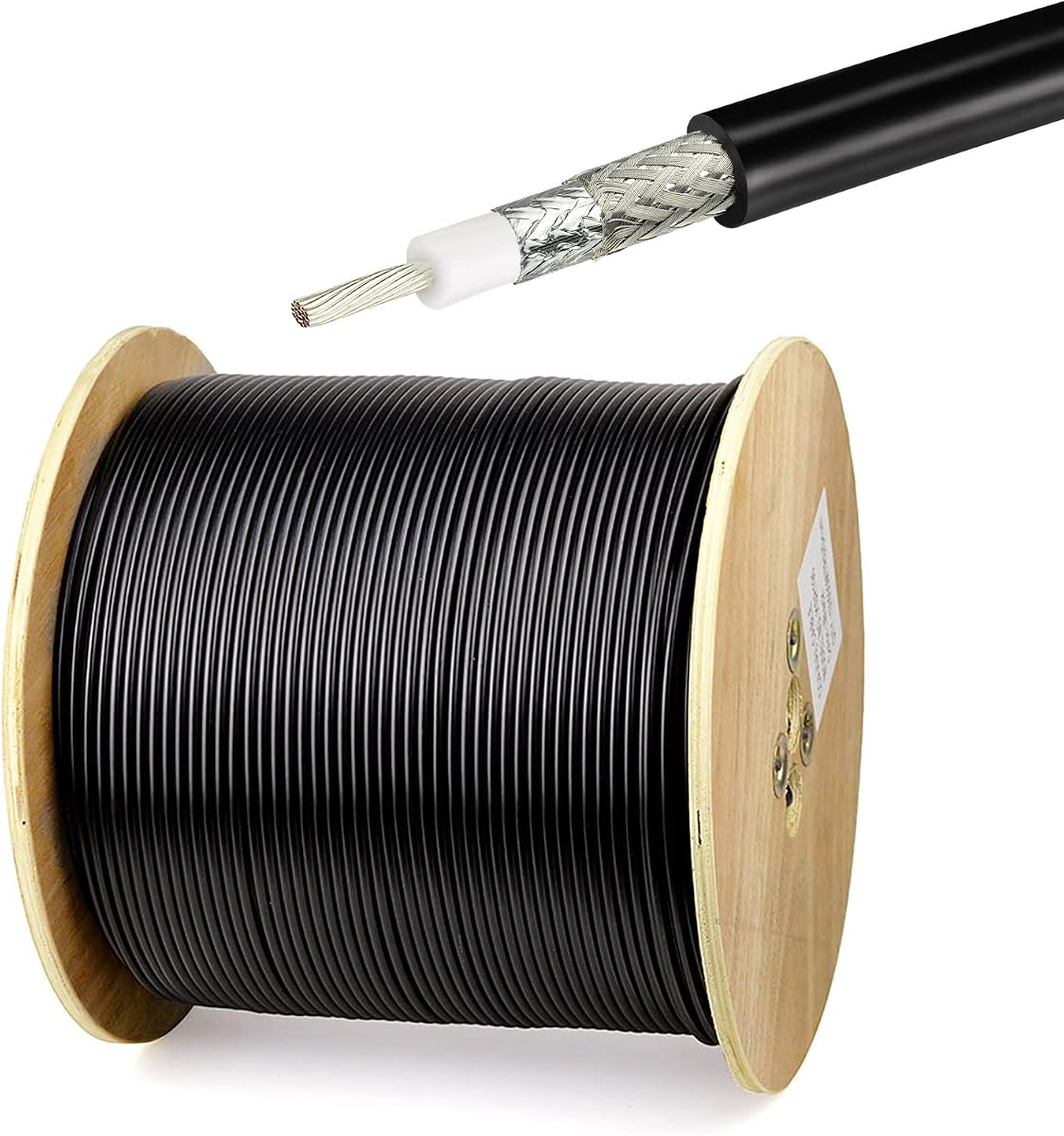
The XRDS RG316 cable has the highest listed rating in the guide at 4.8, but it serves a different purpose from most complete jumper cables. It is a thin, lightweight 50-foot bulk cable intended for custom antenna and interconnection work. With a diameter of only 0.1 inch, it offers exceptional flexibility for cramped or highly routed installations.
We may earn a commission when you buy through this link, at no additional cost to you.
Its inner conductor and braid use silver-plated copper, while the outer jacket is flexible PTFE. The cable is specified as 50-ohm, with a maximum frequency of 6 GHz, attenuation no greater than 0.45 dB per foot at 3 GHz, and VSWR no greater than 1.15. These electrical characteristics are attractive for a wide range of RF applications.
Unlike the other selections, the RG316 listing does not include finished PL259 connectors. Instead, it is intended for antenna cables assembled by terminating the cable with suitable connectors. This makes it attractive to operators comfortable with crimping and soldering, but it is a significant limitation for a buyer who wants a plug-and-play radio lead.
Potential uses include VHF and UHF interconnections, balun antenna projects, ham radio, 4G LTE, ADS-B, and Wi-Fi. It is the top choice for highly compact custom work, but not the simplest option for connecting a conventional CB or ham radio to an elevated antenna.
At 0.1 inch in diameter, the cable can be routed into small spaces and around compact assemblies. Its stranded silver-plated copper core remains flexible while providing a low-loss path.
The absence of installed connectors allows the builder to select terminations appropriate for the device and installation. Soldering skills and the correct connector hardware are essential before use.
We may earn a commission when you buy through this link, at no additional cost to you.
The Superbat 50-foot RG8X cable has a 4.7 rating and offers a straightforward combination of low-loss RG8X construction, 50-ohm impedance, and a waterproof PVC jacket. It is positioned as a step up from RG58 for high-powered applications or for operators who simply want a more capable coax for a standard 50-foot run.
We may earn a commission when you buy through this link, at no additional cost to you.
The jacket can be bent and strapped without the interference problems that can arise from poorly handled coax. Its waterproof construction makes it suitable for harsh outdoor installations, while its broad compatibility includes cell boosters, Wi-Fi repeaters, CB and ham radio equipment, antenna analyzers, and SWR meters.
Connector compatibility is another flexible feature. The listing indicates support for PL259, SMA, BNC, TNC, UHF, and N connections, giving the cable broad usefulness within a mixed equipment environment. The stated SWR target is below 1.15, which is favorable for a 50-ohm RF system.
Unlike some competing products, the supplied description does not elaborate on the center conductor or connector attachment method. That makes the Superbat a practical general recommendation but a less detailed one for buyers who prioritize a specific conductor material. For a standard 50-foot installation, it remains a well-rated and versatile choice.
The flexible PVC jacket is designed to tolerate bending and fastening. That makes it practical for permanent routing where the cable must follow walls, rooflines, or support structures.
Support for several common RF connector styles allows the cable to work across radio, test equipment, and wireless accessories. The 50-ohm design fits standard amateur radio equipment.
We may earn a commission when you buy through this link, at no additional cost to you.
The right coax cable depends on the path between the transmitter and antenna, the operating bands, transmit power, connector requirements, and the environment in which the cable will be installed. These factors matter more than a general low-loss label because every cable balances conductor size, attenuation, shielding, flexibility, and durability.
Cable length influences both signal loss and installation difficulty. A short 15-foot cable is convenient for a radio and analyzer positioned together, while a 50-foot lead can reach a nearby base or rooftop antenna. A 100-foot cable provides much more routing latitude for towers, elevated antennas, large RVs, and outdoor installations, but it is heavier and may add avoidable loss. Measure the complete route rather than estimating only the straight-line distance between devices.
Loss grows with cable length and operating frequency. The guide includes stated figures for several products: the MOOKEERF KMR400 is listed below 2.8 dB at 450 MHz over 50 feet, while the 50-foot MOOKEERF RG8 is listed below 1.5 dB at the same frequency. These values come from different cable designs and should not be treated as directly interchangeable without considering the stated test conditions. A larger 400-class cable is generally the more conservative choice for long VHF or UHF paths.
Center conductor size and material influence power handling, flexibility, and loss. Pure copper options include the 17AWG core in the first RG8X cable and the 16AWG stranded core in the 100-foot exgoofit model. Copper-clad aluminum appears in both MOOKEERF recommendations and the XRDS KMR400. Larger conductors generally support high-powered applications, while aluminum-clad constructions are commonly used to balance attenuation, weight, and cost.
Ham radio equipment in this guide uses 50-ohm systems, so the cable should also be 50 ohm. Double shielding, aluminum foil, or tinned copper braid helps reject external noise and keep transmitted energy inside the intended path. Shielding is especially useful near computers, switching power supplies, automotive electronics, and other interference sources. It does not replace good installation practices, but it provides valuable protection for a well-matched system.
PL259 UHF male-to-male connectors are common for CB and ham radio feedlines. Molding, crimping, and clamping describe different ways the connector is attached to the cable. Clamp-style designs and extended adhesive-lined heat shrink offer added mechanical support and environmental sealing. The connector should also match the equipment’s gender and connector type. A solderable or crimp-on connector may be needed for N, BNC, TNC, SMA, or other interfaces.
RG58 is only 0.195 inches in diameter in the YOTENKO selection, making it easy to route through vehicle conduits and window frames. RG8X and KMR400 offer larger conductors and lower loss but require more space and gentler bend radii. PTFE-jacketed RG316 is exceptionally thin but must be terminated by the user. Consider where the cable must bend, whether connectors must be disconnected frequently, and how much strain the cable will encounter.
A waterproof or water-resistant jacket is valuable for antennas and equipment installed outside. Connector strain relief and sealed heat shrink are equally important because cable entries are often the points where moisture can enter. The XRDS KMR400 lists a UV-resistant jacket intended for long outdoor exposure, while several RG8X choices also specify durable outdoor PVC. Proper support loops, drip routing, and secure connectors remain important regardless of the cable’s stated construction.
A radio, antenna, tuner, SWR meter, antenna analyzer, dummy load, surge protector, or marine radio may use a different connector or expect a particular impedance. Most options in this guide use PL259 male connectors and are intended for 50-ohm equipment. The RG316 cable is the major exception because it arrives without finished connectors. Confirm every endpoint before ordering so an adapter does not become an unnecessary part of the installation.
Plan the route before connecting the cable. Keep the feedline as short as practical, avoid sharp bends, and support it at intervals so its weight does not pull on the antenna connector or transceiver jack. Secure the cable without crushing it, and leave a small amount of slack near each endpoint to reduce mechanical stress. If the cable passes through walls, window frames, or roof materials, use an appropriate passage that will not abrade the jacket.
Connect and disconnect the PL259 fittings by their connector bodies rather than pulling or twisting the cable. Inspect the jack, cable entry, and heat-shrink seal for moisture, corrosion, dirt, or a loose connection. Outdoor cables should be checked after severe weather, moving vehicles, antenna maintenance, and any work near the installation. Keeping connector interfaces clean helps maintain reliable electrical contact and reduces avoidable signal degradation.
For best results, compare the installed antenna system using an SWR meter or antenna analyzer before and after changing the coax. Use the meter within its specified frequency and power range, and follow the manufacturer’s calibration instructions. A healthy reading depends on the antenna, feedline, connectors, and radio together, so a high SWR should not automatically be blamed on the cable. Replace a cable that is visibly damaged, persistently corroded, or electrically suspect.
RG8X is a common and effective 50-ohm cable for many ham radio installations. It offers a larger center conductor and lower loss than RG58 while remaining easier to handle than many 400-class cables. It works particularly well for short-to-medium feedlines, base stations, CB radios, tuners, and analyzers. For long runs at higher frequencies, a larger low-loss cable may offer more useful margin.
RG8X normally uses a solid or stranded copper center with a relatively compact jacket, while LMR400-style designs commonly use a larger copper-clad aluminum center. The larger 400-class construction can support lower loss and higher power handling, but it is heavier and less flexible. The actual performance also depends on length, connectors, installation quality, and frequency.
RG58 can work in appropriate ham radio systems, especially for shorter runs, portable setups, and lower-loss applications. Its smaller center conductor generally produces more attenuation than RG8X or 400-class cable. It is also easier to route in mobile installations. The antenna system should be checked for acceptable SWR after installation, with cable length and operating frequency considered carefully.
Choose 50 feet when the antenna and radio are close enough for a neat route with little excess. Choose 100 feet for elevated antennas, larger properties, RVs, or installations that must route around obstacles. Longer cables should be supported carefully and are generally heavier. Buy only the length needed because excess coax adds loss, weight, and opportunities for poor connections.
Most of the complete cables use PL259 UHF male-to-male connectors, which are common in ham radio and CB installations. The RG316 selection is supplied without finished connectors and must be terminated with appropriate hardware. Check the connector on the radio, antenna, tuner, or meter before purchasing so the cable connects directly or through a suitable, well-made adapter.
No. A water-resistant or waterproof jacket protects the cable’s main body, but connector entries and exposed fittings can still admit moisture. Outdoor installations should include sound heat-shrink sealing, corrosion-resistant connectors, supported cable routing, and regular inspection. The climate and installation quality determine how much protection is actually needed.
Yes, but the listed RG316 cable arrives as bulk coax and does not include finished connectors. A suitably rated installer or experienced hobbyist can terminate it with the correct connector, or it can be used with a ready-made cable and suitable connection arrangement. Its thin diameter is especially useful for compact and highly routed installations.
First inspect the cable, connectors, antenna, and radio for visible damage, moisture, or looseness. Then test the antenna system with an appropriate SWR meter or analyzer and follow its operating instructions. Replacing the cable with a known-good temporary lead can help isolate a feedline issue. Remember that high SWR can originate in the antenna or connection rather than the coax itself.
The MOOKEERF 50-foot KMR400 is the most well-rounded selection for operators seeking a balance of low stated loss, shielding, secure heat-shrink sealing, and manageable length. The G-PLUG 15-foot RG8X serves compact bench and short-run needs, while the XRDS 100-foot KMR400 is the premium choice for permanent, long outdoor feedlines. Each fills a different role rather than competing for every installation.
Prioritize the path, operating frequency, power requirements, and connector needs before choosing a cable. Use RG58 or RG316 when flexibility and routing space are the dominant concerns, select RG8X for a conventional balance of performance and handling, and consider 400-class coax when low loss over a long run matters most. Match connector gender and type at both ends, and protect every outdoor transition from moisture.
Ratings, specifications, availability, and prices can change, so check the current product listing before ordering. Also verify the required cable length and compare the manufacturer’s stated loss figures with your selected band and installation. The right coax is the one that fits the system, maintains a dependable connection, and remains practical to route and support for the life of the station.