
JLab Go Air Pop
4.4Editor score
Three silicone tip sizes
Compact fifteen-percent-smaller housing
Thirty-five-plus-hour total playback
Looking for earbuds for difficult sensitive ears? Compare open-ear, sleep, workout, and noise-cancelling models for comfort, fit, sound, and calls, and daily
Earbuds can be uncomfortable when conventional tips press against sensitive ear canals, create an airtight seal, or add pressure during long listening sessions. The best options for difficult sensitive ears prioritize gentle materials, adjustable fit, open-ear airflow, or ultra-light in-ear shapes designed to reduce irritation.
This guide compares ten earbuds across comfort, fit options, environmental noise control, sound characteristics, microphone performance, water resistance, battery life, and app-based customization. It includes open-ear models, conventional in-ear designs, workout earbuds with secure hooks, and compact sleep earbuds made for side sleepers.
Each selection shows how the design may suit a particular type of sensitive listener, from someone who dislikes sealed earbuds to someone who wants quiet during sleep. Ratings and specifications reflect the supplied product information, while prices and availability can change, so check current listings before purchasing.
4.4Editor score

4.4Editor score

3.9Editor score
The table below compares the ten earbuds by fit style, core comfort feature, noise-control approach, and intended use, making it easier to identify the option that best matches a sensitive ear profile.




The Soundcore V20i earns a 4.4 rating and stands out as the most broadly suitable option for listeners who dislike the pressure created by sealed earbuds. Its open-ear design leaves the ear canal unobstructed, which makes it a compelling choice for sensitive ears, people who wear glasses, and anyone who wants to remain aware of nearby activity.
We may earn a commission when you buy through this link, at no additional cost to you.
Comfort is supported by four adjustable positions. Rather than relying on a single fixed shape, users can rotate each earbud until it rests comfortably around the outer ear. The design also avoids inserting silicone tips deep into the ear, reducing the sort of contact that commonly causes pressure during commuting, studying, or long work sessions.
Sound quality is more substantial than the open format might initially suggest. The V20i uses 16mm drivers with titanium-coated domes and BassUp technology for resonant bass, while the soundcore app provides EQ modes, HearID personalization, and Spatial Audio options. Four microphones with AI enhancement also support clear calls in ordinary daily environments.
The main compromises are inherent to open-ear listening. Audio can leak more than it does with sealed in-ear models, and people who need maximum physical isolation may prefer active noise cancellation. Even so, the V20i balances low physical pressure, strong audio, call quality, and extensive adjustment better than most alternatives, making it the strongest general recommendation.
The V20i rests around the ear instead of occupying the ear canal. That structure can be especially helpful for listeners who notice soreness from tips, suffer pressure with a full seal, or prefer hearing their surroundings without frequently removing the earbuds.
Four rotating positions let users refine the placement around the outer ear. This is valuable because the best position for one person may not suit another, and small adjustments can improve both comfort and stability.
We may earn a commission when you buy through this link, at no additional cost to you.
The Soundcore Sport X20 carries a 4.1 rating and is designed for sensitive ears that need more stability than a conventional earbud can provide. Adjustable ear hooks extend by up to 4mm and rotate through up to 30 degrees, allowing the earbuds to settle into a personalized position rather than relying on a one-size-fits-all orientation.
We may earn a commission when you buy through this link, at no additional cost to you.
Those hooks are the product's defining feature. They wrap around the outer ear and reduce the chance that the earbuds will loosen during running, gym sessions, or repeated movement. Although an in-ear tip still forms a seal, the distributed support from the hook can make the fit feel more balanced and less likely to shift.
Soundcore combines the secure athletic construction with adaptive active noise cancellation. This helps reduce distracting gym sounds, while BassUp and 11mm dynamic drivers add lower-frequency impact. The cavity design and SweatGuard technology are intended to protect the internals from water, sweat, and dust.
Sensitive users should account for the larger physical footprint. The hook wraps around the ear and may feel conspicuous to people who dislike over-ear accessories, while users with especially delicate skin may need to confirm that the contact points will not rub. For active listeners who can tolerate a hook, however, the secure and adjustable fit is difficult to match.
Extension and rotation create several possible positions for each hook. Users can adjust the earbud around the shape of the ear, which is particularly useful when one side sits differently from the other or when glasses interfere with the preferred placement.
The submarine-inspired cavity and SweatGuard technology target moisture and dust exposure. That makes the X20 a more practical choice for running and gym use than a basic earbud without an equivalent protective design.
We may earn a commission when you buy through this link, at no additional cost to you.
The SHOKZ OpenDots ONE has a 4.4 rating and stands out for its exceptionally light 6.5g earbuds. Rather than sitting in the ear canal, each unit uses a clip-on open-ear format, making it a strong option for sensitive listeners who want minimal contact with the inner ear.
We may earn a commission when you buy through this link, at no additional cost to you.
Comfort comes from a flexible nickel-titanium plate and a soft silicone grip. The plate can conform to the outer ear, while the interchangeable left and right earbuds allow the user to place either unit on either side. DirectPitch technology is intended to reduce sound leakage, although an open design will never isolate external audio as completely as a sealed model.
The audio feature set is more refined than the compact size might imply. Dolby Audio and Bassphere Technology support the open-ear presentation, while optimized microphones, an IP54 water-resistance rating, multipoint pairing, and app-based control round out the practical features. The case extends total playback to up to 40 hours, with a quick charge adding two hours of listening.
The clip-on shape is the main consideration. Some users may need several attempts to find a stable position, and sensitive skin may find any wraparound accessory unfamiliar. Nevertheless, the combination of low weight, open airflow, a flexible contact surface, and device flexibility makes the OpenDots ONE one of the most comfortable non-in-ear options in this guide.
At 6.5g per earbud, the OpenDots ONE places very little weight on the ear. The lightweight approach reduces the sensation of a heavy device pulling downward, which can be helpful during long calls, work sessions, or all-day listening.
Multipoint pairing lets the earbuds connect to two devices at once. That is useful for moving between a phone and computer without repeatedly disconnecting, while the app handles EQ, touch controls, device location, and battery status.
We may earn a commission when you buy through this link, at no additional cost to you.
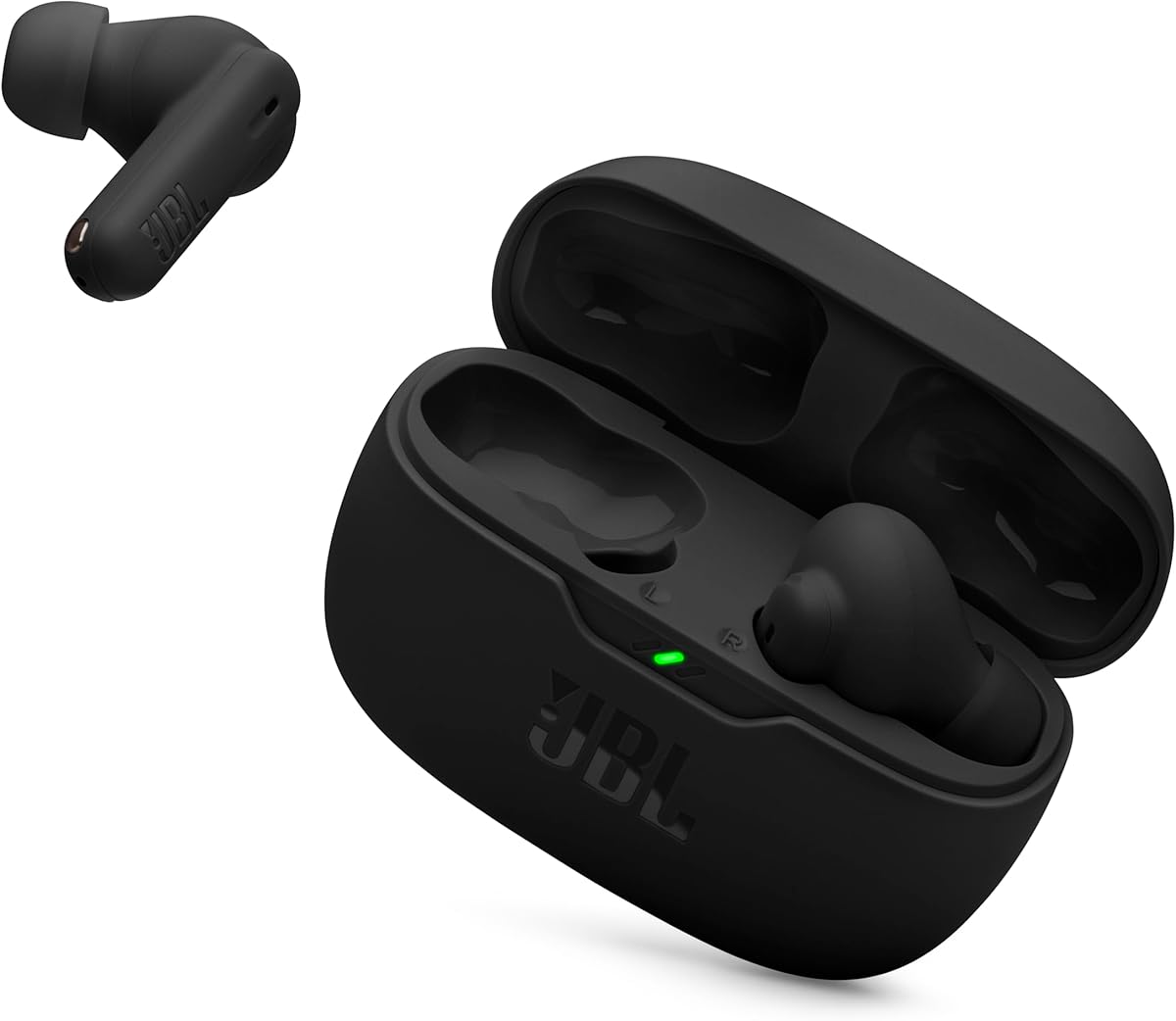
The JBL Vibe Beam 2 has a 4.1 rating and offers a conventional in-ear experience with active noise cancellation, ambient awareness, and app-based sound adjustment. It is a practical choice for sensitive ears that tolerate silicone tips but want more control over environmental noise.
We may earn a commission when you buy through this link, at no additional cost to you.
Its noise-control system can reduce distracting background sound, while Smart Ambient lets outside audio back in for conversations or awareness. The included 8mm dynamic drivers produce JBL Pure Bass sound, and the JBL Headphones app provides preset and custom EQ options along with voice prompts and five Relax Mode sounds.
Call handling is supported by two microphones in each earbud. The stated total playback is 40 hours with ANC off, and a ten-minute USB-C charge provides another three hours. That makes it a straightforward all-purpose option for office use, travel, and everyday listening.
Sensitive-ear users should recognize that conventional in-ear models depend on tip size and seal pressure. If the Vibe Beam 2 is comfortable, its noise cancellation and customization are valuable. If pressure is a recurring problem, an open-ear model may be the safer starting point.
Active noise cancellation supports focused listening, while Smart Ambient provides a quick transition toward awareness. That flexibility can reduce the need to remove the earbuds when someone speaks or an important environmental sound arises.
The app allows users to select an EQ preset or create a custom profile. Five Relax Mode sounds add a dedicated option for winding down, although their exact character will depend on personal preference.
We may earn a commission when you buy through this link, at no additional cost to you.
The JLab Go Air Pop receives a 4.4 rating and is the best budget-oriented pick in this guide. Its main advantage is a compact, approachable design that includes small, medium, and large gel tips, allowing users to find a less intrusive seal without changing to a different model.
We may earn a commission when you buy through this link, at no additional cost to you.
The earbuds are 15% smaller than the previous generation, which may benefit listeners with smaller ear canals. The included gel tips offer three size options, while IPX4 protection adds basic resistance to sweat and light rain. Bluetooth 5.3, Dual Connect, and a MEMS microphone make the model convenient for calls and switching between independent earbuds.
Sound customization is handled through three built-in EQ3 profiles: Signature, Bass Boost, and Balanced. The JLab app provides more detailed EQ adjustment and touch-control management. Battery life reaches more than 35 hours in total when the case is included, making it practical for commuting and regular work use.
There is no active noise cancellation, so the Go Air Pop cannot suppress a café or airplane cabin as effectively as some alternatives. The tips still create an in-ear fit, which may not be appropriate for listeners who cannot tolerate canal contact. For those who can wear gel tips comfortably, it delivers useful features at a restrained budget.
A 15% reduction in housing size can make the Go Air Pop easier to position for listeners with smaller ears. Combined with three tip sizes, it provides more ways to adjust the fit than a model supplied with a single fixed tip.
Dual Connect lets either earbud operate independently, which is helpful for keeping one ear open during a call. The three EQ profiles and app controls provide sound variety without requiring advanced audio knowledge.
We may earn a commission when you buy through this link, at no additional cost to you.
The Soundcore P30i has a 4.3 rating and combines active noise cancellation, transparency mode, app customization, and a charging case that doubles as a phone stand. For sensitive listeners who need environmental noise control but can tolerate an in-ear fit, it offers an unusually useful feature set.
We may earn a commission when you buy through this link, at no additional cost to you.
Its advanced active noise cancelling system is advertised to reduce noise by up to 42dB, while adaptive technology selects a level based on outside sound. Transparency mode gives listeners a way to hear more of their surroundings without removing the earbuds. Four microphones with AI enhancement are intended to improve voice pickup during calls.
Audio comes from 10mm drivers with BassUp technology for stronger bass. The soundcore app adds EQ modes and adjustable noise-cancelling settings. Battery life reaches up to 10 hours per charge and 45 hours with the case when ANC is off, while a ten-minute quick charge adds two hours of use.
The charging case's rear panel supports hands-free phone viewing, making the P30i particularly convenient for travel. As with other sealed earbuds, the included tips may pressure sensitive ear canals, and perceived noise-cancelling performance varies by ear shape and environment. Still, the combination of adaptive controls and practical charging is well balanced.
The adaptive system detects external sound and selects an appropriate cancellation level. Users can also move between stronger isolation and transparency, which is useful when comfort and awareness need to take priority over uninterrupted audio.
The case converts into a phone stand, adding value beyond battery storage. It is especially useful for watching video during a journey, while the quick-charge function helps maintain playback between activities.
We may earn a commission when you buy through this link, at no additional cost to you.
The L8 Pro Sleep Earbuds have the highest supplied rating at 4.8 and specialize in compact, lightweight listening for sleep. Each earbud weighs only 3.0g and follows a contoured shape intended to sit comfortably even when the wearer lies on one side.
We may earn a commission when you buy through this link, at no additional cost to you.
Its standout feature is the full-color LED touch screen on the charging case. The display controls playback, track changes, calls, volume, voice-assistant access, brightness, language, sleep mode, timer, and earbud location. Sleep mode is particularly relevant because it prevents audible low-battery and power-off notifications from interrupting rest.
The 13mm in-ear drivers provide strong bass, clear midrange, and bright treble, while five EQ modes cover standard, classic, jazz, rock, and pop preferences. Battery life reaches six to eight hours per charge and up to 48 hours with the case. USB-C charging is advertised as completing a full charge in about 90 minutes.
Its 4.8 rating should not be treated as universal proof that the earbuds will suit every sensitive ear. The in-ear acoustic structure still enters the canal, and the controls may be more elaborate than some users want. Nevertheless, for side sleepers who want extremely light earbuds and do not mind sealed tips, the sleep-focused design is unusually thorough.
The compact, contoured housing is intended to reduce pressure when a pillow rests on one ear. At only 3.0g per earbud, it also places minimal downward weight on the ear during prolonged use.
The touch-screen case makes it possible to manage sound without waking a partner or removing an earbud. Sleep mode also suppresses common battery and shutdown alerts that could disrupt the intended sleep routine.
We may earn a commission when you buy through this link, at no additional cost to you.
The D20 Mini ANC Sleep Earbuds carry a 4.6 rating and focus on a narrow but important need: lightweight audio and background-noise reduction during rest. Their 3.0g housings, skin-friendly silicone tips, and rounded shape are designed to reduce pressure for side sleepers.
We may earn a commission when you buy through this link, at no additional cost to you.
Dedicated Sleep Mode locks the touch controls, preventing accidental presses against a pillow, and mutes low-battery voice alerts. This is a thoughtful distinction for sleep use because a standard touch-sensitive earbud can react when compressed against bedding.
Active noise cancellation targets lower-frequency background sounds such as air-conditioning hum, distant traffic, and consistent snoring. The product description appropriately notes that sharp, high-frequency noises may not be eliminated. For ambient audio, meditation tracks, or white noise, that limitation is less significant than it would be in a conversation-heavy setting.
Four microphones support environmental noise cancellation for clearer voice pickup, while 14.2mm dynamic drivers deliver the playback. The case supplies additional charges, although actual runtime varies with volume and ANC use. Sensitive users who dislike any tip inside the canal should still avoid this model, but those who tolerate a seal will find it focused and thoughtfully designed.
The ultra-soft silicone tips are intended to reduce canal pressure, and the rounded housings follow the inner-ear curve. These attributes make the D20 more suitable for sleep than many earbuds with bulky, sharply angled components.
Locking the touch controls protects against accidental changes while lying on a pillow. Muting low-battery announcements creates a quieter environment for people who use audio to relax, meditate, or fall asleep.
We may earn a commission when you buy through this link, at no additional cost to you.
The TOZO NC9 has a 4.3 rating and offers one of the broadest selection of replaceable eartips in this guide. Six sizes give sensitive listeners more opportunities to find a seal that feels secure without excessive pressure, while the ergonomic shape is intended to remain stable during daily use.
We may earn a commission when you buy through this link, at no additional cost to you.
Hybrid active noise cancellation is advertised with a maximum reduction depth of 45dB. Transparency mode lets outside sound return, and six microphones with environmental noise reduction support clearer calls in busy settings. These controls make the NC9 suitable for commuting, travel, remote work, and exercise.
Sound comes from 10mm drivers using OrigX Acoustic 2.0 technology. The TOZO app provides numerous EQ options, noise-control adjustments, bass changes, and shared sound profiles. Its charging case has an LED battery display, while the stated total runtime reaches 60 hours with ANC off and 40 hours with ANC on.
IPX8 water resistance is a notable benefit for users who sweat heavily or encounter rain. The trade-off is feature density: touch controls, app settings, multiple modes, and numerous EQ choices may require more adjustment than a simpler earbud. For someone who prioritizes finding the right tip, however, the six-size system is a meaningful advantage.
A broader tip range can help users avoid a tip that is too large for the canal or too small to feel stable. It is one of the most direct ways an in-ear product can accommodate differences between left and right ear anatomy.
The case provides a large claimed total runtime, and its LED display shows remaining battery. This makes it easier to plan charging without waiting for a low-battery alert during a commute or overnight session.
We may earn a commission when you buy through this link, at no additional cost to you.
The Bose QuietComfort Earbuds have a 3.9 rating and offer a premium combination of active noise cancellation, rich audio, and fit customization. Their most relevant feature for sensitive ears is the inclusion of three eartip sizes and three stability band sizes, allowing users to refine both seal pressure and support.
We may earn a commission when you buy through this link, at no additional cost to you.
The earbuds use Bose noise cancellation to reduce distractions and include a wired USB-C cable with a wireless charging case. Up to 8.5 hours of playback are stated per charge, and a 20-minute case charge can add up to two hours. Bluetooth multipoint allows a connection to multiple devices at once.
Call handling, customizable tap controls, and the Bose QCE app add further utility. The app adjusts bass, midrange, and treble, checks battery status, and manages connected devices. IPX4 rating and the stated suitability for running and workouts add some flexibility beyond stationary listening.
The lower supplied rating should not be overlooked, particularly in a category where comfort varies so much between individuals. The single-charge battery figure is also shorter than several competing models, although the case offsets some of that limitation. Bose remains a credible premium choice when noise cancellation, familiar sound quality, and fit adjustment are the priorities.
The three eartip sizes adjust the canal seal, while the three stability band sizes change how the earbud sits around the outer ear. Sensitive users can work on both areas rather than accepting a fixed compromise.
Active noise cancellation targets environmental distractions, while multipoint allows two devices to remain connected. Together they support travel, office work, and daily calls without repeated re-pairing.
We may earn a commission when you buy through this link, at no additional cost to you.
Comfort is personal, so the most important step is identifying what causes discomfort. Ear shape, tip pressure, ear-hook contact, weight, seal, and listening environment all influence whether an earbud feels comfortable over time.
Open-ear earbuds rest around the outer ear and leave the canal unobstructed. That approach can reduce pressure, improve awareness, and work well with glasses, making it a strong starting point for listeners who dislike the sensation of inserted tips. In-ear models generally create a better seal and can deliver stronger bass and more consistent noise control, but they also place greater physical pressure inside the ear canal.
Choose open-ear models when canal contact is the main concern. Choose in-ear models only after confirming that a properly sized tip can be worn without pain, itching, or pressure buildup.
A secure fit should feel stable without requiring the earbud to be pushed deep into the canal. Look for several eartip sizes, shallow-fit shapes, adjustable bands, or rotating positions. The TOZO NC9 offers six replaceable sizes, the JLab Go Air Pop includes three gel sizes, and the Bose QuietComfort Earbuds combine three tips with three band sizes.
Prioritize a fit you can maintain for hours without pain. A loose earbud that requires constant adjustment is not a good solution, even when its sound or battery specifications look impressive.
Small, light earbuds place less weight on the ear and reduce the pull that can become uncomfortable over a long session. The SHOKZ OpenDots ONE weigh 6.5g, while the L8 Pro and D20 sleep earbuds use 3.0g housings. Open-ear products also avoid contact with the inner canal, although their clips or hooks can create pressure around the outer ear.
Compare both weight and contact points. A very light earbud may still be uncomfortable if a large tip forces a deep seal, while a heavier open-ear model may be better tolerated inside the ear.
Sensitive listeners often want less outside noise but may also need to hear alarms, traffic, or conversations. Active noise cancellation is most useful on the JBL Vibe Beam 2, Soundcore P30i, TOZO NC9, and Bose QuietComfort Earbuds. Open-ear models provide natural awareness without requiring a mode change, while the D20 targets lower-frequency noise during sleep.
Choose cancellation when background sound causes fatigue or makes concentration difficult. Choose open-ear listening or transparency when remaining aware of the surroundings is more important than maximum isolation.
Workout earbuds need a stable fit and resistance to perspiration. The Soundcore Sport X20 uses adjustable ear hooks and a SweatGuard-protected cavity. The TOZO NC9 has an IPX8 rating, the JLab Go Air Pop carries IPX4 protection, and the Soundcore V20i and Bose QuietComfort Earbuds are also listed with IPX4 ratings.
Check both the stability method and the water-resistance specification. A secure hook can matter more than a high rating when earbuds repeatedly slide during running or gym exercises.
Battery life should be evaluated both per charge and with the charging case. The TOZO NC9 claims up to 60 total hours with ANC off, the Soundcore P30i reaches 45 hours with ANC off, and the SHOKZ OpenDots ONE provides up to 40 hours with its case. For sleep earbuds, the L8 Pro lists up to 48 total hours and the D20 includes multiple case recharges.
Match the battery specification to your routine. Long case runtime is useful for travel, while fast charging and a visible battery status can be more helpful for someone who uses earbuds every day.
Microphone count is only one part of call quality, but it can indicate how much processing the design supports. The Soundcore V20i and P30i use four microphones, the D20 has four built-in microphones with ENC, and the JBL Vibe Beam 2 uses two microphones in each earbud. These features are especially useful for commuting, remote work, and calls from busy shared spaces.
If calls are frequent, prioritize models with multiple microphones, environmental noise reduction, and a transparent mode. Test microphone performance in a realistic setting when possible, since environmental acoustics can outweigh the listed specifications.
App support can improve fit-related comfort indirectly by providing EQ, ambient controls, touch customization, device management, and firmware updates. Soundcore models support features such as EQ modes, HearID, and Spatial Audio; TOZO provides extensive EQ options; JBL, JLab, Bose, and Shokz also offer app-based sound and control adjustments.
Choose an app that matches your technical comfort. Simpler EQ choices are easier for casual listeners, while extensive presets and sharing features may be more valuable if you frequently adjust sound for different activities.
Begin with the smallest or most open fit that remains stable. For in-ear models, clean and dry the ear canal area, attach the appropriate tip, and place each earbud without pushing it deeper than necessary. Open-ear models should be rotated or adjusted around the outer ear without twisting the clip, hook, or cable.
For sensitive ears, begin with lower volume and increase gradually. Use ANC or transparency according to the environment, but take listening breaks if the earbuds create a feeling of pressure. Clean removable tips with a soft, dry cloth or a manufacturer-approved method, and wipe the housings without pushing moisture into the speaker openings.
Store the earbuds in their case when they are not being used, and keep the charging contacts clean and dry. Check the app for firmware updates, review EQ and fit settings after a few sessions, and stop using damaged tips or cables. If pain, itching, drainage, or persistent discomfort occurs, remove the earbuds and consult a qualified healthcare professional.
Open-ear models are usually the least intrusive because they do not insert a tip into the ear canal. The Soundcore V20i and SHOKZ OpenDots ONE are the leading open-ear choices in this guide. A very small in-ear model with a soft tip can also work, but it depends on the user's ear anatomy and ability to wear a seal without discomfort.
Open-ear designs can work well with glasses because they avoid the temple arm interfering with a traditional earbud housing. Fit still varies, so users should compare the earbud shape with their particular frames. The V20i offers four positions, while the OpenDots ONE uses a flexible clip that can be repositioned around the outer ear.
The L8 Pro and D20 are explicitly designed with side sleeping in mind. Their small 3.0g housings, rounded shapes, and soft silicone tips are intended to reduce pressure against a pillow. A low or medium volume and a properly sized tip can further improve comfort, although users who dislike all canal contact should consider open-ear alternatives.
Remove them immediately and allow the ears to rest. Do not compensate by pushing the earbuds more deeply into the canal, since that can increase pressure. Review tip size, worn-earbud cleanliness, volume, listening duration, and the use of ANC or Spatial Audio, and consult a healthcare professional if pain persists or is accompanied by itching, drainage, or hearing changes.
Not necessarily. Active noise cancellation can reduce mental fatigue caused by persistent background sound, but it does not eliminate physical pressure from an in-ear seal. Open-ear models provide natural environmental awareness without ANC, while models such as the P30i, Vibe Beam 2, NC9, and QuietComfort Earbuds are better suited to users seeking stronger isolation.
The Soundcore Sport X20 is the most purpose-built workout selection because its adjustable hooks improve stability and distribute the fit around the ear. The TOZO NC9 offers six tip sizes and IPX8 water resistance, while the JLab Go Air Pop provides a smaller housing and IPX4 protection. Stability, moisture resistance, and the absence of pressure should all be considered.
A lower cost does not inherently mean poor comfort. The JLab Go Air Pop includes three gel tip sizes, a compact housing, IPX4 protection, and app-based EQ controls. It can be a practical entry point, but ear sensitivity varies greatly, and the inclusion of multiple tips only helps if at least one size creates a comfortable, stable seal.
Choose open-ear earbuds if physical comfort, airflow, glasses compatibility, or continuous awareness matters most. Choose active noise-cancelling models if you want to reduce engine, office, or street noise in a sealed in-ear format. Trying both styles is ideal, because a listener may prioritize comfort while still wanting stronger isolation for travel.
The Soundcore V20i is the strongest all-around recommendation because it combines open-ear comfort, four positioning options, strong drivers, clear calls, and app customization. The SHOKZ OpenDots ONE is especially appealing for listeners who want an even lighter open-ear format, while the Bose QuietComfort Earbuds provide premium customization and active noise cancellation for those who can comfortably wear a seal.
Budget shoppers should consider the JLab Go Air Pop, and sleep-focused users can compare the L8 Pro with the D20. Whichever model you choose, prioritize minimal canal pressure, the correct tip size, a stable fit, and comfortable control placement. Open-ear designs are the safest starting point when the problem is insertion pressure, while compact sleep models suit listeners who want to lie on their side.
Ratings, specifications, product listings, and prices can change, so confirm the current details on the linked Amazon page before buying. The right choice for difficult sensitive ears is ultimately the one you can wear comfortably for the length of time you need, with a fit that does not require constant readjustment.