
Forensics USA NIST 4 Gas Monitor
4.4Editor score
Four-gas workplace coverage
NIST traceable calibration
Time-stamped alarm records
Compare 10 leading hydrogen sulfide monitors for accuracy, alarms, battery life, data logging, portability, and field reliability in this detailed expert
A hydrogen sulfide monitor is specialized safety equipment for detecting H2S in workplaces, confined spaces, and other potentially hazardous environments. A dependable unit should combine a suitable measurement range, clear alerts, rugged construction, and straightforward operation. The right choice depends heavily on whether you need dedicated personal monitoring, fixed-area coverage, or recorded readings.
The products in this guide range from compact single-gas detectors to four-gas monitors that also track carbon monoxide, oxygen, and combustible gases. We compared the listed specifications, alarm systems, data capabilities, power options, environmental features, and intended applications. This guide also considers the differences between zero-maintenance, rechargeable, fixed-probe, and multi-gas designs.
Each review explains who the monitor is best suited for and where its capabilities may fall short. The top picks highlight strong options for budget-conscious users, detailed monitoring, and broader workplace coverage. Features and availability can change, and product prices fluctuate, so confirm the current listing, included accessories, and local safety requirements before purchasing.
4.4Editor score

5.0Editor score

4.6Editor score
This side-by-side comparison covers dedicated H2S instruments and four-gas monitors, highlighting sensor type, display, alert modes, logging, power, and portability.

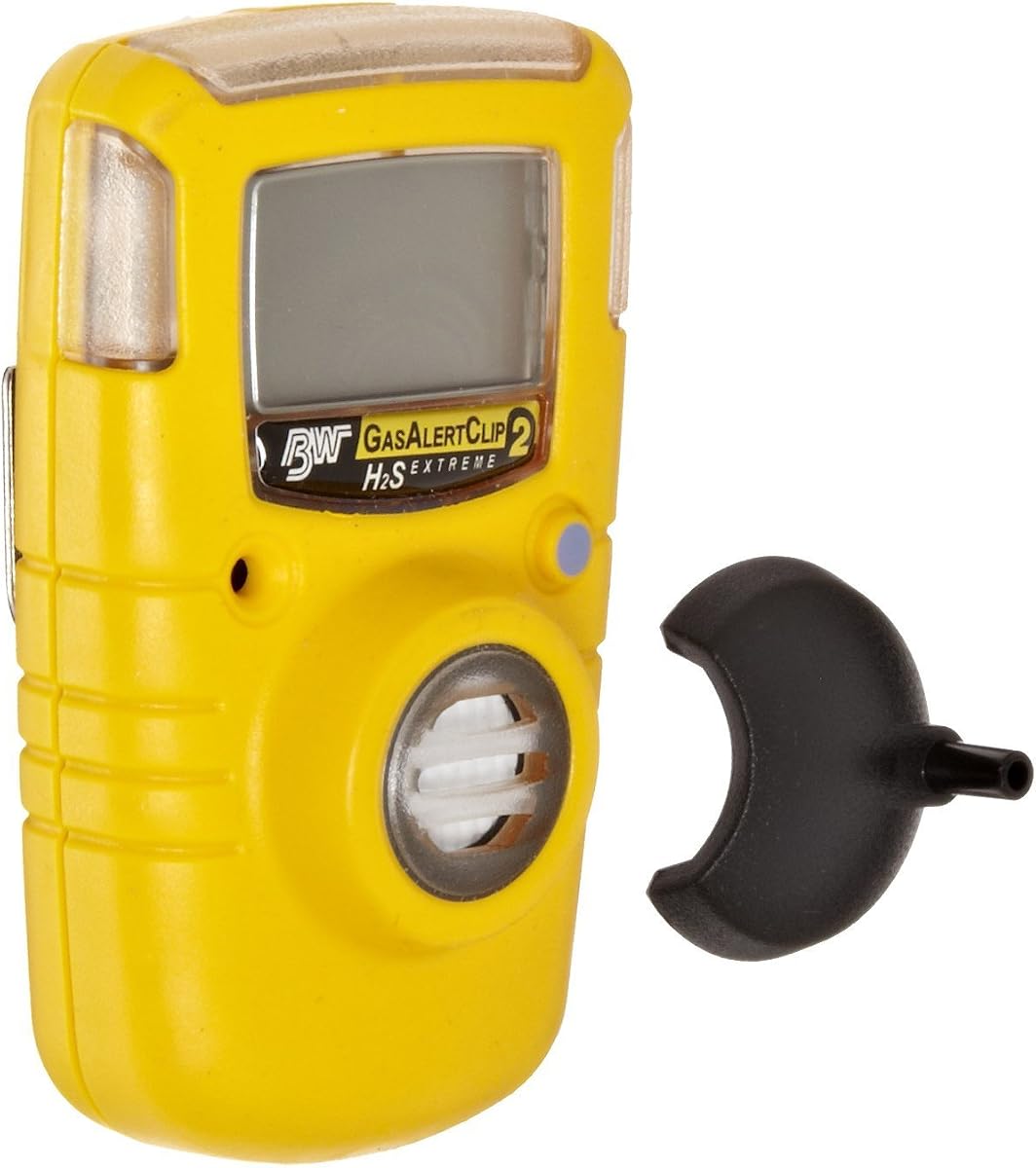


The Honeywell BWC2-H is a compact, dedicated hydrogen sulfide detector with a 4.6 rating. Its strongest qualities are simplicity, portability, and the ability to log recent gas events and bump-test results. It is built for users who need reliable personal H2S awareness without the complexity or bulk of a multi-gas instrument.
We may earn a commission when you buy through this link, at no additional cost to you.
Automatic logging of the 35 most recent gas events and bump-test results gives supervisors a useful record without requiring a separate handheld for every deployment. High and low alarm setpoints can be configured before activation, while compatibility with IntelliDoX, microdock II, and Fleet Manager II software supports managed safety programs. Its one-button design also reduces the training burden for workers who will wear it throughout a shift.
The obvious limitation is that it monitors only hydrogen sulfide. It cannot check oxygen deficiencies, carbon monoxide, or combustible gases, so it is not a substitute for a full four-gas entry monitor in environments where multiple hazards are expected. Users should also consider the need for compatible docks and software when deciding whether the logging and fleet-management features align with their program.
This is a strong budget pick for contractors, facility teams, and industrial workers who need a dedicated H2S clip-on monitor. It is particularly appealing for organizations already using Honeywell or BW Technologies accessories and management systems. For users who need broader gas coverage, a four-gas model is the more versatile choice.
The clip-on format and one-button interface make this detector approachable for regular wear. Its automatic records help supervisors review exposure events and bump-test outcomes without turning every worker into a data specialist.
Logging the 35 most recent gas events and bump-test results adds accountability to a relatively simple device. IntelliDoX, microdock II, and Fleet Manager II compatibility broadens its usefulness for organized deployments.
We may earn a commission when you buy through this link, at no additional cost to you.
The Forensics Hydrogen Sulfide Analyzer combines a 5.0 rating with a feature set aimed at detailed measurement. It measures 0–100 ppm H2S at 0.1 ppm resolution and uses a built-in pump with a four-foot probe. That configuration makes it especially relevant to users who need sampled readings, visual trends, or a digital record rather than only a simple personal alarm.
We may earn a commission when you buy through this link, at no additional cost to you.
The color display and graph functions make concentration behavior easier to interpret, especially when readings change over time. USB computer data logging is included, and the monitor timestamps alarm events with date and time. Its robust high-strength ABS body, anti-slip rubber grip, and water-, dust-, and explosion-resistant construction support use in demanding environments.
The four-foot probe also represents a tradeoff. A wearable clip-on unit is more convenient for moving workers, whereas this analyzer makes more sense for a stationary workstation, vehicle, or area being surveyed. As a dedicated H2S instrument, it does not report oxygen, carbon monoxide, or combustible levels, so users may still need separate equipment for broader atmospheric checks.
The analyzer is our Editor's Choice because it offers the most clearly documented combination of fine resolution, active sampling, trend graphics, and computer logging. It suits environmental, industrial, forensic, and technical users who value detailed records. For a mobile worker needing broader gas coverage, the Forensics four-gas monitor is the more appropriate companion.
A 0.1 ppm resolution display provides greater detail than a basic ppm readout. The graph functions can make short-term changes easier for a trained operator to recognize and document.
The built-in pump and four-foot probe support remote-area sampling. USB logging and date-stamped alarm events create a clearer record for later analysis, review, or compliance support.
We may earn a commission when you buy through this link, at no additional cost to you.
The MSA Altair H2S is a purpose-built personal gas monitor designed around a long-lived sensor, straightforward controls, and demanding field conditions. Its listing describes patented sensors with an operating life of over two years, while LED, audible, and vibrating alarms provide several ways to notice a hazard. It is built for users who value established personal-protection ergonomics over multi-gas versatility.
We may earn a commission when you buy through this link, at no additional cost to you.
One-button operation reduces the learning curve, and the compact format is appropriate for workers who need continuous H2S awareness. The listed resistance to dust and water, combined with high RFI resistance, supports use in industrial settings where electronic interference and rough conditions may be concerns. Multiple alarm modes also help users who may not hear a visual cue immediately.
A potential drawback is the lack of listed specifications for event logging, data output, or display type. Buyers who require detailed records may need a more instrumented model. It also only detects hydrogen sulfide, so it should not be treated as a complete atmospheric assessment tool for spaces where oxygen or other hazardous gases also require measurement.
The Altair is a sensible option for facilities that already work with MSA equipment or want a simple, rugged H2S monitor. Its long sensor life can support a disciplined maintenance strategy, although users should follow the manufacturer's guidance for calibration and sensor management. The absence of a published rating makes specification verification especially important.
The lightweight form and one-button interface keep routine use uncomplicated. LED, audible, and vibration alarms give wearers several ways to respond when attention is divided.
The stated sensor life exceeds two years, potentially simplifying replacement planning. Dust, water, and RFI resistance add confidence in harsh industrial environments.
We may earn a commission when you buy through this link, at no additional cost to you.
The GasAlertClip Extreme is a dedicated H2S detector centered on minimal maintenance. Its two-year version requires no calibration, sensor replacement, battery replacement, or battery charging, according to the supplied information. That simplicity is attractive for organizations deploying many personal monitors and trying to reduce routine servicing demands.
We may earn a commission when you buy through this link, at no additional cost to you.
Automatic event logging creates an accessible history, while a full-function self-test checks the sensor, battery status, circuit integrity, and audible and visual alarms. Wide-angle visual alarm bars improve visibility, and the built-in concussion-proof boot adds protection against impacts. Water resistance and compatibility with the MicroDock II test station further support professional use.
The main constraint is that it monitors only one gas. It cannot substitute for a four-gas monitor during entry into spaces where oxygen deficiency, carbon monoxide, or combustible vapors may also be present. Another consideration is the two-year service period, which is shorter than the over-two-year sensor life stated for the MSA model reviewed earlier.
GasAlertClip Extreme is best for facilities and contractors seeking a simple, continuous personal H2S monitor with minimal upkeep. MicroDock II compatibility can improve fleet administration when that infrastructure is available. Buyers should confirm the detector's current service configuration, event-logging needs, and compatibility with existing safety-management processes.
Eliminating routine calibration, sensor replacement, and battery charging can simplify device management. The result is a monitor designed to remain continuously deployed with less hands-on attention.
Wide-angle visual alarm bars make the warning conspicuous, while the self-test covers key device functions. Automatic event recording provides a straightforward history for program administrators.
We may earn a commission when you buy through this link, at no additional cost to you.
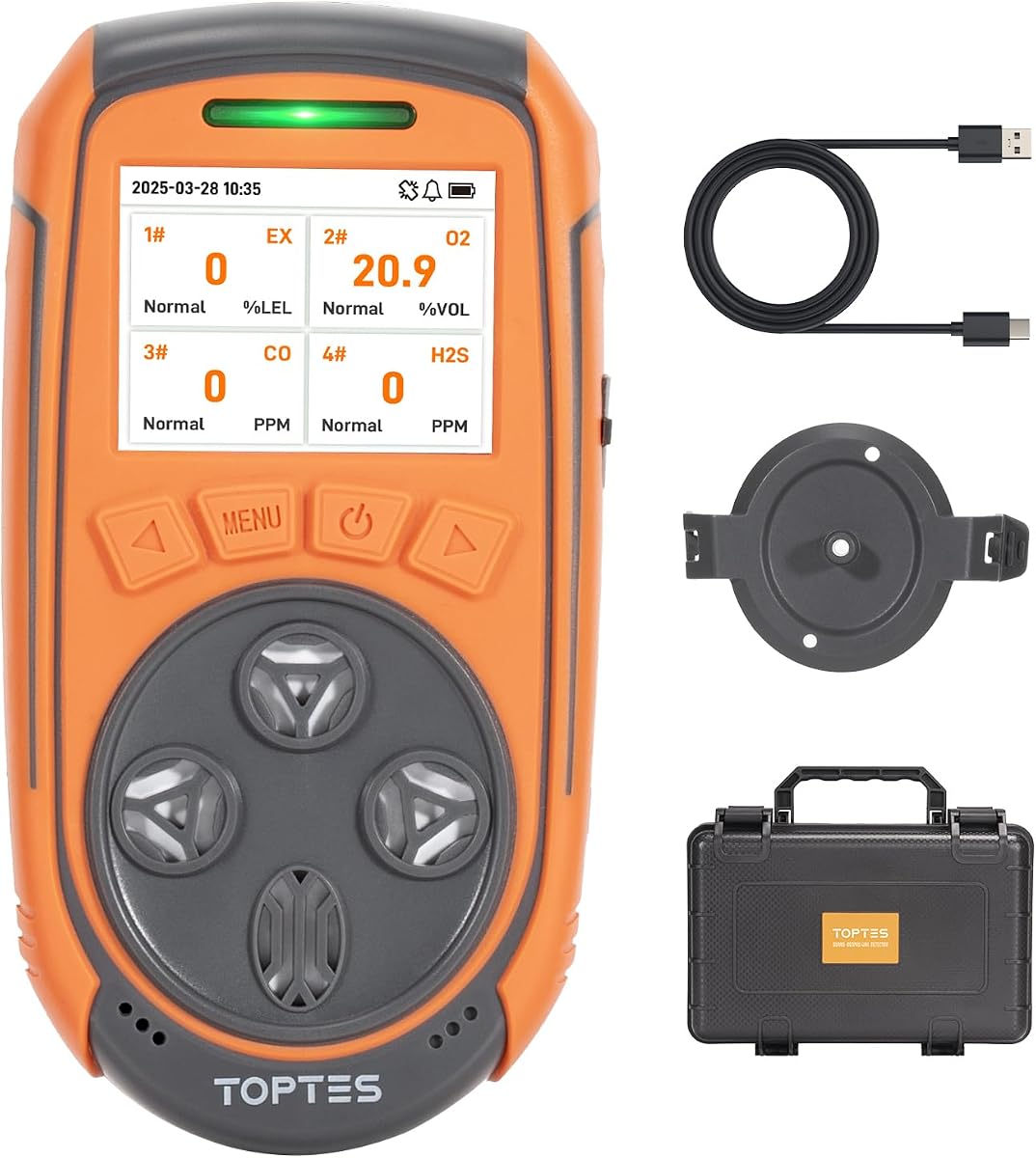
The TopTes Guard-863Pro is one of the most feature-rich four-gas monitors in this roundup, combining H2S, carbon monoxide, lower explosive limit, and oxygen monitoring. It has a 4.7 rating and a 0.5-second response time. The TFT color screen shows real-time concentration matrices and trend curves, making it a strong fit for workers who need more context than a basic H2S-only display.
We may earn a commission when you buy through this link, at no additional cost to you.
Sound, light, and vibration alarms provide a triple-alarm system that continues until readings return to safe levels. USB export includes alarm records, fault logs, calibration records, and operation history, which is useful for both incident review and routine program management. The stated oxygen sensor lifespan of up to five years is another notable feature.
Power management is another strength. The included charging cable supports a listed 2.5-hour full charge, and the battery provides more than 18 hours of continuous operation. The back clip makes the unit easier to carry, and the package includes a standard gas hood. The tradeoffs are that this rechargeable, multi-function design has more settings and consumables than a disposable or maintenance-light dedicated monitor.
Guard-863Pro is a strong all-around option for industrial manufacturing, mining, agriculture, emergency rescue, and other work where several atmospheric hazards may occur. Home use is listed as a possible application, but workplace safety programs should remain the primary reason to select a gas monitor. It is a strong choice for teams that value trends, exported records, and four-gas coverage in one housing.
Monitoring H2S, CO, LEL, and O2 helps workers consider several critical atmospheric hazards with one device. This broader coverage is especially practical for industrial and confined-space programs.
The TFT display presents concentration matrices and trend curves for quick interpretation. USB export supports analysis of alarms, faults, calibration records, and operating history.
We may earn a commission when you buy through this link, at no additional cost to you.
The TopTes Guard-101 offers four-gas detection with a straightforward set of safety features. It monitors H2S, carbon monoxide, combustible gas at the lower explosive limit, and oxygen, while its listed response time is 0.5 seconds. A 4.1 rating reflects a capable general-purpose unit, though the available rating is below those of several alternatives in this guide.
We may earn a commission when you buy through this link, at no additional cost to you.
The device uses LED, vibration, and sound alarms, and it continues alarming until readings return to normal. Alarm-record storage lets users revisit monitoring events, while a back clip supports convenient wear. Password protection is designed to reduce accidental operation, and the initial password is listed as 69. High-strength ABS construction provides water, dust, and explosion-resistant characteristics.
Battery life is stated at up to 14 hours, which is shorter than the Guard-863Pro's more than 18 hours. The product information does not describe a color display or expanded USB export functions, so buyers prioritizing detailed trends or extensive data transfer should examine the higher-specification model instead. The stated certification should also be verified for the user's location and application.
Guard-101 is a practical option for industrial manufacturing, mining, agriculture, emergency response, and other environments where one portable instrument can cover four important hazard categories. Its straightforward controls, clip-on design, and three alarm types make it approachable. It is especially useful for users who want broader coverage than a dedicated H2S detector without the most advanced display features.
Four-gas support reduces the need to carry separate devices for common atmospheric hazards. The compact clip-on format keeps the instrument practical for workers who move through changing environments.
Combining LED, sound, and vibration helps a wearer notice warnings in noisy, bright, or otherwise distracting settings. Continued alarming until normal conditions return reinforces the need for an immediate response.
We may earn a commission when you buy through this link, at no additional cost to you.
The TopTes Guard-633 is a clip-on hydrogen sulfide monitor built around fast response, long runtime, and user-adjustable warnings. It has a 3.9 rating, a listed 0.5-second response time, and up to seven days of continuous operation after a five-hour charge. It is aimed at users who need dedicated H2S coverage without carrying a multi-gas instrument.
We may earn a commission when you buy through this link, at no additional cost to you.
LED, vibration, and audible alarms provide three ways to notice rising concentrations. Custom alarm thresholds give the user more control over warning levels, and data logging supports historical safety records. A real-time battery display and low-battery alert help prevent an unnoticed power loss during extended work periods.
The high-strength ABS shell is described as waterproof, dustproof, and explosion-proof, and the clip-on design improves portability. The package includes calibration certificates and certification documents, which is helpful for procurement records. However, the supplied information does not state a measurement range or resolution, so buyers needing precise display specifications should verify them before purchase.
Guard-633 is best for long-duration, H2S-focused tasks where a worker may keep the same device clipped on for several days. Its three alarm modes and adjustable thresholds add flexibility, while the modest rating suggests buyers should examine the documentation closely. It does not cover oxygen, carbon monoxide, or combustible gases and is not a substitute for a full entry monitor.
Long continuous runtime is the standout feature for extended assignments. A five-hour charge and real-time battery level support planning around multi-day deployments.
Adjustable alarm thresholds let users set warnings according to their work environment. LED, sound, and vibration modes provide redundancy for different working conditions.
We may earn a commission when you buy through this link, at no additional cost to you.
The Portable H2S Gas Detector is a lightweight, single-gas unit designed around straightforward hydrogen sulfide readings. It measures from 0 to 100 ppm with a stated accuracy of plus or minus 5%. Its 3.8 rating is the lowest among the rated products here, so the attractive compact format should be weighed against more limited documentation and features.
We may earn a commission when you buy through this link, at no additional cost to you.
A backlit LCD provides a clear ppm display, and a built-in buzzer and red indicator light activate when levels exceed the safe thresholds. The clip-on body is compact and intended for hands-free carrying. An IP65 rating provides protection against dust and water, which is useful for industrial and outdoor settings.
Unlike several competing products, the supplied information does not mention event logging, data export, calibration certificates, a self-test, or multiple alert technologies beyond the buzzer and red light. Password protection is included, with an initial password of 1111. Users who need documented records or a broader choice of alerts may prefer a more instrumented model.
This detector is best for basic personal H2S awareness, contractors, and settings where a lightweight screen and audible-visual warning are enough. It may be useful as a supplementary awareness device, but it should not automatically be treated as a complete confined-space instrument. Confirm accuracy requirements, calibration practices, and the appropriate safety certification before deploying it in a regulated program.
The backlit LCD makes the ppm reading visible in low-light conditions. A straightforward display is valuable for users who prioritize immediate awareness over advanced menus.
The clip-on housing is easy to carry, while the buzzer and red indicator provide two warning methods. IP65 protection supports use where dust and occasional water exposure are concerns.
We may earn a commission when you buy through this link, at no additional cost to you.
The Forensics USA NIST Calibrated 4 Gas Monitor combines H2S, oxygen, carbon monoxide, and combustible-gas sensing in a robust package. It has a 4.4 rating and a stated detection error of no more than plus or minus 5% full scale. Its response time is under 30 seconds, and the supplied information confirms USA NIST traceable calibration with included calibration and QA certificates.
We may earn a commission when you buy through this link, at no additional cost to you.
The instrument uses high-quality electrochemical sensors and offers zero and span calibration options. Adjustable audio, visual, and vibration alarms can be set for different preset levels, while digital time stamps add context to recorded alarms. The body uses high-strength ABS with anti-slip grip rubber and is described as waterproof, dustproof, and explosion-proof.
Its listed response time is notably slower than the 0.5-second response claimed for both TopTes four-gas models. That does not make it unsuitable for every task, but it matters when rapid changes in a rapidly changing atmosphere are expected. Buyers should also verify display details, probe configuration, charging method, and applicable certifications because they are not specified in the supplied information.
This is our Best Premium pick because it pairs broad gas coverage with documented calibration provenance and formal certificates. It is well suited to technical, industrial, and inspection work where traceability and recordkeeping matter. The included one-year limited warranty and USA-based product verification add further confidence, although the final suitability decision should follow a site-specific risk assessment.
USA NIST traceable calibration, included calibration and QA certificates, and digital alarm timestamps create a stronger documentation trail. These details help technical users connect measurements to formal records.
The electrochemical sensor package covers oxygen, carbon monoxide, H2S, and combustible gases. Adjustable alarms and zero and span calibration options provide flexibility for controlled monitoring programs.
We may earn a commission when you buy through this link, at no additional cost to you.
The Honeywell BW Technologies BW Clip BWC2-H is a compact dedicated H2S monitor for personal protection and organized fleet use. It shares the core design of the rank-one Honeywell listing and carries a 4.4 rating. Its most important strengths are automatic logging, configurable alarm setpoints, hibernation support, and compatibility with established BW Technologies management tools.
We may earn a commission when you buy through this link, at no additional cost to you.
The device logs the 35 most recent gas events and bump-test results, giving administrators a concise record of device history. High and low alarms can be configured before activation, and IntelliDoX, microdock II, and Fleet Manager II software compatibility makes it suitable for organizations using a structured device-management ecosystem. One-button operation and a lightweight housing support routine wear.
As with the other Honeywell BWC2-H listing, the limitation is single-gas coverage. It cannot provide the atmospheric context of a four-gas monitor and should not replace one where multiple hazards must be evaluated. The 35-event log is useful but limited compared with systems designed for extensive USB data export and long operating histories.
This version is a good fit for facilities, contractors, and safety managers who value a simple H2S alarm connected to a fleet-management process. It is especially relevant for organizations that already own compatible docks and software. Confirm the current alarm configuration, event-logging needs, and device-management compatibility before adding it to a deployment.
The single-button interface and compact construction make the BWC2-H easy to deploy and wear. It is a practical choice when H2S is the primary hazard requiring continuous personal monitoring.
IntelliDoX, microdock II, and Fleet Manager II compatibility supports larger device fleets. Recent event and bump-test records help administrators maintain a more visible safety history.
We may earn a commission when you buy through this link, at no additional cost to you.
The right monitor depends on the hazard, mobility of the user, required records, and facility procedures. Review these factors before comparing readings, alarms, and construction.
A dedicated H2S monitor is simpler and may be sufficient when hydrogen sulfide is the only atmospheric hazard requiring continuous measurement. Single-gas units include the Honeywell BWC2-H, MSA Altair, GasAlertClip Extreme, TopTes Guard-633, and the basic portable H2S detector. A four-gas model adds carbon monoxide, oxygen, and lower explosive limit readings, which can be important in industrial, emergency, and confined-space programs where conditions can change quickly.
Choose based on your hazard assessment, not on the number of features. More gases provide broader context but can add cost, training, charging, and maintenance complexity.
The analyzer from Forensics measures 0–100 ppm with 0.1 ppm resolution, while the basic portable H2S detector also states a 0–100 ppm range with plus or minus 5% accuracy. Other single-gas listings do not provide complete range, accuracy, or resolution specifications. Compare those figures with the concentrations expected at your site and with the alarm levels established by your safety program.
Look for both range and resolution. A suitable range must cover expected exposures, while finer resolution can make small changes easier to recognize and document.
The strongest monitors in this group combine audible, visual, and vibration alarms. That redundancy matters in noisy plants, poorly lit areas, and situations where a worker may not be looking directly at the instrument. The Forensics four-gas monitor also allows adjustable alarm levels, while the TopTes Guard-633 supports custom thresholds. Fixed or factory-set alarms may be adequate for standard deployments, but configurable units can suit sites with distinct operating procedures.
Match the warning system to the environment and verify the default setpoints. Always confirm that audible, visual, and vibration alerts are effective for the intended wearer.
Response time indicates how quickly a monitor can react after exposure. The Guard-863Pro and Guard-101 claim a 0.5-second response, while the Forensics four-gas monitor lists a response under 30 seconds. The supplied information does not state equivalent timing for every product. Faster response may be valuable in rapidly changing environments, but it should be considered alongside accuracy, stability, alarm behavior, and the overall risk assessment.
Do not use response time alone to rank safety devices. Confirm the complete specification, measurement method, and suitability for the application before relying on a headline figure.
Data capabilities range from a 35-event log on the Honeywell units to timestamped alarms, graphs, and USB computer logging on the Forensics instruments. The Guard-863Pro can export alarm records, fault logs, calibration records, and operating history. GasAlertClip Extreme also provides automatic event recording. Buyers should identify which records their program must retain and whether the software is included, optional, or requires a compatible dock.
More records are not automatically better; usable, exportable records are what matter. Confirm file formats, storage capacity, software compatibility, and access controls before deployment.
Power strategy affects both deployment time and administrative burden. GasAlertClip Extreme requires no calibration, sensor replacement, battery replacement, or battery charging. Rechargeable models offer longer or more flexible operating periods, including up to seven days for the Guard-633 and more than 18 hours for the Guard-863Pro. A dedicated analyzer may use removable power or a charging method that is not fully described in the supplied information.
Consider shift length, charging access, spare inventory, and sensor service policies. Select a model your technicians can maintain consistently without compromising monitoring coverage.
Industrial use exposes instruments to dust, moisture, impacts, temperature changes, and electromagnetic interference. Several products use high-strength ABS, anti-slip rubber, water-resistant construction, and integrated protective boots. The basic portable H2S detector has an IP65 rating, while the MSA Altair listing highlights dust and water protection plus high RFI resistance. The Forensics units are described as waterproof, dustproof, and explosion-proof.
Choose protection appropriate to the actual site. A rugged housing helps, but it does not replace correct handling, suitable calibration, or compliance with applicable safety rules.
Clip-on personal monitors are convenient for moving workers, while a pump and four-foot probe can make remote-area sampling easier. The Forensics analyzer's built-in pump and extended probe distinguish it from wearable devices and make it well suited to area checks with recorded trends. Personal safety programs also need to account for how quickly a worker can reach a safe exit, maintain the device, and communicate an alarm.
Match the form factor to the task. Do not use a probe-style analyzer as a wearable personal alarm unless the manufacturer explicitly permits it.
Before use, review the manual, understand the display and alarms, verify the sensor and battery condition, and confirm that any required calibration or function test is current. Choose a monitor whose gas coverage, range, and alarm setpoints match the site-specific hazard assessment. For wearable models, position the clip securely in the breathing zone without obstructing the inlet or alarm.
During operation, keep the display and alarm openings clear, remain alert to audible, visual, and vibration warnings, and follow the facility's emergency procedure if an alarm sounds. Do not attempt to silence a warning without identifying and correcting the hazard. For a probe-style analyzer, position the probe where it can represent the intended sampling area and avoid introducing fumes from the device itself.
After a shift, follow the manufacturer's instructions for charging, storage, sensor maintenance, and event downloads. Treat a failed self-test, low-battery warning, fault record, unusual drift, or damaged enclosure as a reason to remove the instrument from service. Use approved procedures for bump tests, calibration, sensor replacement, and dock management, and keep records that show each device's maintenance history.
A single-gas monitor is designed specifically to detect hydrogen sulfide, while a four-gas monitor measures H2S alongside carbon monoxide, oxygen, and combustible gas at the lower explosive limit. Single-gas models are simpler for jobs where H2S is the primary concern. Four-gas instruments provide broader atmospheric context for industrial and confined-space applications, but they require more training, charging, and maintenance.
Only if a site-specific hazard assessment and applicable regulations show that H2S is the only required measurement. A dedicated H2S detector cannot identify oxygen deficiency, carbon monoxide, or combustible vapors. Workers entering enclosed spaces often need an instrument that covers all hazards identified by the assessment, along with an appropriate procedure for testing, communications, and emergency response.
Look for a range that comfortably covers the concentrations expected in your environment and accommodates the alarm levels set by your safety program. The Forensics analyzer and basic portable detector state a 0–100 ppm range, while several other listings do not provide complete range information. Confirm the manufacturer's specifications before selecting a model for a regulated or high-risk application.
Different conditions make it harder to notice one type of alert. A worker may not hear a buzzer in a noisy plant, may not see a light in poor lighting, or may not feel a vibration while wearing heavy equipment. Combining all three alert methods improves the chance that a warning is noticed and acted upon promptly.
No. The GasAlertClip Extreme listing specifically states that it requires no calibration, while the Forensics four-gas monitor offers zero and span calibration options, and some products include calibration certificates. Maintenance requirements vary by design and manufacturer, so users should follow the applicable instructions and document every required test, calibration, and sensor replacement.
It depends on how the device will be managed and whether the employer needs exposure or alarm records. Logging can support review, maintenance tracking, and regulatory documentation, but it adds value only if the information is accessible and retained correctly. Check storage capacity, event limits, export options, software, and dock compatibility before deciding.
The appropriate schedule should follow the manufacturer's instructions and your site-specific safety program. Many programs require a pre-use visual and functional check, while formal bump tests and calibration occur on defined intervals or after events that may affect performance. A monitor that reports a fault, shows abnormal readings, or has a damaged enclosure should be removed from service until properly evaluated.
Some product listings identify home use, but H2S monitors are primarily safety instruments and should be used according to their instructions. Placement, ventilation, response planning, and alarm limits all affect performance. Avoid placing a personal monitor where fumes from the device itself could affect readings, and confirm that the certification and application are appropriate for the location.
The Forensics Hydrogen Sulfide Analyzer stands out for detailed readings, a built-in pump, 0.1 ppm resolution, graph functions, and USB logging, making it the Editor's Choice for sampled technical monitoring. The Honeywell BWC2-H is the Best Budget pick for compact personal protection and fleet-friendly event records, while the Forensics four-gas monitor earns the Best Premium designation through four-gas coverage, NIST traceable calibration, and included documentation.
The right choice for everyone else depends on the task. A dedicated single-gas unit can be ideal when H2S is the only hazard and simple wearability matters. A four-gas model is more appropriate when oxygen, carbon monoxide, and combustible gases also need continuous assessment. Response time, alarm methods, data export, calibration, and rugged construction should be weighed against the specific work environment rather than considered in isolation.
Before buying, verify the current specifications, included accessories, certification, alarm setpoints, maintenance requirements, and software compatibility. Product prices and listings change, so check the current offer at the time of purchase. Most importantly, use the selected monitor as part of a complete safety program that includes a hazard assessment, proper training, maintenance, and an emergency response plan.