
HP 14-inch Student Business Laptop
4.6Editor score
628GB combined storage
Windows 11 Pro
Complete accessory bundle
A nursing school laptop must handle lectures, research, video calls, clinical documentation, and long hours away from an outlet without becoming a burden to carry. The best models balance dependable performance, comfortable displays, useful connectivity, and enough battery life for a demanding academic schedule.
We compared these ten laptops by examining processor capability, memory, storage, screen size, portability, connectivity, operating systems, included software, and practical features for students. The list includes Windows laptops, Chromebooks, compact models, and a larger option for users who prefer more working space.
Each review explains the standout features, limitations, and likely nursing-school use case for every product. Ratings reflect the supplied customer feedback, while product specifications and configurations can change. Current prices and availability should be confirmed before purchase.
4.6Editor score

4.4Editor score

4.3Editor score
As an Amazon Associate we earn from qualifying purchases.
This comparison places the ten laptops side by side, focusing on the specifications that matter most during nursing school: processing power, memory, storage, display, portability, connectivity, and software. It also shows where each option fits best within a student's typical study routine.


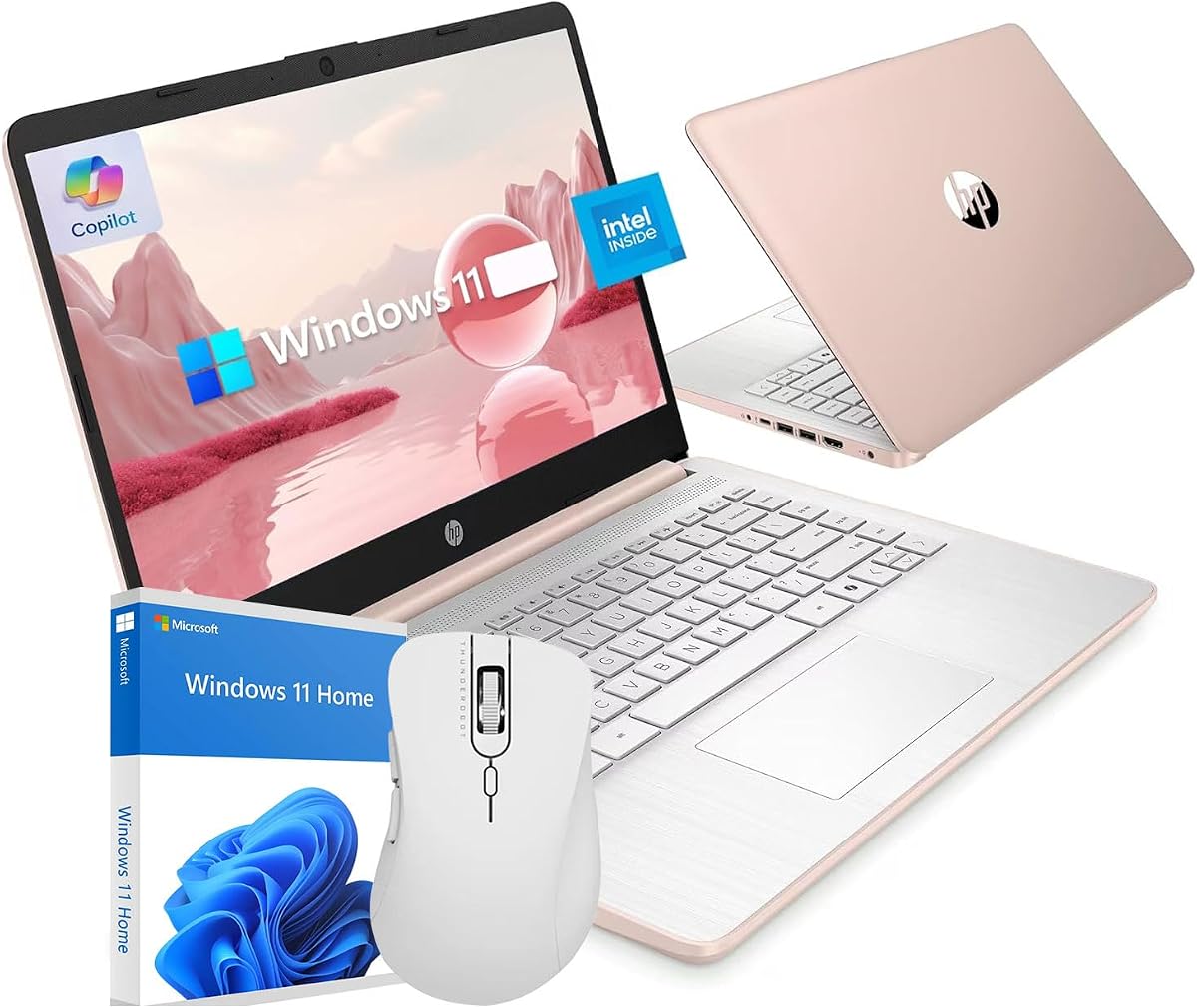


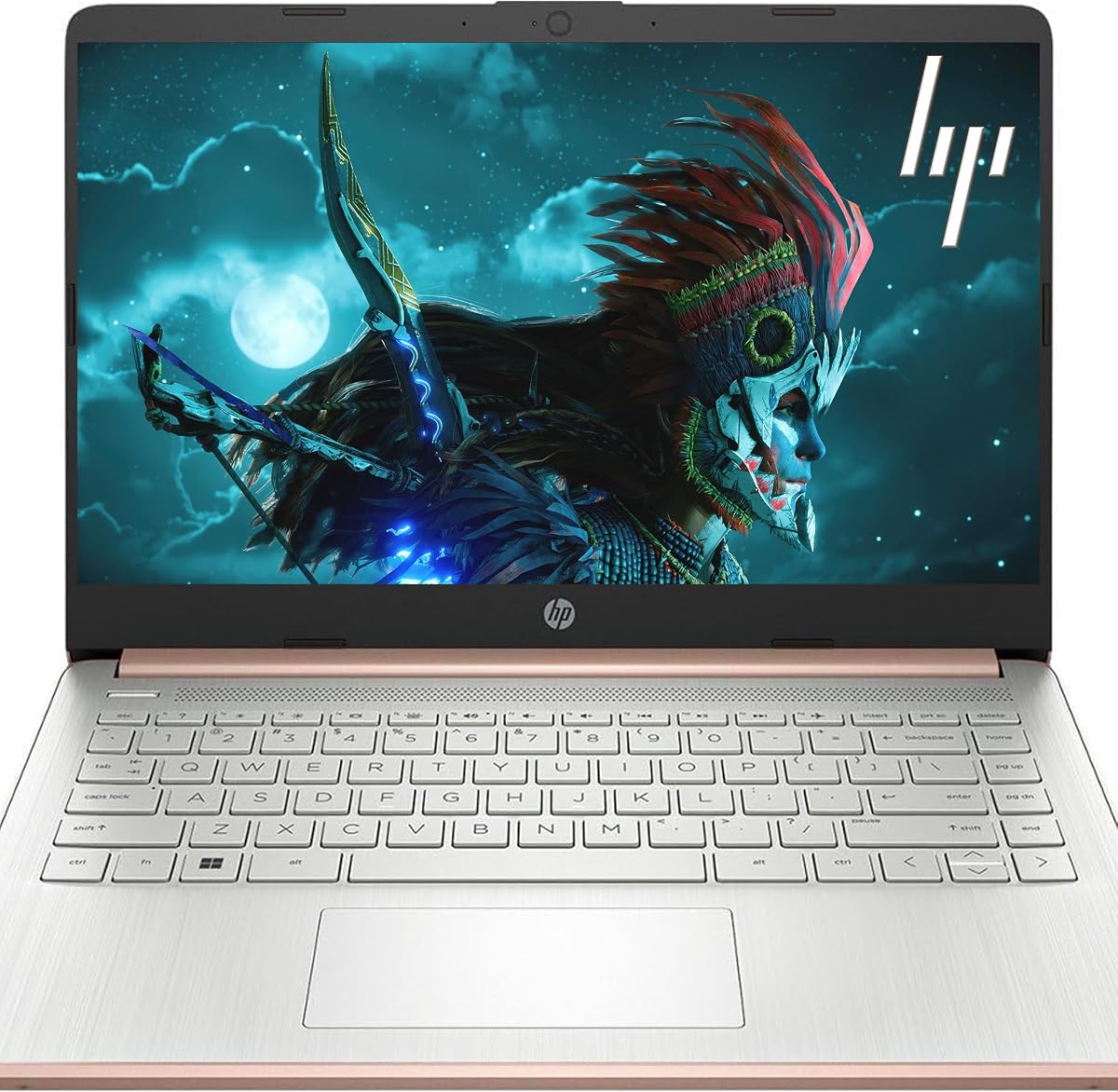


This HP combines a 14-inch anti-glare display, an Intel N150 quad-core processor, 4GB of LPDDR5 memory, and an unusually generous storage bundle for a value-oriented student laptop. Its supplied customer rating is 4.6, the highest among the ten options, and the configuration is particularly practical for nursing students who need room for coursework, clinical documents, reference materials, and media files.
We may earn a commission when you buy through this link, at no additional cost to you.
The most notable feature is the combination of 128GB UFS internal storage and a bundled 500GB portable external drive. That arrangement gives the student 628GB of stated storage without requiring a separate purchase. The Windows 11 Pro operating system also adds familiar productivity features, hardware-based isolation, encryption, and malware protection, while the included Office suite supports Word, Excel, and PowerPoint assignments.
The trade-off is the 4GB of memory. That amount is sufficient for browser-based research, note-taking, video meetings, and document editing, but it can feel restrictive when many large browser tabs or communication applications are open simultaneously. The 14-inch HD anti-glare display is useful for long reading and lectures, although its resolution is less detailed than full HD. A 720p camera and dual microphones support online classes and study groups.
This is an appealing choice for a nursing student who values included accessories, generous file capacity, and a complete software package more than maximum processing power. It is particularly suitable for note-taking, research, care-plan assignments, telehealth coursework, and everyday clinical training. Overall, it provides the strongest budget-oriented balance in this list, provided the student manages applications and files thoughtfully.
The bundled external drive is a meaningful advantage for students accumulating research PDFs, videos, spreadsheets, and case-study materials. It avoids the need to upload everything immediately to cloud storage, although the external drive should be backed up because it is removable.
Wi-Fi 6, a 720p camera, dual array microphones, and an anti-glare screen cover the most common needs of nursing school. The accessory bundle also includes earbuds, a mouse, a mouse pad, an HDMI cable, a USB extension cord, and the external drive.
We may earn a commission when you buy through this link, at no additional cost to you.
This may be the most balanced laptop in the roundup for a nursing student because it combines 8GB of memory with a portable 3.24-pound chassis and a stated battery life of up to 11 hours. It carries a 4.4 customer rating, and its Intel N150 processor is designed for the practical mix of research, documentation, conferencing, and coursework that occupies a nursing student's day.
We may earn a commission when you buy through this link, at no additional cost to you.
The 8GB memory provides more room for several browser tabs, a video-call application, and documents than the 4GB configurations elsewhere in the list. One year of Microsoft 365 includes access to Word, Excel, and PowerPoint, while Windows 11, Wi-Fi 6, Bluetooth, a 720p camera, USB-C, and HDMI create a well-rounded study environment. The product information also describes the Windows 11 Home interface in S mode.
Storage is the most obvious limitation. The internal capacity of 128GB can fill quickly with downloaded course materials, recorded lectures, photos, and software. Users may need cloud storage, an external drive, or selective file management. Gaming is listed in the title, but the N150 is fundamentally an efficient processor for light casual use rather than demanding games or specialized clinical applications.
This laptop is recommended for students who regularly carry a computer between classes, simulations, clinical areas, or study locations. Its combination of memory, weight, battery claims, and software makes it easier to recommend than many similarly compact alternatives. It is the editor's choice for nursing school students who need a capable everyday machine without moving to a larger or more powerful laptop.
Eight gigabytes of memory is the key practical advantage over the 4GB models. It gives students more room to keep reference tabs, notes, telehealth applications, and class documents open at the same time, although demanding software can still benefit from more memory.
The stated maximum of 11 hours makes this a practical option for long school days, although real runtime depends on screen brightness, network quality, video calls, and battery condition. Carrying a compact charger is still advisable before clinical shifts.
We may earn a commission when you buy through this link, at no additional cost to you.
The HP Essential puts a portable 14-inch design, Wi-Fi 6, useful ports, and Microsoft 365 into a straightforward student configuration. It has a 4.4 customer rating and weighs 3.24 pounds, matching the portability of the top-ranked HP while offering a more conventional storage arrangement. The Intel N150 supports up to 3.6 GHz turbo boost for everyday tasks.
We may earn a commission when you buy through this link, at no additional cost to you.
Its 14-inch HD micro-edge display uses an anti-glare panel, 250-nit brightness, and 62.5% sRGB coverage. These specifications are not aimed at detailed photo editing, but they are reasonable for reading articles, viewing lecture slides, completing forms, and joining online lessons. The 720p camera includes noise reduction, while dual microphones improve voice pickup during virtual sessions.
Connectivity is one of its strongest qualities. It includes USB-C with DisplayPort 1.2, two USB-A ports, HDMI, a headphone and microphone jack, and a multi-format SD card reader. That variety makes it easy to connect peripherals, transfer files from a camera or memory card, or use an external monitor. Bluetooth 5.4 and Wi-Fi 6 round out the wireless features.
The main compromise is 4GB of LPDDR5 memory. A nursing student should keep browser usage controlled and save larger files to the cloud or removable media. For students who primarily need browsing, word processing, virtual meetings, and electronic documentation, this laptop offers a good balance of portability and practical features.
USB-C, HDMI, two USB-A ports, and an SD reader reduce the need for adapters when connecting a mouse, storage device, classroom projector, or second display. The port mix is particularly helpful for students who move between nursing-school spaces and study locations.
The product information lists up to 11 hours of video playback and 7.5 hours of mixed use or wireless streaming. At 3.24 pounds and only 0.71 inches thick, it is easy to carry while providing a screen larger than a typical compact study device.
We may earn a commission when you buy through this link, at no additional cost to you.
This HP Ultrabook targets students who want a polished, familiar Windows notebook with a rose gold design. It carries a 4.0 customer rating, the lowest score in this group, but its Intel N150 processor, 128GB SSD, Windows 11 Home, Wi-Fi 6, and one-year Microsoft 365 subscription cover the basic requirements of nursing school.
We may earn a commission when you buy through this link, at no additional cost to you.
The supplied information is less detailed than that for several competing models, so it is wise to review the final configuration carefully. A 128GB SSD remains a good match for an operating system, browser, learning platform, and active semester of documents. The included Microsoft 365 Personal subscription provides the core Word, Excel, and PowerPoint applications commonly required for assignments.
Its 4.0 rating suggests that customer experiences are more varied than those of the higher-rated models. Potential concerns may involve included software, value, or the overall balance between specifications and features, although the available data does not establish a specific recurring defect. Buyers should also verify the amount of installed memory, screen resolution, and included accessories before purchasing.
The design and Windows foundation make this a reasonable option for a nursing student who values appearance and a simple home-and-study setup. It is best suited to document editing, research, online classes, and communication applications. Those wanting stronger multitasking performance, more complete specifications, or a longer battery description should compare one of the better-documented configurations.
The rose gold finish gives this notebook a more personal appearance than a standard business computer. It is intended for students using the device at home, in classrooms, and during study sessions rather than for demanding professional workloads.
One year of Microsoft 365 Personal covers the main productivity applications, and Windows 11 Home supplies a conventional desktop environment. Students can use cloud storage to avoid filling the 128GB SSD with large files and media.
We may earn a commission when you buy through this link, at no additional cost to you.
The Lenovo Chromebook is the lightest option in the roundup and stands out with a 14-inch full HD touchscreen. Its 4.2 rating reflects a generally favorable reception, while Chrome OS, Wi-Fi 6, an integrated 720p camera, and a privacy shutter create a convenient environment for web-based nursing coursework and online collaboration.
We may earn a commission when you buy through this link, at no additional cost to you.
The octa-core MediaTek Kompanio 520 processor is designed for efficient Chrome OS use, and the full HD 1920 by 1080 IPS display is more detailed than the HD panels used by several HP models. Wide viewing angles can be helpful during group study, while touch navigation makes reading and reviewing course material intuitive. The 2.86-pound weight and 0.73-inch thickness reduce backpack fatigue.
Its 64GB eMMC and 4GB RAM are the main constraints. This configuration is best for a student whose school requires browser-based applications, Google Workspace, and cloud-centric workflows. It is less suitable for large simulations, extensive local media libraries, specialized nursing software, or workflows that require a conventional Windows application suite.
This Chromebook works best for students whose nursing program primarily relies on web portals, video conferencing, electronic assignments, and cloud documents. It can be an excellent secondary device or a primary computer for a carefully managed course load. Students needing Windows-specific clinical or productivity software should choose a Windows model instead.
The 1920 by 1080 IPS panel offers a sharper and more colorful presentation than the 1366 by 768 displays found on several competitors. Touch input also makes document zooming, annotation, and navigating tablet-friendly learning tools more direct.
Chrome OS emphasizes browser applications, automatic updates, cloud backup, and built-in protection. That simplicity works well when coursework and clinical communication systems are web-based, though active cloud use and a backup strategy remain important with limited local storage.
We may earn a commission when you buy through this link, at no additional cost to you.
This HP stands apart from the value-oriented models with a 13th-generation Intel Core i5-1334U processor, 16GB of DDR4 memory, a 512GB PCIe NVMe solid-state drive, and Iris Xe integrated graphics. It has a 4.3 customer rating, making it a strong choice for nursing students who need smoother performance across many applications or expect to use more demanding coursework tools.
We may earn a commission when you buy through this link, at no additional cost to you.
The 17.3-inch full HD IPS display provides substantially more working area than a 14-inch HD panel. Wide viewing angles make it useful for group study and reviewing charts, care plans, or reference tables. The Core i5 processor and 16GB of memory create a more comfortable environment for numerous browser tabs, lecture video, documents, and communication tools running together.
Storage is another major strength. The 512GB NVMe drive offers more room for course software, saved research, videos, and clinical materials while responding quickly compared with a traditional hard drive. The physical camera shutter adds privacy, and the HP True Vision HD camera supports everyday video calls. The trade-off is portability because the 17.3-inch display requires a larger, heavier travel solution than the compact models.
This is the most performance-oriented choice in the guide and is worth considering for students with demanding schedules, multiple simultaneous applications, or a need for a large display. It is less attractive for someone who carries a computer constantly or prioritizes the lightest possible design. For a student keeping the laptop mainly at home or in a study room, the extra capability is a meaningful advantage.
Sixteen gigabytes of RAM gives nursing students room to keep several learning portals, notes, videos, and clinical references open without relying on constant browser-tab discipline. It is also a better foundation for software beyond basic word processing.
The large full HD IPS screen is particularly useful when comparing patient information, completing forms, reviewing research, or collaborating with classmates. Its wide viewing angles make the larger footprint more comfortable for shared study sessions.
We may earn a commission when you buy through this link, at no additional cost to you.
This HP combines 16GB of memory with a thin 3.24-pound chassis, making it a distinctive middle ground between a basic study laptop and a larger performance machine. The supplied data does not provide a customer rating, so the configuration specifications are more useful than customer feedback when evaluating it. Its Intel N150 processor and 128GB NVMe drive target everyday academic tasks.
We may earn a commission when you buy through this link, at no additional cost to you.
The major strength is memory. Sixteen gigabytes gives the student ample room for browser-based research, telehealth applications, document editing, and other programs running together, even though the processor remains an efficient entry-level model. The stated battery life of up to 11 hours and 30 minutes is also encouraging for commuting between school, clinical sites, and study groups.
Its 14-inch HD anti-glare display has 1366 by 768 resolution and 250-nit brightness, making it adequate for standard reading and coursework but less detailed than full HD alternatives. Storage is another limitation, and users will need cloud storage or an external drive. The listed connectivity includes two USB-A ports, USB-C, HDMI, an SD card reader, Wi-Fi 6, and Bluetooth, which is a useful collection for study and assignments.
This model is recommended for students who prioritize portability and memory over screen resolution and storage capacity. The included earbuds add convenience for online classes and study calls. Because the product has no supplied customer rating, prospective buyers should consider warranty coverage, return terms, and the final configuration carefully before deciding.
The 16GB memory is uncommon among similarly compact N150-based options in this guide. It supports a smoother mix of course portals, notes, conferencing tools, and reference documents, making the laptop suitable for students who dislike restarting browser-based applications.
At 3.24 pounds and 0.71 inches thick, the laptop is small enough for frequent carrying. USB-C, HDMI, USB-A, and an SD reader ensure that common study peripherals can still be connected without relying entirely on cloud services.
We may earn a commission when you buy through this link, at no additional cost to you.
The Dell 15.6-inch laptop offers a full HD display, Intel Core 3 100U processing, 8GB of memory, and Windows 11 Home. Its 4.3 rating aligns with several well-rated competitors, while the roomy keyboard, numeric keypad, and ComfortView software make it a practical option for students who spend considerable time typing calculations and completing forms.
We may earn a commission when you buy through this link, at no additional cost to you.
The 15.6-inch full HD panel offers more resolution and working area than the 14-inch HD models in the guide. That additional space can help when navigating electronic medical records, research databases, spreadsheets, or multiple study resources. The Intel Core 3 processor and 8GB of memory should support standard nursing-school productivity applications and regular multitasking.
The product information does not specify storage type or capacity, so buyers should check that detail before purchase. Its larger screen also means more weight and a larger footprint than the HP ultraportables and Lenovo Chromebook, even though the available data does not provide exact dimensions. Dell's one-year onsite service is useful for hardware issues that cannot be resolved remotely.
This laptop is a sound recommendation for students who want a full-size screen, a numeric keypad, and a conventional desktop experience without moving to the more powerful Core i5 configuration. It is best suited to use at a dorm, home, study room, or fixed clinical workstation. Frequent travelers may prefer one of the lighter 14-inch alternatives.
A separate numeric keypad is useful for entering measurements, calculating dosages for coursework, and filling numerical sections of clinical forms. The lifted hinges also provide a more ergonomic typing angle during long sessions.
The included one-year onsite service can be valuable when a qualifying hardware issue cannot be resolved remotely. It provides another form of support beyond choosing the computer itself, which is useful for students managing demanding academic timelines.
We may earn a commission when you buy through this link, at no additional cost to you.
This HP is designed around reliable everyday computing, with an Intel N150 processor, 4GB of LPDDR5 memory, and 128GB of UFS storage. It has a 4.3 customer rating and includes a one-year Office 365 subscription, making it a sensible choice for nursing students whose work is primarily web browsing, document editing, streaming, and online learning.
We may earn a commission when you buy through this link, at no additional cost to you.
The 14-inch HD micro-edge display has 1366 by 768 resolution, 250-nit brightness, and 62.5% sRGB coverage. The anti-glare treatment helps with readability in bright classroom environments. A 720p camera with temporal noise reduction and dual array microphones supports online lectures, while AI Noise Reduction is designed to filter background sounds during conversations.
Its ports are more versatile than the abbreviated specifications might initially suggest. There is one USB-C port with DisplayPort 1.2, two USB-A ports, HDMI, a headphone and microphone combination jack, and a multi-format SD card reader. That gives the laptop practical flexibility for external monitors, wired peripherals, presentations, and file transfers.
As with other 4GB models, this laptop is best when the student limits the number of simultaneous heavy applications and relies on cloud storage. It is well suited to a nursing student attending online classes, conducting research, participating in study groups, and preparing standard Word, Excel, and PowerPoint assignments.
The camera, microphones, AI noise reduction, and anti-glare display support the main elements of hybrid nursing instruction. These features are more immediately relevant to daily coursework than a discrete graphics processor for many students.
DisplayPort over USB-C and a dedicated HDMI port make it possible to connect classroom displays or a personal monitor. Two USB-A ports leave room for a mouse and other study accessories.
We may earn a commission when you buy through this link, at no additional cost to you.
This HP Ultra-Portable combines a 14-inch HD display, Intel N150 processor, 4GB of memory, Windows 11 Pro, and 628GB of stated combined storage. It carries a 4.3 rating and includes a large accessory bundle, giving students access to a docking station, external drive, mouse, cables, and Office software without sourcing each item separately.
We may earn a commission when you buy through this link, at no additional cost to you.
The bundled USB-C docking hub includes USB 3.0, HDMI, a USB-C connection, and SD and TF card readers. It can simplify a home study desk, while the 500GB external drive helps address the limited 128GB internal storage. The external drive, mouse pad, wireless mouse, HDMI cable, and USB extension cord create a ready-to-use workspace.
Windows 11 Pro adds hardware-based isolation, encryption, malware protection, and a familiar desktop environment. The 720p camera and dual microphones make the device suitable for online classes, Google Classroom, remote learning, and Zoom meetings. However, 4GB of memory is the most important limitation. Students running many browser tabs and other applications should expect less fluidity than on an 8GB or 16GB configuration.
This laptop is best for a student who values a complete ready-to-use package and large stated storage capacity more than high-end performance. The rose gold finish and near-bezel-free display also give it a student-friendly appearance. Buyers who only need a small bundle can save space by focusing on the computer, Office software, and external drive.
The docking hub and wired accessories can turn the laptop into a more permanent desk setup with one monitor, mouse, storage, and card-reader connections. The included cables reduce the initial setup required for home study or dorm-room use.
Windows 11 Pro includes built-in security features relevant to students handling academic and clinical information. The 500GB external drive adds file capacity, but it should not be treated as the only backup for important coursework.
We may earn a commission when you buy through this link, at no additional cost to you.
The right nursing-school laptop should support web-based learning, document editing, video communication, and specialized coursework without becoming difficult to carry. Performance, memory, storage, display, connectivity, and battery life should be balanced against the student's clinical schedule and software requirements.
Begin by asking the school which applications, learning platforms, and clinical information systems students must access. Browser-based coursework can work on Chrome OS, but Windows is safer when a program requires desktop software, plug-ins, file management tools, or specific electronic health record interfaces. Check the school's compatibility list before choosing an operating system, and avoid assuming that a web portal will support every required function.
Choose an operating system and software set that your nursing program officially supports. Windows models offer the broadest compatibility, while a Chromebook works best for a web-centered curriculum.
A nursing student often moves between course portals, lecture recordings, note-taking tools, email, spreadsheets, and video meetings. Eight gigabytes of RAM provides a more comfortable margin for those tasks than four gigabytes, while sixteen gigabytes is a stronger choice for demanding clinical software, extensive research, and long-term program use. Processor speed alone cannot compensate for insufficient memory when many applications remain open.
Aim for at least 8GB when the budget allows. Choose 16GB for heavy multitasking, specialized software, or keeping the computer for a multiyear program.
The Intel N150 found in many models here is an efficient quad-core processor with four threads and turbo boost up to 3.6 GHz. It is well suited to browsing, streaming, Office applications, and routine documentation. The Core 3 100U and Core i5-1334U options provide a higher performance ceiling for heavier multitasking, specialized coursework, or software that demands more processing capability.
Use N150 for standard academic work and choose Core 3 or Core i5 when software demands, coursework complexity, or long-term responsiveness justify the additional cost.
A 128GB or 256GB internal drive can fill quickly once Windows, applications, browser data, lecture recordings, and clinical documents are stored. The top-ranked and final HP models address this with a bundled 500GB external drive, while the Core i5 model provides 512GB internally. Students should distinguish between fast internal storage and convenient removable storage, as an external drive cannot replace the performance and convenience of a larger internal drive.
Choose at least 128GB internally and add cloud or removable storage. Favor a larger NVMe drive when applications, media, and records must remain available offline.
A 14-inch laptop is easier to carry between classes and clinical locations, while 15.6-inch and 17.3-inch screens provide more room for research and documentation. Resolution also matters: 1366 by 768 is adequate for basic reading, whereas full HD offers clearer text and more usable workspace. Anti-glare panels are especially helpful under classroom lighting, and touchscreens can make annotation and document review easier.
Choose 14 inches for maximum portability and full HD for clarity. Larger screens are comfortable for desk-based study but should be weighed against frequent carrying.
Clinical schedules can keep students away from outlets longer than a conventional class day. Several models list battery life of up to 11 or 11.5 hours, but real-world runtime depends on video calls, brightness, wireless use, and battery aging. A compact charger or compatible power bank can provide insurance, but the laptop should still be efficient enough to last through lectures, travel, and documentation tasks without constant charging.
Treat maximum battery claims as a guide rather than a promise. Prioritize efficient processors and carry a backup charger for clinical days.
Wi-Fi 6 is useful for fast wireless access in busy schools and clinical environments, but USB-A, USB-C, HDMI, and an audio jack remain important for peripherals, presentations, diagnostics, and study tools. Nursing students should also consider camera quality, microphone clarity, and physical privacy. The Core i5 model includes a camera shutter, while the Lenovo Chromebook includes one as well. A privacy screen may be useful where patient or confidential information is visible.
Check that the laptop includes the ports your school and personal accessories require. Treat webcam and microphone quality as clinical-study tools, and use a physical shutter when appropriate.
A nursing education can last several years, so build a modest upgrade into the budget. A durable chassis, comfortable keyboard, reliable battery, and repair support can matter more than a small processor upgrade. The Dell includes a one-year onsite service option, while the HP models provide office bundles and accessories that reduce the need for immediate extras. Students should also consider the availability of replacement parts and customer support when choosing a long-term device.
Think beyond the first semester. Choose dependable construction, useful support, and enough expandable storage for the entire academic program.
Begin by organizing coursework into clear folders for each class, simulation, clinical rotation, and administrative task. Update the operating system and applications promptly, enable automatic cloud backup for critical documents, and keep a separate copy of assignments outside the laptop. Use the included external drive for large videos and research files, but treat it as a secondary location rather than the only copy.
Protect the machine by using a padded, water-resistant carrying case and by keeping drinks away from the keyboard. Charge on a stable, ventilated surface, inspect cables for damage, and avoid leaving the computer in a hot car. Clean the display and keyboard with suitable materials, and use a screen protector if the anti-glare coating is not sufficient for your eyes. Keep vents unobstructed to preserve cooling and battery performance.
Before each clinical shift, verify that required course platforms, communication tools, and clinical systems open correctly. Download essential documents ahead of time when connectivity may be unreliable, and use the camera shutter or privacy measures when handling sensitive information. During study sessions, adjust text size and brightness, take short breaks, and keep backups synchronized so a damaged device, lost charger, or failed drive does not become a missed assignment.
A Chromebook can be sufficient when the nursing program relies on web-based learning platforms, cloud documents, video meetings, and browser-compatible clinical resources. It is less suitable if students must run Windows-specific software, store large media locally, or use specialized applications. Confirm the school's software requirements before choosing Chrome OS.
Eight gigabytes is a practical minimum for students who keep several browser tabs, documents, notes, and video-call applications open. Sixteen gigabytes offers more comfortable multitasking and a better foundation for specialized coursework. Four-gigabyte models can work for lighter use, but they are more likely to slow down under a heavy application load.
Most nursing school assignments do not require a dedicated graphics card. Intel Iris Xe integrated graphics are sufficient for standard research, documentation, conferencing, and media playback. A dedicated GPU becomes more relevant for advanced simulations, 3D anatomy software, video editing, or other graphically demanding programs.
A 14-inch laptop is easier to carry between classrooms, simulation areas, and clinical locations. A 17.3-inch screen provides more workspace and is often more comfortable for reading charts, comparing sources, and working at a desk. The better choice depends on how often the computer travels and whether a full HD display is important.
At least 128GB of internal storage is a practical starting point for the operating system, applications, and active coursework. Students who save lecture videos, large research libraries, or clinical materials may prefer 512GB internally or a portable external drive. Cloud backup and regular file organization remain important regardless of capacity.
A touchscreen can be useful for zooming, annotation, reading, and using tablet-friendly learning tools. It is an added convenience rather than an essential requirement for most nursing assignments. A sharp standard display, comfortable keyboard, and accurate typing experience usually matter more day to day.
Microsoft 365 provides access to Word, Excel, PowerPoint, cloud storage, and other common productivity tools. It can make the first semester easier because core software is already available. Check the subscription length, account requirements, and whether your school provides its own institutional access before paying for an additional plan.
Yes, but the computer should not be treated as a replacement for every personal device. Keep personal files separate from school folders, use a strong account password, install required security updates, and follow school policies for clinical information. Avoid confidential data on shared or personal accounts and maintain backups of academic work.
The HP 14-inch Student Business Laptop is the strongest budget-oriented choice because it combines Windows 11 Pro, a useful accessory bundle, and 628GB of stated storage. The HP 14-inch 8GB Student Laptop stands out as the editor's choice thanks to its 8GB memory, portable design, and stated 11-hour battery life. For greater performance and screen space, the HP 17.3-inch Core i5 Laptop is the premium selection.
Your nursing program should ultimately determine the operating system and minimum performance level. A Chromebook may be enough for a browser-centered course, while 8GB or 16GB of memory will suit heavier multitasking. Full HD resolution, a comfortable keyboard, dependable wireless connectivity, and a battery that lasts through a clinical day are more valuable than unrelated extras.
Before ordering, verify the exact processor, memory, storage, operating system, included software, port selection, warranty, and return policy on the current listing. Prices, promotions, and configurations can change, and the supplied customer ratings may also evolve. Compare the final cost with the complete accessory bundle, then choose the laptop best aligned with your nursing-school software and daily schedule.

