
ROPVACNIC Robot Vacuum and Mop Combo S1
4.3Editor score
5200Pa maximum suction
Vacuum and mop functions
App and voice control
Explore the best robot vacuums for every home budget, comparing suction, navigation, self-emptying, mopping, pet hair features, and smart controls in detail.
Robot vacuums offer an easy way to keep floors tidy, but choosing the right model requires balancing suction, navigation, maintenance, and cost. A basic unit may handle one level, while a premium system can empty itself, map multiple floors, mop hard surfaces, and avoid obstacles with greater precision.
This guide compares ten robot vacuums across essential capabilities, including cleaning power, battery life, LiDAR mapping, self-emptying bases, mopping functions, pet-hair handling, and control options. The list covers entry-level models, versatile vacuum-and-mop combinations, and advanced systems for larger homes.
Each pick reveals which shoppers it is best suited for, with the top choices representing strong budget, overall, and premium options. Product specifications and availability can change, and prices fluctuate, so shoppers should verify current listings and their own floor types before purchasing.
4.3Editor score

4.5Editor score

4.3Editor score
The comparison below highlights the defining features of each model, including cleaning power, navigation, maintenance, and convenience, making it easier to match a robot vacuum with a particular home and budget.



The ROPVACNIC S1 is a budget-oriented robot vacuum and mop combo that pairs 5,200Pa of suction with electronically controlled mopping. Its 4.3 rating reflects a solid balance of useful everyday features, particularly for shoppers who want floor cleaning beyond a basic dry-vacuum-only design without moving into higher-cost self-emptying systems.
We may earn a commission when you buy through this link, at no additional cost to you.
Its strongest appeal is the combination of a high-capacity water tank, four-stage water adjustment, three suction levels, and several cleaning modes. The robot can vacuum and mop in one system, while obstacle detection and autonomous direction changes support hands-free operation. Compatibility with Alexa and Google Assistant adds convenient voice control, and the anti-entanglement brush design targets a common frustration for households with cats or dogs.
The main limitation is that the bin must be emptied by the user, so it does not deliver the low-touch maintenance associated with a dock-equipped model. It also lacks the detailed multi-floor mapping and precise zone controls emphasized by several premium competitors. These shortcomings are understandable for the category, but they make the S1 less attractive for large homes with several rooms or owners who want the robot to operate for weeks at a time.
This is a convincing recommendation for first-time robot vacuum buyers, apartment residents, and budget-conscious households with hard floors or low-pile carpets. It delivers more capability than the simplest manual-cleaning models while remaining appropriately positioned among affordable options. For anyone willing to empty the dustbin and control mopping manually, the ROPVACNIC S1 offers strong value.
The four-stage water adjustment allows the owner to vary mopping intensity for different conditions, while the three-point cleaning system combines suction with side-brush sweeping. That flexibility is useful across wood, hard floors, and low-pile carpet, although carpets should be protected with no-mop settings if available in the app.
The brush system is intended to reduce entanglement with pet hair, and dual rotating electric side brushes reach debris along edges and corners. This does not guarantee perfect pickup in every room, but it directly addresses a cleaning problem many robot owners encounter repeatedly.
We may earn a commission when you buy through this link, at no additional cost to you.
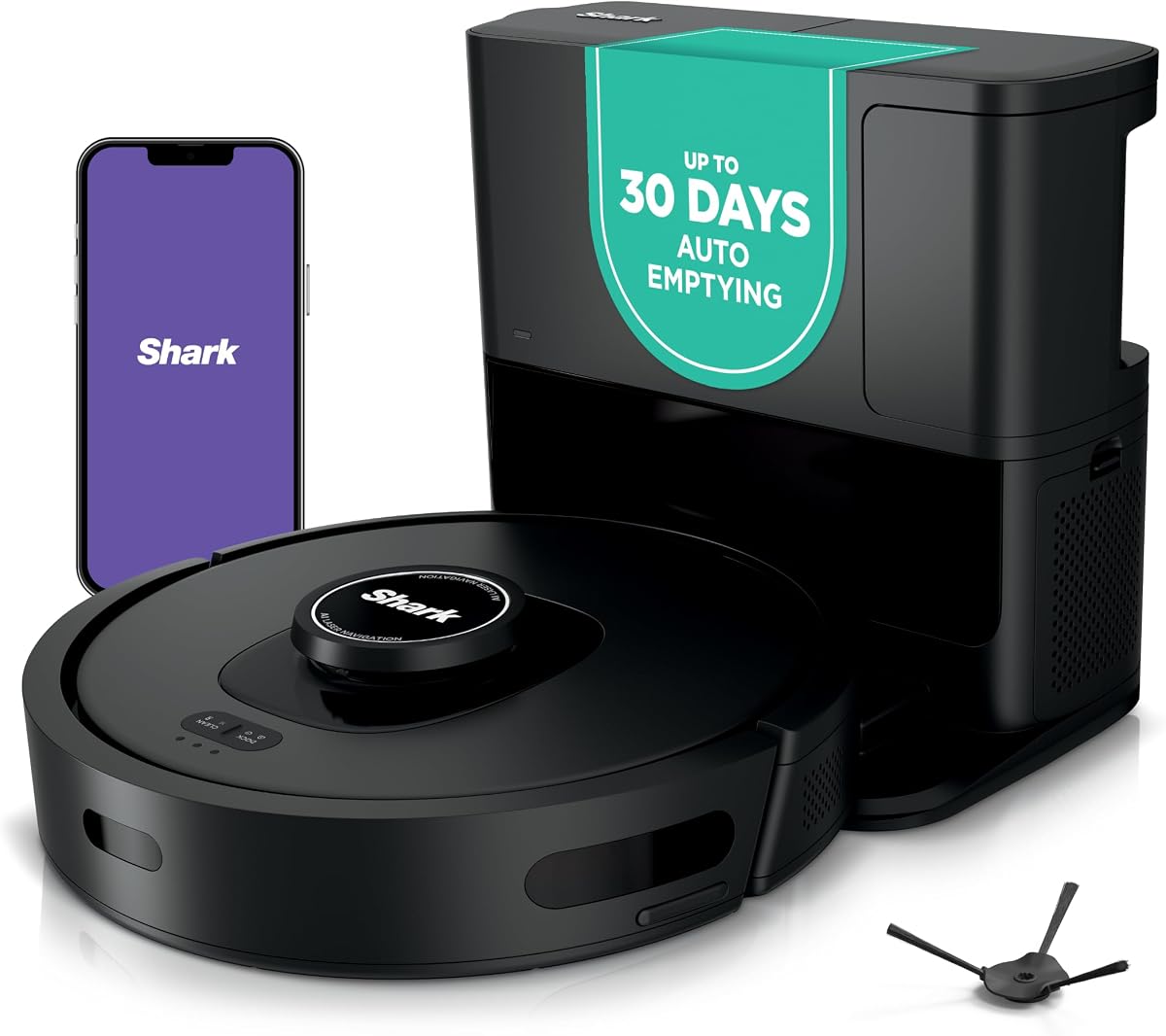
The Shark AI Ultra AV2511AE is a self-emptying robot vacuum built around powerful suction, precise navigation, and minimal maintenance. It carries a 4.0 rating and stands out for its bagless base, Matrix Clean route pattern, LiDAR mapping, and support for Amazon Alexa, Google Assistant, and the SharkClean app.
We may earn a commission when you buy through this link, at no additional cost to you.
Its base can hold up to 60 days of collected dirt and debris without requiring disposal bags, reducing the recurring cost and inconvenience associated with bagged systems. The robot's self-cleaning brushroll is designed to help prevent hair wrapping, while strong suction targets pet hair, crumbs, and embedded dirt on hard floors and carpets. Object detection and whole-home navigation make it a strong fit for busy, frequently changing spaces.
This model is focused on vacuuming rather than mopping, so it will not satisfy shoppers seeking an all-in-one floor-washing solution. Its 90-minute runtime is shorter than the maximum figures offered by several competitors, though recharge-and-resume behavior allows the cleaning session to continue. The base also needs adequate clearance and access, and a 60-day capacity reflects ideal conditions rather than a guaranteed interval for every household.
The AV2511AE is best for pet owners and busy users who want dependable autonomous vacuuming with rare bin emptying. It combines careful navigation, effective carpet and floor cleaning, and a particularly low-maintenance base. Among the higher-tier choices here, it offers a focused alternative for people who do not need a mopping function.
The base's bagless design can accommodate up to 60 days of debris, eliminating the need to buy or replace disposal bags. Regular removal and cleaning of the base remains necessary, but the overall routine is designed for households that would otherwise empty a conventional robot bin every few days.
Matrix Clean uses a precision grid and multiple passes to improve coverage, while 360-degree LiDAR navigation creates an accurate map. Together, these features help the robot work methodically and detect objects even when cleaning in low-light conditions.
We may earn a commission when you buy through this link, at no additional cost to you.
The Tikom G8000 Max is a slim robot vacuum and mop combo that focuses on useful performance at an accessible tier. It has a 4.4 rating, 5,000Pa of suction, a 150-minute maximum runtime, and a low 2.99-inch body designed to reach beneath beds, sofas, and cabinets.
We may earn a commission when you buy through this link, at no additional cost to you.
The robot supports simultaneous vacuuming and mopping through a 450-ml dustbin and 300-ml water tank. Four control methods—app, remote, voice, and onboard button—make it approachable for different household members, while Spot, Edge, Zig-zag, and Manual modes offer flexibility. Anti-collision and anti-fall sensors help it navigate around furniture and stairs, and its larger wheels help it cross thresholds between hard floors and carpets.
There is no self-emptying base, so owners must empty the collected debris manually. Its navigation system is less sophisticated than the LiDAR mapping found in higher-ranked premium models, and the four modes do not replace the precise room and zone controls available on more advanced robots. The quoted runtime also depends on cleaning mode and conditions rather than remaining constant during every task.
The G8000 Max is a strong choice for apartment dwellers, renters, and anyone whose furniture sits low enough to defeat a taller robot. It also makes sense for shoppers who want remote and voice control plus mopping without paying for a self-emptying system. Its combination of slim dimensions, strong suction, and flexible controls offers unusual value.
The 2.99-inch height is one of the most useful physical specifications in the roundup. It gives the robot a meaningful chance to clean under beds, low sofas, and cabinets where a standard-height vacuum may leave dust and hair untouched.
App, remote, voice, and physical button operation cover nearly every preference. The physical controls are useful for less tech-oriented users, while the app makes scheduling and mode selection more convenient for regular use.
We may earn a commission when you buy through this link, at no additional cost to you.
The Tikom L8000 Plus is a versatile self-emptying vacuum and mop with a 4.5 rating, tying for the highest rating in this guide. Its 6,000Pa maximum suction, LiDAR navigation, three-liter self-emptying bag, and support for five saved maps make it one of the strongest midrange combinations for multi-level homes.
We may earn a commission when you buy through this link, at no additional cost to you.
The app supports no-go zones, no-mop zones, virtual walls, room selection, schedules, and adjustable suction and water levels. A 150-minute gentle-mode runtime gives the robot ample time to clean larger spaces, and automatic recharge and resume should reduce lost coverage. The robot can also work with Alexa over both 2.4GHz and 5GHz Wi-Fi, making network setup less restrictive.
Its main caveat is the need to manage mopping carefully. The product instructions advise removing the mop holder or creating a no-mop zone to prevent carpets from being dirtied. The self-emptying station also uses a three-liter dust bag, creating a recurring consumable that some owners may prefer to avoid. The mop holder removal requirement also means the all-in-one function is not completely hands-off across mixed flooring.
This model is well suited to households that want LiDAR mapping, precise app controls, self-emptying, and mopping without moving to the top premium tier. It is particularly attractive for multi-level homes because it can store up to five maps. Shoppers seeking an excellent balance of capability, maintenance reduction, and mapping flexibility should give it serious consideration.
No-go and no-mop zones let owners protect pet bowls, rugs, and other sensitive areas. Adjustable suction and water flow also help tailor cleaning, although the mop holder should still be removed when the robot may cross onto carpet.
The LiDAR system can save up to five floor maps, reducing the need to reconstruct the layout whenever the robot changes floors. This is a meaningful convenience for homes with more than one level and a clear advantage over simpler models without advanced map storage.
We may earn a commission when you buy through this link, at no additional cost to you.
This 120-Day Self-Emptying Robot and Mop is built around 6,000Pa suction, a four-liter dust bag, LiDAR mapping, and a dual anti-tangle brush design. Its 4.5 rating and broad feature set make it a compelling option for pet households that want long intervals between base servicing.
We may earn a commission when you buy through this link, at no additional cost to you.
The station can collect dust, debris, and pet hair into a large bag for up to 120 days under the stated conditions. LiDAR mapping supports up to four saved floor levels, and app-defined no-go zones help protect bowls, furniture, or other areas. Three suction levels and three water-flow settings provide control across carpets, tile, and hardwood, while automatic carpet boost increases power when needed.
The 120-day figure is a maximum maintenance interval rather than a guarantee, as pet volume, floor area, and cleaning frequency can fill the bag much sooner. The generic branding also provides fewer opportunities to evaluate long-term parts support or accessory consistency than an established model name. As with many combined units, the owner must remove the mopping cloth when dry vacuuming is preferred.
This robot is a strong match for busy homes where fur accumulation is constant and a large station is available. The four-floor map support and broad app controls improve daily usability, while the anti-tangle design targets pet hair directly. It is particularly worth considering when reducing bin-related interruptions matters more than brand recognition or a more compact dock.
A four-liter bag and automatic emptying are especially useful in homes where one or more pets add significant debris. The anti-tangle roller and flexible side brush work together to collect fur and reduce the need to cut hair from the brush assembly.
Four stored maps make the unit practical for split-level homes. Owners can move the robot, select the matching saved layout, and use room or schedule controls to keep the cleaning routine organized.
We may earn a commission when you buy through this link, at no additional cost to you.
The Shark AV2501AE combines a self-emptying robot, a bagless 60-day base, LiDAR navigation, and true HEPA filtration. Its 4.0 rating reflects a focused vacuuming system suited to homeowners who prioritize filtration, bagless maintenance, and thorough navigation over mopping.
We may earn a commission when you buy through this link, at no additional cost to you.
The base holds up to 60 days of dirt and debris, while the filtration system is stated to capture 99.97% of dust and allergens down to 0.3 microns. Matrix Clean navigation makes multiple passes in a grid, and 360-degree LiDAR vision maps the home and detects objects during the day or at night. The robot offers up to 120 minutes of runtime and resumes its task after recharging.
It is a dry vacuum only, which narrows its appeal for anyone who wants to mop hard floors in the same routine. Because the base is bagless, owners will still need to periodically remove collected dirt and wipe down the base, even though emptying happens less often than with a conventional bin. Its larger station also requires a permanent floor location with adequate clearance.
The AV2501AE is best for allergy-conscious households and pet owners who prefer a long-capacity, bagless base. It combines detailed mapping with a generous runtime and strong filtration, making it a practical alternative to the shorter-capacity Shark AV2501S. Those who do not need mopping will find a focused and convenient cleaning package.
True HEPA filtration is the defining feature for shoppers concerned with fine dust and allergens. The sealed filtration path is designed to capture particles inside the system, although filter care remains necessary to preserve performance over time.
The claimed 120-minute runtime provides ample time for larger homes. When the battery becomes low, the robot returns to its dock, recharges, and continues from where it stopped rather than ending the session.
We may earn a commission when you buy through this link, at no additional cost to you.
The VONKO Robot Vacuum and Mop has a 4.6 rating, the highest listed rating among these ten products. It pairs 8,000Pa of suction with self-emptying, LiDAR navigation, a vacuum-and-mop mode, and a claimed 180-minute runtime, making it a strong high-power option below the most advanced premium systems.
We may earn a commission when you buy through this link, at no additional cost to you.
The robot returns to its station after cleaning and transfers debris into a large-capacity dust bag designed for up to 60 days of hands-free operation. LiDAR creates accurate maps and stores layouts for up to five floors. Users can adjust suction, select rooms, establish no-go zones, schedule cleaning, and use Alexa for hands-free operation.
Its 8,000Pa figure may be especially reassuring for households with embedded carpet debris or substantial pet hair, but suction alone cannot guarantee better pickup on every surface. The station still requires periodic dust-bag changes, and owners should use no-go or no-mop zones to protect carpets. The 180-minute runtime is a maximum that varies with mode, surface, and cleaning conditions.
The VONKO is a strong recommendation for larger homes that need more power and longer runtime without moving directly to a top-tier premium model. Its mapping, self-emptying, and strong rating make it particularly appealing for pet owners. It also suits multi-level households that can take advantage of its five saved maps.
The high 8,000Pa maximum is useful for crumbs, dust, and pet hair on hard floors and carpets. It gives the robot more potential pickup power than lower-rated budget models while remaining below the headline figure of the dreame L40 Ultra Gen 2.
A claimed 180-minute runtime can cover substantial floor areas before recharging is required. Actual duration varies, but the specification gives large homes a favorable starting point for completing a full cleaning cycle.
We may earn a commission when you buy through this link, at no additional cost to you.
The Shark AV2501S is a self-emptying robot vacuum with a 30-day bagless base, true HEPA filtration, Matrix Clean navigation, and 360-degree LiDAR mapping. Its 4.0 rating aligns it with the other Shark systems in the list while offering a smaller stated debris capacity than the 60-day models.
We may earn a commission when you buy through this link, at no additional cost to you.
Its self-cleaning brushroll is designed to capture pet hair while reducing wrapping, and the HEPA system is stated to trap 99.97% of dust and allergens down to 0.3 microns. Multiple Matrix Clean passes improve systematic coverage, while LiDAR navigation and object detection help the robot adapt to changes in the home. It supports up to 120 minutes of cleaning and recharge-and-resume operation.
Compared with the AV2501AE, its most obvious trade-off is the shorter base capacity. It may therefore require more frequent base maintenance in a busy household, although it still eliminates routine emptying of the robot's internal bin. The lack of a mopping function also makes it less versatile than the Tikom, VONKO, ROPVACNIC, and dreame combinations.
The AV2501S is a sensible choice for pet owners who want Shark's established cleaning features, HEPA filtration, and a bagless self-emptying station in a more compact package. It works especially well for users who prioritize vacuuming and a familiar brand ecosystem over mopping or maximum base capacity.
The base avoids disposable bags while maintaining true HEPA filtration in the system. This balance is useful for owners who want fewer recurring consumables without giving up detailed allergen filtration.
A self-cleaning brushroll helps lift hair from carpets and hard floors while reducing wrap around the brush. It is a practical feature for pet homes that would otherwise need to remove long strands from a traditional roller frequently.
We may earn a commission when you buy through this link, at no additional cost to you.
The Shark Matrix Plus UR2650WS is a high-end vacuum and mop system centered on sonic mopping, precise grid cleaning, and advanced edge pickup. Its 4.0 rating reflects a feature-rich package for households that want the robot to handle both debris and hard-floor residue.
We may earn a commission when you buy through this link, at no additional cost to you.
The vacuum uses Matrix Clean to make multiple passes, while CleanEdge Detect uses air bursts and corner recognition to pull debris into the cleaning path. The manufacturer states 30% better carpet cleaning than a single-pass comparison model and 50% better edge cleaning with CleanEdge enabled. Sonic mopping adds hard-floor cleaning, and the bagless base stores up to 30 days of debris with true HEPA filtration.
The robot empties and recharges itself, and the recharge-and-resume function helps preserve coverage. As with the other Shark models, it does not use a disposable base bag, but the base still requires regular cleaning. It also sits in a higher spending category than the budget combos, and its performance claims depend on the referenced comparison conditions rather than every real-world floor.
CleanEdge Detect is the model's most distinctive physical feature. Recognizing edges and corners allows the robot to redirect nearby debris into its path, addressing an area many otherwise capable robots clean less thoroughly.
The system can vacuum carpets and hard floors while also sonic-mopping hard surfaces. This makes it more versatile than dry-only premium Shark models, although the mop system should be considered carefully in homes with mixed flooring.
We may earn a commission when you buy through this link, at no additional cost to you.
The dreame L40 Ultra Gen 2 is the most technically advanced model in this guide, featuring 25,000Pa suction, extendable brush and mop hardware, an all-in-one self-cleaning dock, and advanced mapping. Its 4.3 rating reflects a premium package intended for buyers who want the most advanced feature set available here.
We may earn a commission when you buy through this link, at no additional cost to you.
Five suction levels allow cleaning intensity to be adjusted for hard floors or carpets. The brush and mop extend to reach corners and under furniture, while carpet avoidance, suction boost, intensive carpet cleaning, and 0.41-inch mop lifting give the owner dedicated controls for mixed surfaces. Smart Pathfinder and 3DAdapt technologies map the home and avoid obstacles such as shoes, and a 5,200mAh battery supports up to 231 minutes in Quiet Mode.
This is also the most expensive product category represented in the roundup, so the advanced hardware comes with a greater initial commitment. The optional auto-detergent dispenser requires a separately purchased module. Connectivity is limited to 2.4GHz Wi-Fi, and the product is listed for use in the USA, which could matter for customers in other markets. Even so, no other model here matches its suction figure or extendable cleaning design.
The L40 Ultra Gen 2 is best for large, multi-surface homes with demanding cleaning needs and a generous budget. It is particularly appropriate for users who want strong carpet performance, hard-floor mopping, precise object avoidance, and minimal manual dock upkeep. For shoppers who do not need those advanced features, the Tikom L8000 Plus or VONKO offers a more economical route.
The brush and mop can extend toward edges and beneath furniture, allowing the robot to reach areas that a fixed arrangement may miss. This physical movement complements the app's mapping controls and makes the system more adaptable to complicated layouts.
The all-in-one dock streamlines post-cleaning tasks, while four carpet-focused modes offer precise control over suction, avoidance, and mop height. The optional detergent dispenser adds another maintenance capability for owners willing to buy the separate module.
We may earn a commission when you buy through this link, at no additional cost to you.
The right robot vacuum depends less on a single specification and more on how well navigation, cleaning power, floor compatibility, and maintenance match your home. These factors help separate a basic convenience appliance from a system capable of managing demanding whole-home routines.
Suction is one of the easiest ways to compare robot vacuums, but the headline number should be considered alongside brush design, surface detection, and debris type. Higher maximum figures can help with embedded carpet dirt, pet hair, and crumbs, while lower-power models may still perform well on sealed hard floors with routine dust. Automatic carpet boost is also useful because it allows the robot to increase power only when a carpet is detected.
Choose based on your surfaces and debris. Higher suction is advantageous for thick or soft carpets, while strong side brushes and edge cleaning matter in rooms with narrow spaces between furniture and walls.
A reliable navigation system helps the robot cover floors without repeatedly bumping into objects or cleaning the same small area. LiDAR mapping is the most advanced option represented here, creating precise layouts and enabling room selection, no-go zones, and virtual walls. Basic sensor-based models can still work, but they may require more manual correction around cords, shoes, and irregular furniture.
Prioritize LiDAR for complex or multi-level homes. If your layout is simple and the budget is limited, a basic sensor system can provide adequate coverage without the cost of advanced mapping.
A self-emptying base transfers debris from the robot into a larger container, allowing the robot to run without frequent bin emptying. This is one of the most meaningful convenience upgrades in the category, particularly for pet owners and busy households. Some bases use a disposable dust bag, while bagless Shark models require the collector to be emptied manually instead.
Decide whether low-touch operation or avoiding consumable bags matters more. Consider the stated capacity as a maximum, since pets, carpet debris, and cleaning frequency can fill the base much sooner.
A vacuum-and-mop combination can vacuum debris and wipe hard floors in one cycle, but it is not automatically better than a dedicated vacuum. Water-tank size, water-flow controls, and the ability to establish no-mop zones determine how safely the robot moves across mixed flooring. Premium models may also include sonic mopping, edge mopping, automatic mop lifting, and dock cleaning.
Choose a combination only if you will use the mopping function. For homes dominated by carpet, prioritize suction and brush performance; for sealed hard floors, verify the mopping settings and available water controls.
Pet households should look for anti-tangle brush systems, strong side brushes, and an easy-to-empty collection path. Fine HEPA filtration can also be valuable for trapping dust and allergens down to 0.3 microns. A larger self-emptying bag or bagless base is especially practical where pet hair is regenerated every day.
Do not rely on the word pet-friendly alone. Compare brush design, filtration, suction, and maintenance together, since each addresses a different part of the pet-hair problem.
Longer runtime can reduce the number of recharge interruptions, but battery estimates vary according to mode, suction level, terrain, and the amount of hair collected. A claimed 90-minute runtime may be enough for a modest apartment, while homes with several levels benefit from 150- to 180-minute figures. Recharge-and-resume is an equally important feature because it allows interrupted sessions to continue.
Estimate cleaning time from floor area rather than room count alone. Large carpeted homes should also confirm that the dock can be placed in an accessible location and that the robot can navigate thresholds between surfaces.
App control can provide scheduling, room selection, live mapping, suction adjustment, and no-go zones, making a robot easier to integrate into a regular routine. Voice-control compatibility adds another layer of convenience, although voice assistants do not expose every setting. Buyers should also check whether the model supports both common Wi-Fi bands, since 2.4GHz-only compatibility can cause setup issues.
Prioritize controls you will actually use. A simple button or remote can be preferable for nontechnical users, while app and voice tools are valuable for targeted cleaning and scheduling.
Robot height determines whether the machine can clean under low sofas, beds, and cabinets. The Tikom G8000 Max is notably slim at 2.99 inches, while other models may offer stronger suction but fit under less furniture. Dock dimensions, dust-bag access, power outlet placement, and floor clearance also affect whether the system can be installed permanently in a convenient location.
Measure your furniture before buying and leave room around the station. A technically capable robot will deliver better results if it can reach the spaces where dirt accumulates.
Begin by charging the robot in its dock and placing the station on a level surface with access to an outlet. For mapped models, run an initial exploration or mapping pass before establishing a permanent cleaning schedule. Use app-defined no-go or no-mop zones for pet bowls, cables, rugs, and other areas where the robot should not operate.
Vacuum and mop settings should match the floor. Remove the mop holder or cloth when a robot might cross carpet, and use lower water flow for delicate or sealed surfaces. Pet owners should check the brush and side brush regularly, removing wrapped hair before it affects movement. Empty the internal bin when prompted, even if the model has a self-emptying base.
Long-term care also includes wiping sensors, cleaning the mop pad, and checking the base for buildup. Filters, side brushes, dust bags, and other replaceable parts should be maintained according to the manufacturer's instructions. For mapped multi-level homes, save each layout under a clear name so the correct map is selected when the robot changes floors.
The ROPVACNIC S1 and Tikom G8000 Max are the leading budget-oriented options in this guide. Both combine vacuuming and mopping, but the ROPVACNIC offers 5,200Pa suction while the Tikom has a slimmer 2.99-inch body and four control methods. Choose the ROPVACNIC for stronger suction and the Tikom when reaching beneath low furniture is the priority.
They can be especially useful in homes where pet hair accumulates faster than the robot's internal bin can hold. Models such as the Shark AV2501AE, VONKO 8000Pa, and 120-Day Self-Emptying Robot reduce the frequency of manual emptying. The benefit depends on how much hair is shed, so a smaller bagless base may still require frequent attention in a multi-pet home.
LiDAR uses distance measurement to create a more structured map of the home, which supports room selection, virtual walls, and precise no-go zones. Basic sensors primarily detect nearby objects so the robot can change direction. LiDAR is generally more useful in cluttered or multi-level spaces because it can plan routes more systematically.
Most of the listed models are designed for mixed flooring, with automatic carpet detection or a carpet boost appearing in many specifications. Mopping requires more caution because wet pads can dirty carpets. Use no-mop zones, remove the mop holder, or choose vacuum-only mode when the robot may cross a rug.
The dreame L40 Ultra Gen 2 has the highest stated maximum at 25,000Pa. The VONKO follows with 8,000Pa, while several midrange options top out at 6,000Pa. Suction is only one part of cleaning performance, so navigation, brush design, and maintenance features should also influence the decision.
They are better suited to frequent maintenance and lighter everyday cleaning than to every deep-cleaning task. A robot can handle surface debris, dust, and pet hair across regularly accessible spaces, but it may not replace deep carpet extraction, stairs, narrow gaps, or stubborn debris. Many owners use one for daily upkeep and a conventional vacuum for periodic intensive cleaning.
Prioritize LiDAR mapping, support for multiple saved floor maps, and the ability to choose a stored map after moving the robot. The Tikom L8000 Plus stores up to five maps, the VONKO supports up to five, and the 120-Day Self-Emptying Robot supports four. A strong battery and recharge-and-resume function are also useful for larger floor plans.
Bagless bases avoid replacement bags but must be emptied and cleaned by the owner. Bagged systems can make handling dirt more convenient, though the bags are consumables. Shark models such as the AV2501AE and AV2501S provide bagless capacity, while other options use larger dust bags for longer intervals between servicing.
The ROPVACNIC S1 stands out as the best budget selection, combining 5,200Pa suction with vacuuming, mopping, app controls, and voice operation. The Tikom L8000 Plus is the most balanced midrange choice, adding a self-emptying station, LiDAR maps, flexible zone controls, and a 4.5 rating. The dreame L40 Ultra Gen 2 is the premium option for shoppers who prioritize 25,000Pa suction, extendable hardware, and advanced carpet and mopping controls.
Prioritize the features that solve your actual cleaning problem. Apartment residents may need a slim body, pet owners should examine anti-tangle brushes and base capacity, and multi-level homes should look for multiple map storage. Buyers with substantial carpet coverage may favor stronger suction and carpet boost, while hard-floor households should investigate mopping settings, edge cleaning, and mixed-floor protection.
Before buying, confirm the robot's dimensions, floor compatibility, app requirements, included accessories, and Wi-Fi support. Prices and promotions can change at any time, so compare the current listing with the features discussed in this guide rather than choosing solely by rank or appearance.