
TOPELER 15A Smart Plug with Energy Monitor, Timer & Remote Control, 2 Pack
4.1Editor score
Real-time power and voltage
Dual Wi-Fi and Bluetooth
Compact 15A outlet design
Our Smart Plug with Energy Monitor guide compares ten smart plugs for energy tracking, automation, Matter support, safety, app control, and Wi-Fi options.
Smart plugs with energy monitors combine remote outlet control with detailed insight into household electricity use. The best models add timers, usage charts, safety shutoffs, voice assistants, and smart-home compatibility. This guide compares ten options across those features, helping you identify a plug that fits your outlets, appliances, network, and routines.
The comparison considers each product's stated monitoring capabilities, current and voltage visibility, scheduling tools, app-based controls, connectivity requirements, supported platforms, safety features, and included pack size. It also distinguishes standard Wi-Fi products from Matter-compatible models, because local control, platform flexibility, and offline operation can materially change the user experience.
The list shows why the Tapo P115 stands out for comprehensive energy and charging features, why Govee offers especially accessible real-time monitoring, and why Matter-compatible Kasa and Meross plugs appeal to broader smart homes. Product details and availability can change, so confirm current specifications, network requirements, and pricing before purchasing.
4.1Editor score

4.5Editor score

4.3Editor score
This side-by-side comparison covers ten energy-monitoring smart plugs, highlighting their connectivity, energy tools, automation, safety features, pack sizes, and smart-home compatibility.


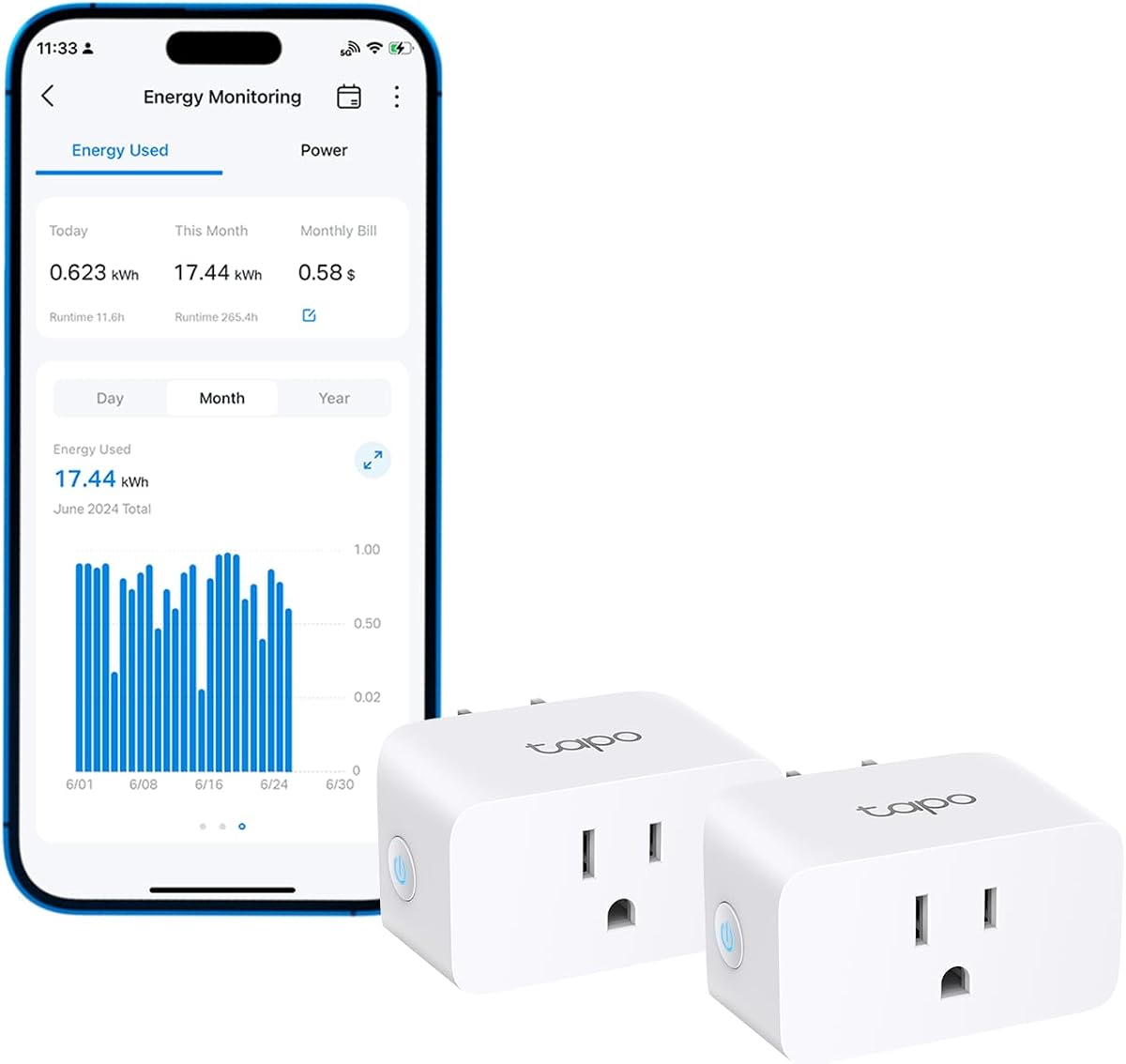

The Tapo P115 4-Pack stands out as the most complete option in this guide, combining clear energy tracking with scheduling, charging controls, and automatic protection. Its 4.5 rating reflects a strong balance of useful monitoring and convenience, while the four-pack format makes it practical for monitoring several appliances or rooms at once.
We may earn a commission when you buy through this link, at no additional cost to you.
Its standout feature is the depth of the energy dashboard. The plug presents consumption through understandable statistics and intuitive charts, while billing-system integration can visualize estimated costs for single or periodic readings. Programmable schedules add another layer by allowing high-consumption devices to operate during off-peak periods when electricity rates are lower.
The P115 also does more than display usage. Its smart charging function cuts power when a connected device reaches the user-defined low-battery limit, while auto-shutoff protects against excessive power draw. Alexa and Google Assistant support provide hands-free switching, and the Tapo app handles remote access and direct management of connected devices.
The main limitation is that its supplied information does not identify the P115 as Matter certified, so buyers building a mixed-brand Matter ecosystem may prefer the P110M. Users who also expect to plug in a continuously operating high-load appliance should confirm compatibility and load requirements. For most households, however, the P115 delivers the strongest combination of energy insight, protection, automation, and app usability.
Charts, billing estimates, and configurable schedules make the P115 more useful than a basic remote switch. You can compare usage over time, identify costly devices, and move flexible loads to less expensive electricity periods.
Smart charging and auto-shutoff add practical safeguards. These functions can stop connected devices at a chosen battery level or disconnect power when consumption exceeds the configured threshold.
We may earn a commission when you buy through this link, at no additional cost to you.
The Tapo P110M 4-Pack is an attractive choice for households that want energy monitoring and broader smart-home interoperability. Its 4.4 rating and Matter certification distinguish it from ordinary Wi-Fi plugs, while the four included units are useful for coordinating several connected appliances.
We may earn a commission when you buy through this link, at no additional cost to you.
Matter certification allows the plug to work with major platforms such as Amazon Alexa, Apple HomeKit, Google Home, and Samsung SmartThings. This makes it less dependent on one brand's ecosystem and better suited to mixed smart homes. The Tapo app remains the central interface for remote control and energy settings.
Energy management includes in-depth statistics, clear visuals, estimated billing information, and programmable scheduling. Overcharge prevention adds another layer by cutting power at user-set thresholds and durations. The plug can also protect connected devices from overcurrents by shutting off when power exceeds configured limits.
The tradeoff is that Matter users may need compatible hubs, apps, and compatible ecosystems. Buyers seeking simpler setup may find the standard P115 more direct, while those already invested in Apple Home, SmartThings, Alexa, or Google Home gain meaningful flexibility. Overall, the P110M is ideal for users who want monitoring without sacrificing ecosystem flexibility.
Matter certification is the defining advantage here. The P110M can fit into several major smart-home ecosystems, reducing the need to replace devices when your preferred platform changes.
The plug combines usage reports and off-peak scheduling with configurable power thresholds. This helps users control routine loads while adding protection against excessive draw or extended charging.
We may earn a commission when you buy through this link, at no additional cost to you.
The Govee Smart Plug with Energy Monitoring 4 Pack earns the highest listed rating in this roundup at 4.6. It is particularly appealing to users who want to see real-time power, current, and voltage immediately, then examine that information through daily, weekly, monthly, and longer-term views.
We may earn a commission when you buy through this link, at no additional cost to you.
Its app-based reporting is one of the clearest reasons to consider this model. Historical data extending up to one year can reveal changes in consumption and help identify appliances that remain active longer than expected. Schedules can be defined down to the minute, allowing lamps, fans, humidifiers, and other equipment to follow repeatable routines automatically.
Connectivity includes both Wi-Fi and Bluetooth through the Govee Home app. That gives users an additional way to access and control connected plugs, while voice control through Alexa and Google Assistant adds hands-free convenience. The plug is also rated for 15A at 120V, making it suitable for many household appliances when operating within its limits.
Its main limitation is network compatibility: 5GHz Wi-Fi is not supported, so a home without a 2.4GHz network will need to create one. The supplied information also does not mention Matter support. For users who prioritize accessible real-time readings and long reporting history more than cross-platform standardization, this is a strong and well-rounded selection.
The ability to review daily, weekly, monthly, and up-to-one-year data gives the Govee plug value beyond simple on-and-off control. Longer histories make changes in appliance usage easier to identify.
Wi-Fi and Bluetooth support broadens access, while minute-level schedules support demanding routines. The compact four-pack also gives households a straightforward way to monitor several areas.
We may earn a commission when you buy through this link, at no additional cost to you.
The Emporia Energy Monitoring Smart Plug 4 Pack focuses on the fundamentals: controlling appliances, viewing device energy use, creating schedules, and checking real-time status remotely. Its 4.0 rating is the lowest among the ten products here, but the core feature set remains relevant for everyday household equipment.
We may earn a commission when you buy through this link, at no additional cost to you.
The plug can handle lights, fans, lamps, humidifiers, and other 120V appliances. It supports on-and-off schedules through the Emporia app, allowing users to automate coffee preparation or other routines. Remote status checks and switching add convenience when a device was left on unexpectedly.
Energy monitoring is particularly useful for spotting standby consumption. The supplied information emphasizes the potential to eliminate wasteful standby power, make informed decisions about device use, and potentially extend the service life of connected products by reducing unnecessary operation.
Load ratings deserve close attention. Emporia lists a 10A maximum continuous load and a 15A maximum peak load for up to one hour per day, making this less flexible for sustained high-draw appliances than products rated for 15A continuously. It also requires 2.4GHz Wi-Fi. For lamps, fans, humidifiers, and other moderate-load devices, it remains a functional choice.
The plug makes it easier to identify devices that continue drawing power without active use. Tracking those loads can support more deliberate appliance habits and reduce unnecessary standby consumption.
Built-in scheduling and remote status checks cover the most common needs without requiring advanced configuration. It is a practical option for recurring household routines.
We may earn a commission when you buy through this link, at no additional cost to you.
The AiSeek Smart Plug Outlet 4-Pack is a versatile option for users who want real-time energy tracking, compact construction, and flexible timers in one device. Its 4.3 rating places it solidly among the higher-rated products, while the 15A and 1800W capacity suits many common household loads.
We may earn a commission when you buy through this link, at no additional cost to you.
The integrated meter tracks real-time power and total energy for connected devices. Users can schedule automatic shutdowns, which helps limit waste from devices that may otherwise remain on after use. The supplied examples include holiday lights, televisions, lamps, fans, humidifiers, blenders, and lightbulbs, illustrating the broad range of supported everyday equipment.
Safety features include FCC certification, fire-resistant materials, and protection against short circuits and overloads. Its small form factor is intended to reduce the chance of blocking adjacent outlets. Setup uses the SmartLife app without a hub, and group control lets users manage multiple plugs together.
There is an important setup caveat: Alexa and Google Assistant require the plug to be connected to SmartLife first and then linked through third-party services. Direct connection to Alexa is not supported. Buyers already committed to the SmartLife ecosystem should find setup intuitive, while those expecting a simple native voice-link process may prefer a more tightly integrated alternative.
Combining live power readings with detailed schedules makes it easy to see what a device consumes and decide when it should run. Automatic shutdown offers a simple way to prevent forgotten appliances from staying powered.
The small enclosure helps preserve access to nearby outlets. Short-circuit and overload protection add safeguards, while group control simplifies management of several plugs.
We may earn a commission when you buy through this link, at no additional cost to you.
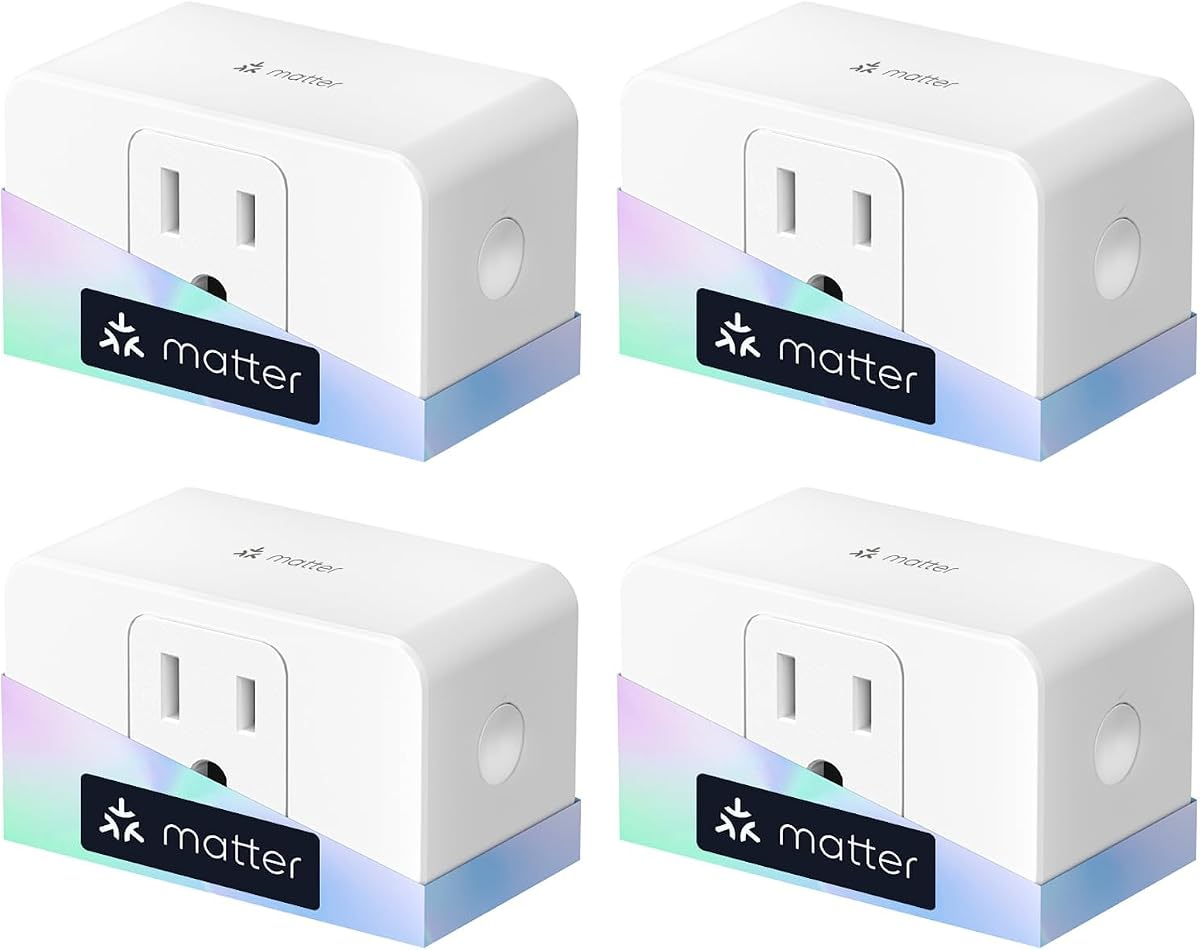
The Kasa Matter Smart Plug KP125MP4 is a premium-oriented pick for households that want energy data and dependable smart-home integration. It supports Matter-certified platforms including Apple Home, Amazon Alexa, Google Home, and Samsung SmartThings, allowing users to avoid tying the plug to only one brand.
We may earn a commission when you buy through this link, at no additional cost to you.
Its most valuable technical feature is smooth LAN control. Matter-certified devices in the same local area network can communicate directly, so a compatible switch or sensor may still operate a Matter light without a cloud connection. Once configured, local communication can continue when the home internet goes offline, which improves resilience for routine control.
Energy monitoring tracks consumption over time, helping users recognize patterns and make informed decisions. The plug also has a compact form factor, UL-certified flame-retardant design, and a stated two-year limited warranty. Control is available through the free Kasa app and voice commands through Siri, Alexa, Google Assistant, or Samsung SmartThings.
The tradeoff is that buyers must already operate or be willing to configure a compatible Matter ecosystem. The four-pack configuration also places it in a higher category than basic two-pack choices. For users seeking local control, broad platform support, and energy history without depending heavily on cloud availability, the KP125MP4 is among the strongest selections here.
Matter's LAN communication allows compatible devices to interact directly without requiring a specific forwarding device. This can keep essential lighting and switching functions working during an internet outage.
Support for Apple Home, Alexa, Google Home, and Samsung SmartThings gives users room to mix brands. The Kasa app remains available for direct energy and outlet management.
We may earn a commission when you buy through this link, at no additional cost to you.
The Tapo P115 2-Pack preserves the major strengths of the four-pack version while offering a more focused configuration for households that only need two monitored outlets. It carries the same strong 4.5 rating and includes insightful energy statistics, intuitive charts, and estimated billing features.
We may earn a commission when you buy through this link, at no additional cost to you.
Its energy tools are unusually comprehensive for a smart plug. Users can view single and periodic consumption readings, integrate billing information for clearer cost visualization, and schedule high-consumption devices to operate during off-peak electricity periods. These functions make it easier to connect everyday scheduling decisions with visible energy data.
Smart charging is another differentiator. The plug can stop power once a connected device reaches the low-battery limit selected by the user, helping prevent overcharging. Automatic shutoff similarly disconnects devices that use too much power, while Alexa, Google Assistant, and the Tapo app cover hands-free and remote control.
Compared with the four-pack, this version simply includes fewer plugs, so it is less convenient for whole-home monitoring. It also does not have stated Matter certification. For buyers who value the P115's advanced energy and charging controls but need only two units, this configuration makes the feature set easier to justify.
Estimated cost visualization links energy behavior with household rates. Scheduling flexible appliances during off-peak periods adds a practical way to respond to what the monitor shows.
User-defined battery limits can reduce the risk of overcharging, while automatic shutoff responds to excessive consumption. These protections give the plug value beyond convenience switching.
We may earn a commission when you buy through this link, at no additional cost to you.
The Kasa KP125MP2 is a compact two-pack option for users who want Matter compatibility and local control without purchasing four plugs. It combines 15A and 1800W maximum capacity with a UL-certified flame-retardant design, while its 4.3 rating reflects a balanced feature set.
We may earn a commission when you buy through this link, at no additional cost to you.
As a Matter-compatible device, it works with Apple Home, Amazon Alexa, Google Home, and Samsung SmartThings. That cross-platform approach is particularly valuable for users who already own devices from several manufacturers. Direct LAN communication can also allow compatible switches and sensors to control compatible lights without relying on a cloud service.
Energy monitoring tracks usage over time so users can understand patterns and decide how connected products should operate. The plug can be managed through the free Kasa app, while Siri, Alexa, Google Assistant, and Samsung SmartThings provide voice-control options. Its compact design is intended to avoid blocking adjacent outlets.
The two-pack size is less suitable for a broad whole-home installation, and a compatible Matter setup may be required to realize the full benefit. Users with only one brand and no interest in local smart-home control may find a basic Wi-Fi plug simpler. For mixed ecosystems, however, the KP125MP2 delivers a polished and space-conscious combination of monitoring and interoperability.
The compact enclosure helps preserve neighboring outlet access while Matter support keeps the plug usable across major platforms. It is a balanced choice for apartments and selective room upgrades.
Usage tracking provides a record of consumption patterns, while LAN control supports continued communication between compatible devices if internet service is interrupted.
We may earn a commission when you buy through this link, at no additional cost to you.
The TOPELER 15A Smart Plug with Energy Monitor 2 Pack is the most budget-conscious choice in the guide, combining real-time monitoring with useful app reports and flexible connectivity. Its 4.1 rating is modest compared with the leaders, but the stated feature set covers many core requirements.
We may earn a commission when you buy through this link, at no additional cost to you.
Through the Smart Life app, the plug reports real-time power usage, current, and voltage. Daily, weekly, and monthly charts help users identify consumption patterns and reduce waste. The Smart Life app also handles remote switching, timers, and automation, allowing connected equipment to run according to a chosen routine.
Dual-mode connectivity is a useful distinction. It supports 2.4GHz Wi-Fi and Bluetooth, allowing local Bluetooth control even if the Wi-Fi connection is unavailable. That can be helpful for setup, troubleshooting, and maintaining basic control without a hub. Amazon Alexa and Google Assistant are also supported after linking through the app.
The tradeoffs are familiar limitations of the category: 5GHz Wi-Fi is not supported, and voice assistants must be connected through Smart Life rather than directly. Its ETL and FCC certifications, fire-resistant construction, 15A/1800W rating, and compact enclosure help offset the modest rating. It is a sensible entry point for essential energy tracking.
Bluetooth support can maintain local access when the Wi-Fi network is unavailable. This makes the plug more adaptable for intermittent connectivity and initial setup.
Power, current, and voltage readings are complemented by daily, weekly, and monthly charts. The information is straightforward enough for users who want visibility without a complex energy system.
We may earn a commission when you buy through this link, at no additional cost to you.
The meross Matter Smart Plug is a privacy-conscious option for shoppers who value local control and dislike mandatory cloud registration. Its 4.4 rating reflects a solid feature set built around Matter compatibility, real-time monitoring, historical energy data, and offline LAN access.
We may earn a commission when you buy through this link, at no additional cost to you.
The built-in power meter shows real-time consumption and retains historical data through the Meross app. That combination helps users understand patterns and make informed energy choices. The standby-killer concept is especially relevant for devices that continue drawing small amounts of power after they appear inactive.
Privacy is a defining feature. The plug requires no registration and performs no data tracking, according to the supplied information. It provides direct access without relying on the cloud and can remain connected when the internet goes offline. FFS setup with Echo offers a streamlined route for compatible Alexa users, provided the purchase account matches the Echo account.
There are important setup conditions. Matter over Wi-Fi requires a 2.4GHz IPv6 network, does not support Thread, and needs a compatible hub for the selected platform. The phone must run iOS 16.1 or later or Android 8.1 or higher. These requirements are more exacting than ordinary 2.4GHz setup, but buyers who meet them gain a strong combination of privacy, resilience, and energy visibility.
No account registration and no data tracking make this an attractive option for privacy-conscious households. Direct local access can keep core control working even when the internet is unavailable.
Real-time readings and historical data reveal both active and standby consumption. The standby-killer positioning helps users address small but persistent energy use.
We may earn a commission when you buy through this link, at no additional cost to you.
Choosing a smart plug with energy monitoring means balancing measurement detail, network compatibility, electrical limits, automation, safety, and ecosystem support. The most useful model is the one that fits both your appliances and your existing smart-home setup.
A useful energy monitor should show more than whether an outlet is on or off. Look for real-time power readings and, ideally, current and voltage measurements. Daily, weekly, and monthly reports are useful for identifying appliances with unusual consumption, while yearly history provides a stronger baseline for judging whether a change is meaningful. Tapo adds estimated billing views, Govee provides the longest stated reporting window, and Kasa and Meross focus on historical usage patterns.
Choose the model that matches how deeply you intend to analyze energy. Real-time readings are sufficient for quick checks, but historical charts are essential for understanding trends and making informed scheduling decisions.
Most energy-monitoring smart plugs use 2.4GHz Wi-Fi rather than 5GHz. Govee, Emporia, AiSeek, and TOPELER explicitly support only 2.4GHz networks. Meross adds IPv6 and compatible-hub requirements, while Matter models may require current platform software and appropriate controllers. Confirm that your router offers a 2.4GHz network and that your phone can join it during setup.
A 2.4GHz requirement is normal for this category, but it should not be a surprise. Checking network compatibility before ordering prevents the most common setup obstacle.
Matter compatibility matters when you use multiple smart-home brands or want local device communication. Tapo P110M is Matter certified, while Kasa KP125MP4, Kasa KP125MP2, and Meross are Matter compatible. Matter can allow compatible devices to communicate over the local network and continue basic control during an internet outage. Standard Wi-Fi plugs are simpler but may remain tied to their manufacturer's cloud and app.
Choose Matter if ecosystem flexibility and local resilience are priorities. If you already use one brand's app and voice assistant exclusively, a conventional Wi-Fi plug may be easier to configure.
Do not treat the number printed on the front as proof that every appliance is safe to connect. Tapo models are listed at 15A, Govee at 15A and 120V, and several other products at 15A or 1800W. Emporia has a lower 10A maximum continuous load, with a 15A peak rating limited to one hour per day. High-wattage heaters, kettles, and other sustained loads deserve especially careful compatibility checks.
Match the plug's continuous rating to the device you intend to control. When in doubt, use the lower load limit and follow the appliance manufacturer's guidance.
Scheduling turns a smart plug into an automation tool rather than a simple remote switch. Most options support timers, on-and-off routines, or minute-level schedules. Tapo adds off-peak operation and configurable charging limits, while TOPELER and AiSeek emphasize automatic shutdown to reduce waste. Useful schedules include lighting, coffee preparation, humidifiers, holiday displays, and equipment that should not remain active after a set time.
Prioritize clear timer controls and automated shutdown if forgotten devices are the main problem you want to solve. The schedule should be easy to create and edit in the manufacturer's app.
Energy monitoring provides information, while protection provides action. Tapo P115 and P110M feature automatic shutoff for excessive power, configurable overcharge prevention, and threshold-based cutoff. Meross includes short-circuit and overload protection, while AiSeek states similar safeguards. Govee is ETL certified, TOPELER is ETL and FCC certified, and Kasa lists an UL-certified flame-retardant design. These certifications and protections are especially important around heat-producing appliances.
Prioritize recognized safety certifications and automatic cutoff behavior, especially for chargers, entertainment equipment, or older appliances. Never use a smart plug to hide an overloaded circuit.
Remote control depends on the app and cloud connection in many Wi-Fi products. Alexa and Google Assistant support is broad across the list, while Kasa and Meross also mention Siri and Samsung SmartThings. AiSeek and TOPELER require Smart Life app setup before voice services can be linked. Bluetooth support in Govee and TOPELER can offer an additional access method, while Matter models may provide local LAN control.
Check how voice linking works rather than assuming native pairing. Users who prioritize uninterrupted local control should favor Matter LAN features or a product with Bluetooth fallback.
Two-packs are convenient for testing a system or monitoring two rooms, while four-packs make broader deployment easier. Kasa and Meross emphasize compact construction, and AiSeek and TOPELER also describe space-conscious designs. Consider the outlet layout, nearby plugs, and whether one device will block access to another. Pack size does not change the underlying monitoring capabilities, but it affects convenience and the number of available outlets.
Choose the smallest pack that meets your immediate coverage needs if outlet space is tight. Larger packs work best where several rooms or appliances can benefit from monitoring.
Begin by confirming that the plug's electrical rating matches the appliance and that your home provides the required 2.4GHz Wi-Fi. Plug the device into a grounded wall outlet, install the specified app, and follow the setup instructions to join the network. Matter-based models may also require a compatible hub or controller, while voice services usually need to be linked through the manufacturer's third-party integration menu.
After setup, use the app to verify the energy readings with a familiar appliance and establish a baseline. Create schedules for lights, coffee makers, fans, chargers, and other equipment that benefits from automatic operation. If the plug includes overload or charging thresholds, configure them conservatively, then test normal switching and any applicable voice commands before relying on the automation for an unattended device.
Care for the plug by keeping it dry, avoiding repeated plugging and unplugging, and following the connected appliance's safety instructions. Do not exceed continuous or peak load limits. Periodically review energy history for unexpected changes, update the associated app when updates are offered, and investigate sudden readings or abnormal heat. A smart plug supplements responsible appliance care; it does not replace a surge protector, grounded outlet, or professional electrical advice where appropriate.
Most models show real-time power usage, and many also report current and voltage. The best options add historical daily, weekly, or monthly charts so you can compare consumption patterns over time. Tapo P115 models also provide estimated billing views, while some products can automate operation according to the usage you observe.
Most products in this guide require 2.4GHz Wi-Fi, and several explicitly do not support 5GHz networks. Meross requires Matter over Wi-Fi on a 2.4GHz IPv6 network. If your router combines both bands, make sure a separate 2.4GHz option is available before ordering the plug.
Matter is valuable if you use several smart-home brands or want compatible devices to communicate over a local network. It can also support basic control during an internet outage. The Tapo P110M, Kasa KP125MP4, Kasa KP125MP2, and Meross plug support Matter, but buyers need compatible platforms, apps, and in some cases a suitable hub.
Only if the appliance's operating requirements fall within the plug's continuous rating and the manufacturer's safety guidance. Products rated for 15A or 1800W cover many household loads, while Emporia lists a 10A maximum continuous load and limits 15A peak operation. Continuous high-draw devices can also generate heat, so check both ratings carefully.
They can help by revealing standby consumption, preventing forgotten devices from remaining on, and scheduling flexible loads during off-peak periods. Actual savings depend on your appliances, usage patterns, electricity rates, and how consistently you use the plug's automation features. A monitor is most effective when its reports lead to deliberate changes.
Matter models such as the Kasa plugs offer local LAN communication under compatible conditions, and Meross emphasizes direct access and offline operation. Products using conventional Wi-Fi may lose remote cloud control when internet service is unavailable, although TOPELER and Govee include Bluetooth access. Check the product documentation for the exact offline behavior.
They can be useful when they provide appropriate charging limits or overload protection. Tapo P115 models can cut power at a user-selected low-battery level, Tapo P110M supports threshold-based cutoff, and several other products include overload safeguards. Still, confirm electrical compatibility, use grounded outlets, and follow the appliance manufacturer's instructions.
A two-pack is convenient for a small apartment, a pair of rooms, or testing an ecosystem before expanding. A four-pack offers broader coverage without requiring separate purchases for each outlet. Choose based on the number of appliances you want to monitor and the physical space around your outlets, since compact designs can still vary in how they fit.
The Tapo P115 4-Pack is the strongest all-around selection, combining clear consumption charts, estimated billing features, off-peak scheduling, smart charging, and overload shutoff. Govee stands out for real-time power, current, and voltage readings with historical views extending up to one year, while the Kasa KP125MP4 offers Matter flexibility and dependable local communication.
Prioritize the features that will actually influence your routine: detailed monitoring for visibility, Matter for mixed ecosystems, automatic shutoff for unattended devices, or Bluetooth fallback for weaker connectivity. Also verify 2.4GHz requirements, continuous load limits, app setup, and voice-service linking before making a final choice. A smaller two-pack can be the most practical starting point for a limited number of outlets.
Product specifications, platform requirements, and availability can change, so confirm the current listing before purchasing. Review the manufacturer's instructions, compare the plug's electrical rating with your appliance, and make sure your network and smart-home platform are compatible. With those checks completed, the right smart plug can provide useful visibility and more disciplined control over everyday electricity use.