
HP Chromebook 14 x360 Plus
4.2Editor score
Convertible 360-degree hinge
WUXGA touch display
Wi-Fi 6 connectivity
Choosing a laptop for a 12-year-old involves more than comparing screens and processors. A useful machine should handle school platforms, video calls, browsing, documents, creative projects, and entertainment while remaining portable, secure, and easy for a young student to manage independently.
This guide compares ten Chromebooks and Windows laptops using the specifications and feature details available for each model. It considers processor capability, memory, storage, display quality, battery claims, connectivity, portability, input options, and the different needs created by refurbished, upgraded, or bundle-based configurations.
Each review identifies the product's strongest traits, practical limitations, and most suitable user. The selections range from budget-friendly basic laptops to flexible touchscreens and Windows models with more storage, while current prices and availability can change over time.
4.2Editor score

4.5Editor score
4.4Editor score
As an Amazon Associate we earn from qualifying purchases.
The comparison below places all ten laptops side by side, emphasizing the distinctions that matter most to a young student: operating system, processor, memory, storage, display, connectivity, and portability.





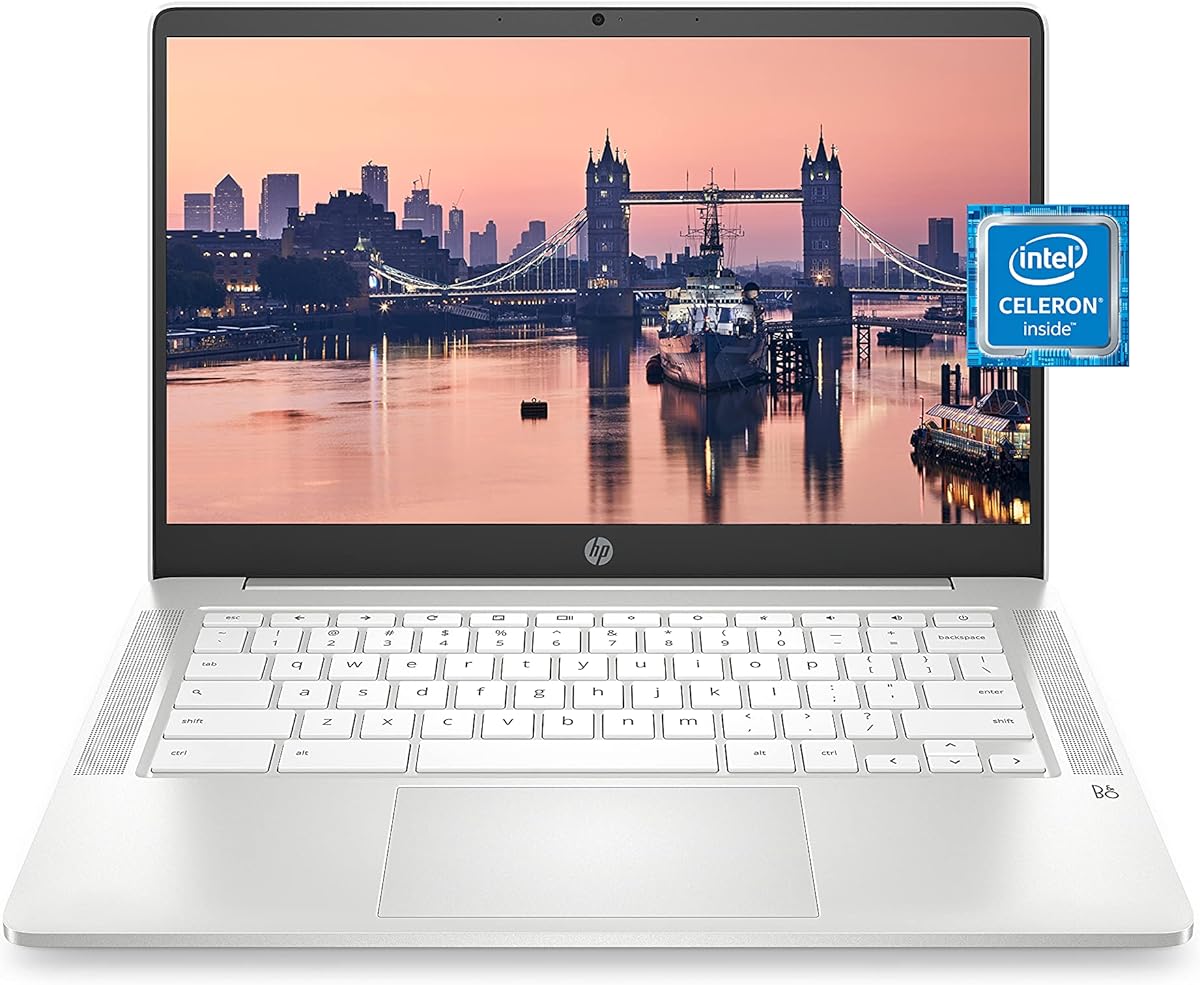
The HP Chromebook 14a-na0021nr combines a portable 14-inch form with a 4.4 rating, making it a practical starting point for a 12-year-old who needs a dedicated computer for school and everyday use. Its Intel Celeron N4000, 4GB of memory, and 32GB of eMMC form a straightforward platform for browsing, Google Workspace, video calls, streaming, and light applications.
We may earn a commission when you buy through this link, at no additional cost to you.
The anti-glare 1366 by 768 display is practical for a shared study area because it can make on-screen content easier to view under varied lighting. The listed weight of 3.24 pounds supports daily transport, while the Wide Vision HD camera and integrated dual-array microphones cover online classes and calls. Wi-Fi 5 and Bluetooth 5.0 provide the connectivity expected for typical school work.
The main limitation is storage. With only 32GB of eMMC, the student must be attentive to downloaded files, cached videos, and installed applications. The N4000 is also designed for routine productivity rather than demanding creative software or intensive gaming. These constraints are reasonable for a browser-centered Chromebook, although they make the device less flexible than models offering a touchscreen or 64GB of storage.
This laptop is a strong recommendation for a child using Google Classroom, Google Docs, Khan Academy, and similar web-based tools. It suits families prioritizing portability, battery life, and simplicity over maximum storage. For a student who works mainly online and keeps files in cloud storage, it offers a convincing mix of portability, useful features, and straightforward operation.
ChromeOS provides direct access to web-based learning tools, and the N4000 is adequate for ordinary assignments, research, and communication. The anti-glare panel also makes the larger screen practical for extended reading compared with a compact glossier display.
At a listed 3.24 pounds, the Chromebook is easy to include in a backpack without creating a major portability burden. Its claimed wireless streaming battery life of up to 13 hours and 30 minutes also supports a full school day, although actual results depend on workload and settings.
We may earn a commission when you buy through this link, at no additional cost to you.
The Samsung Galaxy Chromebook Go is a slim 14-inch Chromebook with a 4.3 rating, offering a polished alternative for a student who values design, portability, and straightforward operation. Its Intel Celeron N4500 and 4GB RAM are aimed at everyday browsing, school applications, communication, and entertainment rather than advanced software.
We may earn a commission when you buy through this link, at no additional cost to you.
Samsung describes the chassis as military tough, with construction intended to withstand occasional drops or dings. That focus is reassuring for a device likely to move between home, school, and extracurricular activities. A claimed 12-hour battery life, 64GB of storage, and built-in integration with a user's phone make the laptop more convenient for students who already rely on Google's ecosystem.
Like the other Chromebooks in this guide, it is not intended to replace a full Windows workstation for specialized desktop applications. The processor and memory provide sufficient room for ordinary tasks, but demanding browser tabs, complex editing, and advanced games can reveal their limits. Users should also evaluate the included Google AI Pro trial and cloud-storage terms rather than treating temporary benefits as permanent value.
The Galaxy Chromebook Go is best for a 12-year-old who wants a conventional laptop rather than a convertible, values a slim silver design, and works primarily in ChromeOS. It is particularly attractive when phone-to-computer file transfer and direct phone control would make daily organization easier. A family comfortable with Google's applications will find that integration useful.
The slim construction and stated drop resistance suit a laptop expected to travel regularly. Samsung's focus on durability makes this model appealing for students who need a machine that can tolerate ordinary bumps and frequent repositioning.
File transfer and phone control can reduce friction when a student needs to move between Android and Chromebook. The 64GB drive also provides more room for applications and offline files than the 32GB configurations in this roundup.
We may earn a commission when you buy through this link, at no additional cost to you.
The renewed Lenovo 300e is a compact 2-in-1 Chromebook with a 4.0 rating, offering a distinctive combination of touch input, portability, and affordability. Its MediaTek 8173C quad-core processor and 4GB of LPDPR3 memory are suitable for web browsing, Google Classroom, basic documents, and communication.
We may earn a commission when you buy through this link, at no additional cost to you.
The 11.6-inch HD panel supports 10-point multitouch and an IPS viewing experience, making it useful for touch-based activities, drawing, or using a 2-in-1 posture. Wi-Fi 802.11ac and Bluetooth 4.2 provide the essential wireless connections expected in a modern classroom or home. The 32GB eMMC keeps files limited, so cloud storage remains important.
Renewed status is the decisive consideration. Buyers should review the listing's condition details, included accessories, warranty information, and return terms carefully. The processor and specifications also belong to an older Chromebook generation, so demanding multitasking, modern games, or intensive creative work is less appropriate than with newer models. Its age should be considered alongside the compact dimensions and touchscreen benefits.
This is a practical option for a 12-year-old whose schoolwork revolves around web applications and who prefers a small, touch-enabled device. It may also appeal to families seeking a lower-cost first laptop. The recommendation depends on accepting refurbished equipment and checking the exact condition before purchase.
The 10-point multitouch screen gives a 2-in-1 Chromebook more ways to interact with educational sites, drawing tools, and presentations. The smaller display can also be easier to carry and may be more comfortable in a compact study space.
A renewed computer can provide a useful combination of touchscreen design and affordability, but it does not carry the same uncertainty as a new model. Check the condition description, battery expectations, included components, warranty, and return policy before making a decision.
We may earn a commission when you buy through this link, at no additional cost to you.
The HP Chromebook 14a-na0226nr earns a 4.3 rating by bringing together a quad-core Intel Celeron N4120, 64GB of storage, and a claimed battery life of up to 14 hours. It is a well-balanced option for schoolwork, browsing, communication, and entertainment on a 14-inch display.
We may earn a commission when you buy through this link, at no additional cost to you.
Its anti-glare 1366 by 768 screen is well suited to text-heavy assignments, while custom-tuned stereo speakers support media use outside lessons. HP Fast Charge is advertised to move from zero to 50 percent in about 45 minutes, a useful feature when a student needs a quick boost between activities. The multi-touch touchpad enables scrolling, zooming, and four-finger gestures.
The main visual limitation is the 1366 by 768 resolution. It is adequate for standard school platforms, but a Full HD panel would appear sharper for text, video, and creative work. Intel UHD Graphics 600 is suitable for streaming and casual games, yet it should not be treated as a high-end gaming solution. Otherwise, the generous storage and long stated runtime make this a versatile family Chromebook.
This model is well suited to a student who regularly downloads files, needs offline access to assignments, or wants a larger screen without the complexity of Windows. It works especially well for Google Workspace, educational web applications, and everyday video calls. Families looking for a balance of storage, battery claim, and familiar Chromebook design should find this option appealing.
The 64GB eMMC gives this Chromebook more breathing room than 32GB models. It is still modest for large video libraries, but it reduces the need to transfer files constantly to cloud storage.
HP Fast Charge offers a practical way to add substantial charge during a short break. The advertised up-to-14-hour runtime also makes the Chromebook suitable for students who spend a full day away from an outlet.
We may earn a commission when you buy through this link, at no additional cost to you.
The Lenovo Flagship 14-inch Chromebook combines a Full HD touchscreen, an eight-core MediaTek Kompanio 520, and a 4.2 rating. Its 1920 by 1080 IPS display is the clearest on this list, giving students more detail for documents, educational diagrams, and video than a standard 1366 by 768 panel.
We may earn a commission when you buy through this link, at no additional cost to you.
The touchscreen supports finger navigation, while the integrated 720p HD camera has a physical privacy shutter that helps when a student is not in a video call. At a listed 2.86 pounds, the laptop is highly portable. Wi-Fi 6 and Bluetooth 5.1 also provide modern wireless capabilities, and the USB-C, USB-A, microSD, and audio connections cover common student accessories.
Four gigabytes of memory is the principal limitation. It can be sufficient for browser-based learning and ordinary applications, but many simultaneous tabs may leave less room for smooth switching. The model is not intended for intensive gaming or professional creative software. The Full HD display also adds some weight and power demand compared with a lower-resolution panel, making efficiency dependent on actual workload and settings.
This Chromebook is a strong match for a visual learner, a student completing reading-heavy assignments, or anyone who wants touch interaction without moving to a premium convertible. It is well suited to Google Classroom, remote learning, and Zoom-style communication. The combination of clarity, portability, and modern connectivity gives it a well-rounded role for both school and home.
The 1920 by 1080 resolution provides finer detail for reading passages, reviewing annotated material, and following video lessons. IPS technology and wide viewing angles also help when the laptop is used at a desk rather than directly in front of the student.
Wi-Fi 6 is useful in crowded school or home networks where several devices compete for wireless access. The camera's physical privacy shutter offers a simple, visible way to prevent accidental video capture when the camera is not needed.
We may earn a commission when you buy through this link, at no additional cost to you.
The HP Chromebook 14 x360 Plus is the most versatile premium selection here, with a 4.2 rating and a 360-degree hinge that converts it among laptop, tent, stand, and tablet modes. That flexibility makes it useful for writing, browsing, video calls, reading, and touch-based activities without requiring a separate tablet.
We may earn a commission when you buy through this link, at no additional cost to you.
Its 1920 by 1200 touchscreen has narrow bezels, 300-nit brightness, and an anti-glare coating. Intel N150 processing, 4GB of LPDPR5 memory, and 128GB of UFS storage support ordinary productivity, streaming, and light multitasking. USB-C, USB-A, Wi-Fi 6, Bluetooth 5.4, and an FHD camera make it a well-equipped everyday device.
The memory remains the main specification-level constraint, and premium hardware does not turn a 4GB Chromebook into a heavy workstation. The product disclosure also says the computer has been resealed to upgrade the system, with a one-year HP warranty on remaining components. Buyers should read the disclosure and warranty terms carefully, particularly if appearance or packaging condition matters.
For a 12-year-old who studies at a desk but also watches demonstrations, reads materials, or uses a shared screen, the x360 format is especially useful. It is also a strong family choice because one device can serve several learning styles. This is a premium pick based on its flexible display design and newer platform, not on high-end specifications.
The 360-degree hinge allows a parent or teacher to move quickly between a conventional keyboard setup, a compact tent position, a hands-free stand, and a tablet. Those modes make the device adaptable to lectures, drawing, reading, and video calls.
The WUXGA touchscreen provides more working area and detail than a basic HD panel. Intel N150, LPDPR5 memory, and 128GB UFS storage also create a more modern platform for a student who expects the computer to last through several years of ordinary use.
We may earn a commission when you buy through this link, at no additional cost to you.
The Lenovo 2023 14-inch FHD Chromebook has the highest customer rating in this roundup at 4.5, and its specifications support that strong result. A Full HD IPS touchscreen, eight-core MediaTek Kompanio 520, 64GB of storage, and Wi-Fi 6 provide a capable foundation for school, communication, and entertainment.
We may earn a commission when you buy through this link, at no additional cost to you.
The 1920 by 1080 screen is a major advantage for a young student, providing crisp text and a useful amount of detail for lessons. The Kompanio 520 combines four 2.0GHz Cortex-A73 cores with four 2.0GHz Cortex-A53 cores and is designed for responsive everyday Chromebook use. A 720p HD webcam, dual-array microphone, physical privacy shutter, Wi-Fi 6, and Bluetooth 5.1 support online learning well.
The shared 4GB of memory is the one notable limitation. It should handle the normal mix of browser tabs, Google applications, and a video call, but very heavy multitasking can test the system. The listed 2.86-pound weight, slim dimensions, and 64GB drive help offset that limitation by preserving portability and practical storage. The bundle also includes an HDMI cable, USB extension cord, and mouse pad.
This is our editor's choice because it balances a sharp touchscreen, strong processor specification, modern wireless connectivity, useful physical dimensions, and the highest listed rating. It is a strong all-around recommendation for a 12-year-old whose school day spans documents, research, interactive lessons, video meetings, and entertainment. The value of the included accessories may also make setup easier.
The Full HD IPS panel, webcam privacy shutter, and dual-array microphone cover several common school needs at once. Clear visuals support reading and diagrams, while the camera and microphone are suitable for online participation and group projects.
The octa-core Kompanio 520 provides a useful foundation for browser-heavy work and light app use. It also makes this model a more convincing long-term option than older entry-level Chromebooks, provided the student's workload remains within everyday computing limits.
We may earn a commission when you buy through this link, at no additional cost to you.
The HP 14 Ultra-Light Laptop provides a useful Windows alternative for a 12-year-old whose schoolwork includes Microsoft Office or software that is not designed for ChromeOS. It carries a 4.3 rating, an Intel N150 processor, 4GB of DDR4 memory, and 256GB of total storage.
We may earn a commission when you buy through this link, at no additional cost to you.
Storage consists of 128GB UFS plus a 128GB SD card, and the product disclosure notes that the SD card was added to reach the advertised capacity. The 14-inch anti-glare display has 1366 by 768 resolution and 250-nit brightness. An HP True Vision 720p camera supports classes, while USB-C, two USB-A ports, HDMI, and a headphone connection cover typical accessories.
Windows 11 Home in S mode is designed around security and performance, but it can restrict installation of certain applications. The listing explains that it can be switched to Windows 11 Home through the activation settings. A parent should decide whether that flexibility is needed and understand the implications before setting up the device. The 4GB memory and entry-level processor still limit demanding work.
This laptop is best for a student who specifically needs Windows, works regularly with Word, Excel, or PowerPoint, and values a mix of internal and removable storage. The included one-year Microsoft 365 subscription adds immediate productivity value. Its basic display, however, makes the full-screen Lenovo options more attractive for extended reading or multimedia.
Unlike ChromeOS, Windows supports a broad collection of desktop and educational applications. That makes the HP 14 a more practical fit when school software is Windows-only, while S mode offers a more controlled starting point for a younger student.
The internal 128GB UFS drive provides fast everyday storage, while the included 128GB SD card expands the usable file and media capacity. The upgraded configuration and associated storage warranty should be confirmed in the listing before purchase.
We may earn a commission when you buy through this link, at no additional cost to you.
The HP Stream 14-inch Student Laptop stands apart through its bundled 1TB docking station, one-year Microsoft 365 subscription, and broad set of included accessories. It has a 4.2 rating and uses Windows 11, Intel N150 processing, and 4GB of DDR4 memory for everyday school and family use.
We may earn a commission when you buy through this link, at no additional cost to you.
The included seven-in-one dock adds substantial file capacity and connectivity, while a 32GB microSD card, Type-C data cable, three-in-one charging cable, and cleaning cloth cover several common setup needs. The laptop itself includes 128GB of UFS storage. Its anti-glare display, 720p webcam, Wi-Fi 6, Bluetooth 5.4, and Windows 11 create a capable foundation for assignments and video calls.
The headline storage figure should be interpreted carefully because 1TB belongs to the docking station rather than the laptop's internal drive. The 4GB of system memory and Intel N150 remain modest, and the 1366 by 768 screen is basic. If the dock is not needed for the child's regular routine, the bundle may be more elaborate than necessary.
This model is a good fit for a family that wants Windows, Microsoft Office, and a large expandable storage area for media and school files. It may appeal particularly to a student who works across a laptop and a more permanent desk setup. Parents should supervise initial account setup, software installation, and the transition away from Windows S mode if full Windows becomes necessary.
The docking station can make a fixed study area more practical by expanding storage and simplifying connection to accessories. A student who studies mostly at one desk may extract more value from the package than one who carries every component between classes.
The one-year Microsoft 365 subscription provides access to applications such as Word, Excel, and PowerPoint during the included period. Families should review renewal terms and whether the school's own licenses already provide the student with these tools.
We may earn a commission when you buy through this link, at no additional cost to you.
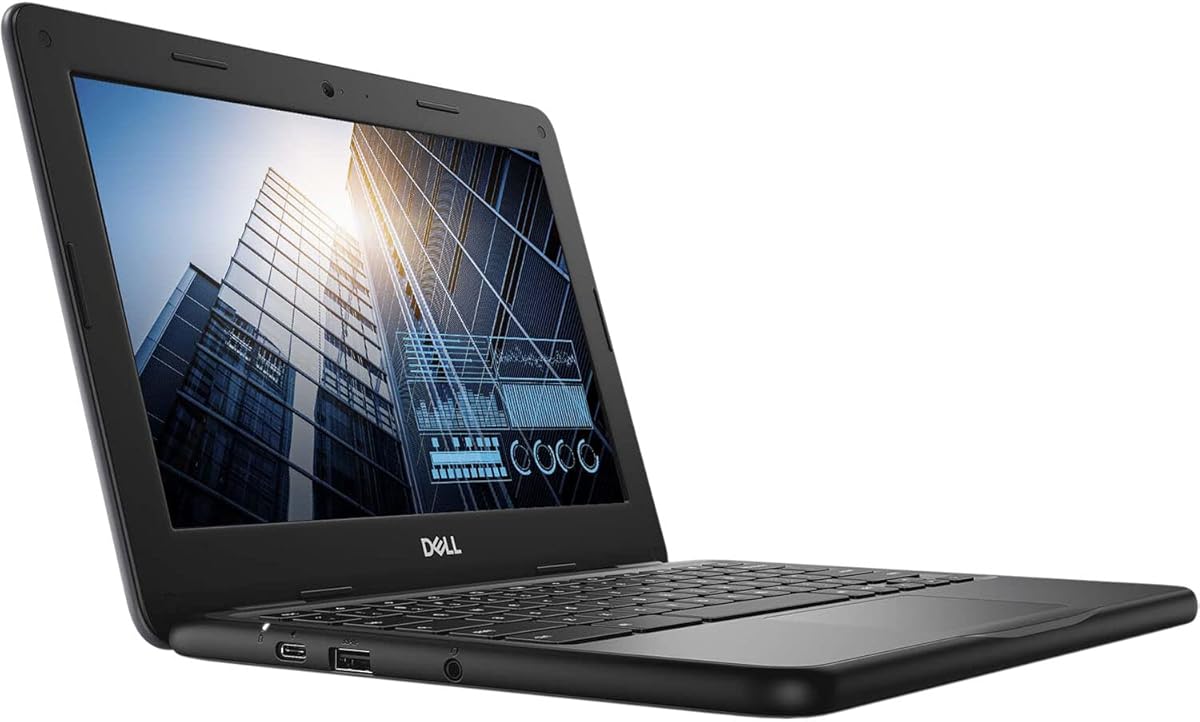
The renewed Dell Chromebook 11 3100 is a compact 2-in-1 for a student who wants a smaller touchscreen computer. Its 4.3 rating is supported by a useful mix of an 11.6-inch 1366 by 768 display, Intel Celeron N4020 processor, 4GB of memory, and 32GB of flash storage.
We may earn a commission when you buy through this link, at no additional cost to you.
The convertible design allows the display to be used in different orientations, which can help with reading, watching instructional video, or collaborating at a shared table. ChromeOS provides a simple environment for Google Workspace, educational websites, and communication tools. The power adapter and USB Type-C connectivity are identified in the listing, while Bluetooth support is also stated.
As a renewed product, the laptop's physical condition, battery condition, included accessories, and warranty should be confirmed before ordering. Its dual-core N4020 and 4GB of memory are appropriate for routine school tasks but limited for heavy applications, advanced creative work, or modern games. The 32GB drive also leaves little room for locally stored media.
This is a sensible lower-cost option for a younger student working primarily in browser-based applications, particularly if a small touchscreen format is important. It is also a candidate for a family that understands refurbished-device trade-offs. For a child needing more storage or a larger, sharper screen, the newer Lenovo and HP 14-inch models provide more room for growth.
The 11.6-inch touchscreen can make the Chromebook easier to handle in a confined space and provides additional viewing angles when the device is converted. Those traits can be useful for individual study and shared classroom activities.
The 4.3 rating suggests that renewed units can provide dependable value, but each listing should be evaluated on its own. A clear return policy, confirmed charger, and adequate warranty are especially important when buying an older compact Chromebook for a child.
We may earn a commission when you buy through this link, at no additional cost to you.
The right choice depends on the child's curriculum, learning environment, software requirements, and need for mobility. Parents should begin with the school's platform requirements, then balance performance, display, battery, storage, durability, and parental controls.
ChromeOS is built around browser-based work, quick updates, and Google's applications, making it a strong match for Google Classroom, Docs, Sheets, and Slides. It also simplifies maintenance for families that want a secure, comparatively straightforward system. Windows laptops offer a much broader range of desktop software, including full Microsoft Office and specialized learning applications, but they require more attention to updates, security, and installed programs. Check the school's required applications before deciding. If both systems satisfy the course requirements, the operating system should follow the child's existing comfort and the family's management preferences.
A 12-year-old's laptop must be comfortable handling browser tabs, video calls, streamed lessons, and document editing at the same time. Intel Celeron N-series and entry-level Intel N processors are designed for that foundation, while the MediaTek Kompanio 520 in the two Lenovo touchscreen models provides an eight-core specification for more responsive everyday use. A faster processor cannot compensate for insufficient memory, but it can improve multitasking and responsiveness. Avoid judging models by clock speed alone; consider core configuration, system memory, thermal design, and the applications the child actually intends to run.
Every model in this guide has 4GB of memory, which reflects the entry-level nature of the category. That amount is generally sufficient for web-based coursework, documents, and a small number of applications, but heavy tab use can reduce responsiveness. A student who keeps many browser tabs, communication tools, and media applications open will benefit from additional memory when available. Parents should also review whether the operating system and applications update efficiently over time, since a new release can increase resource demands. Cloud storage helps with files, but it does not replace the RAM needed to keep several browser pages responsive at once.
Storage determines how many applications, offline files, videos, and documents can live on the laptop. A 32GB eMMC or flash drive is workable when files remain in cloud accounts and downloads are managed, but it can become restrictive for creative projects and offline learning. A 64GB drive offers a more comfortable balance for the simple Chromebook models. Windows configurations may combine internal storage with an SD card or a docking station, which adds capacity but can also add clutter. Check the type of drive, removable components, included accessories, and storage warranty before comparing advertised totals.
A larger 14-inch display is generally easier for writing and viewing multiple items, while an 11.6-inch model is easier to carry and may suit a child with a smaller workspace. Resolution matters as well: 1920 by 1080 provides sharper text and images than 1366 by 768, while the HP x360's 1920 by 1200 panel offers a wider 16:10 working area. Anti-glare finishes are useful in bright rooms, and touchscreens can make interactive lessons more intuitive. The best choice balances clarity, size, eye comfort, and the child's comfort rather than automatically selecting the largest display.
Battery claims provide a useful guide, but real runtime depends on screen brightness, Wi-Fi use, video playback, and how many applications are open. HP claims up to 13 hours and 30 minutes for the N4000 Chromebook, up to 14 hours for the N4120 model, and up to 11 hours for the Windows HP 14, while Samsung lists a 12-hour battery for the Galaxy Chromebook Go. Weight matters just as much: listed figures range from 2.86 pounds to 3.24 pounds for several of the larger models. A lighter machine is easier to carry, but battery capacity and thermal performance also influence whether it can last through a school day.
A 12-year-old's laptop will be transported, opened repeatedly, and occasionally dropped. Samsung specifically describes the Galaxy Chromebook Go as military tough, while the HP x360 Plus is stated to have passed MIL-STD 810H testing. A sturdy case or sleeve can provide additional protection. Management features matter just as much: ChromeOS offers a simple, tightly integrated web environment, while Windows provides greater flexibility but more settings for parents to configure. Before handing over the device, establish account ownership, update settings, enable appropriate family controls, and discuss safe browsing, downloads, communication, and screen-time expectations.
USB-A, USB-C, HDMI, a microSD reader, and an audio jack can determine how easily a student connects headphones, storage, a monitor, or classroom equipment. Most models in this guide include at least one USB-A and one USB-C connection, but port placement and availability matter when the laptop is on a desk. The Lenovo 2023 bundle includes an HDMI cable, USB extension, and mouse pad, while the HP Stream package includes a multiport dock and several cables. Accessories can improve setup, but they should not outweigh the core needs of performance, display, battery life, and software compatibility.
Begin with a clean setup rather than handing over an unconfigured device. Sign into the child's school account, install required applications from official sources, update the operating system, set a recognizable password, and adjust permissions, privacy controls, and family settings. Create separate browser profiles for school and personal use, and explain which activities require adult approval. On a Chromebook, confirm that the student can access school platforms and required Google applications without accidentally signing out of a shared family account.
Create a consistent storage routine. Keep active assignments in a clearly named school folder, download only what is needed, and remove large videos or duplicate files regularly. On Windows, check that system and application updates run automatically and include the device in any family backup plan. On ChromeOS, make sure important documents are available offline when required, while remembering that cloud synchronization is not the same as a local backup. Establish a charging location and use the included cable or a compatible replacement.
Physical care is simple but important. Keep food and drinks away from the keyboard, use a stable table, and avoid leaving the laptop in a hot car. A padded sleeve protects the finish during transport, while a case or screen cover reduces the risk of impact damage. Clean the display and keyboard with a soft microfiber cloth, disconnect power before cleaning, and avoid liquid cleaners unless the manufacturer approves them. Review battery habits, update software, and back up important work periodically to keep the laptop dependable throughout the school year.
For most schoolwork, a Chromebook is a strong fit because it supports web-based learning platforms, Google Workspace, streaming, video calls, and a wide selection of educational Android apps. Its automatic updates and comparatively simple interface also make it approachable for a young student. A Windows laptop is preferable when the curriculum requires specific desktop applications that cannot run in ChromeOS.
A touchscreen can make reading, drawing, interactive lessons, and app use more engaging and flexible. It is especially valuable in a convertible design that can move between laptop and tablet positions. It is not essential for every student, however, and a conventional anti-glare laptop may be more affordable, durable, and appropriate for a child focused on typing assignments.
A 32GB drive works for cloud-centered users who install only essential applications and download files sparingly. A 64GB drive is a better general target for a student who keeps assignments, presentations, photos, and videos on the machine. Students using creative software, large media files, or specialized programs should consider a laptop with more internal storage rather than relying only on an SD card or docking station.
4GB is adequate for standard school tasks such as browsing educational sites, editing documents, taking video calls, and using ChromeOS applications. It becomes less comfortable when many tabs and communication tools remain open simultaneously. A student with a heavy workload benefits from more memory, while a typical web-focused user can generally manage with the 4GB configurations represented in this guide.
A renewed laptop can be a practical way to reduce the initial cost of a suitable model, particularly when it offers a touchscreen or compact form that would otherwise cost more. Buyers should carefully review the condition, battery expectations, included charger, warranty, and return policy. A stronger new configuration may provide better long-term assurance if the child is likely to keep the device for several years.
Among the 14-inch models, the Lenovo Flagship and Lenovo 2023 Chromebooks are listed at 2.86 pounds, making them especially light for larger-screen options. The renewed Lenovo 300e and Dell Chromebook 11 3100 are smaller at 11.6 inches and may feel even more compact in a backpack. The best choice also depends on battery needs and whether the child prefers a touchscreen or conventional keyboard.
One well-configured laptop can usually support both environments because both school and home work can be organized through separate browser profiles, folders, and user accounts. The device should support the school's required applications and allow printing, video calls, and file syncing. A separate device becomes more useful when siblings have different schedules, software requirements, or supervision needs.
Start by using a strong account password, enabling automatic updates, reviewing privacy and sharing settings, and activating the appropriate family controls for the operating system. Discuss safe browsing, communication with strangers, app downloads, and purchases. Parents should also periodically review browser history, installed applications, and account activity while respecting the student's growing need for privacy and independence.
The Lenovo 2023 14-inch FHD Touchscreen Chromebook stands out as the editor's choice because it combines the highest listed rating with a sharp display, eight-core processor, 64GB of storage, modern Wi-Fi, and a portable design. The HP Chromebook 14 x360 Plus is the premium option for students who value a convertible design, while the HP Chromebook 14a-na0021nr provides a lighter and more economical route into a larger-screen Chromebook.
Most families should begin with the school's software requirements and then prioritize a screen the child can comfortably read, a battery that survives the school day, and enough storage for real assignments. A Full HD touchscreen is useful but not mandatory, while a 64GB drive offers more breathing room than 32GB. Windows becomes important when required educational software demands it; otherwise, ChromeOS can provide a simpler and highly accessible experience.
Before purchasing, compare the current listing, warranty, included accessories, and any upgrade disclosures, because configurations and availability can change. Current prices should also be checked at the time of purchase. A good laptop for a 12-year-old is not necessarily the most powerful model; it is the one that meets the curriculum, fits the student's workspace, and remains reliable and manageable throughout the school year.