
Sony Z9K Series
3.8Editor score
Native 8K Mini LED display
4K gaming up to 120Hz
HDMI 2.1 VRR support
PlayStation 5 optimizations
An 8K TV can give PC gaming an exceptionally sharp canvas, but resolution alone does not determine performance. Great gaming televisions also need low input lag, high refresh rates, variable refresh rate support, accurate HDR, and a backlight capable of preserving detail in both shadows and highlights.
We compared the supplied models by examining native resolution, panel and backlight technology, gaming refresh specifications, VRR, HDMI features, HDR support, motion processing, smart-platform capabilities, and sound. The list includes every television provided, including several strong 4K gaming sets that can still outperform 8K alternatives for particular PCs.
Each review identifies the technology that matters most in real use rather than treating every specification as equally important. Ratings and product details reflect the supplied listings, while availability and pricing can change. Check current retailer listings and PC compatibility before making a final purchase.
3.8Editor score

4.1Editor score

3.4Editor score
As an Amazon Associate we earn from qualifying purchases.
The comparison below places resolution alongside the factors that have a greater practical effect on PC gaming, including refresh rate, VRR, local dimming, HDR, audio, and smart features. Several entries are 4K gaming televisions rather than native 8K models, making them useful alternatives when responsiveness or value matters more than headline resolution.




The Sony Z9K Series combines a genuine 8K panel with Mini LED backlighting, making it one of the clearest choices for PC enthusiasts who want more visible detail than a conventional 4K television can provide. Its supplied rating is 3.8, but the underlying specification sheet is persuasive: 4K gaming at up to 120Hz, HDMI 2.1 features, VRR, ALLM, and input latency as low as 8.5ms. The 75-inch screen can render fine textures, small interface text, and distant objects with greater perceived sharpness, particularly when the PC can output at native 4K or when high-quality upscaling handles lower-resolution content.
We may earn a commission when you buy through this link, at no additional cost to you.
Sony's Cognitive Processor XR and XR Backlight Master Drive manage contrast, color, and local brightness across thousands of Mini LEDs. That combination is valuable in games that alternate between dim interiors and bright skies, since the backlight can deepen shadow detail without sacrificing highlight intensity. Dolby Vision, IMAX Enhanced, and Triluminos Pro strengthen the cinematic presentation, while the dedicated Game Menu gathers picture settings and assist features into one place. The supplied listing also highlights automatic HDR tone mapping and automatic genre picture switching for PlayStation 5.
There are important compromises. Its maximum stated gaming refresh rate is 120Hz, below the 165Hz and 240Hz figures offered by several Samsung models in this list. That does not make the Z9K slow: 120Hz remains excellent for PC gaming, and its 8.5ms latency figure is particularly strong. It is simply a more measured proposition than the fastest high-refresh alternatives. Native 8K at 120Hz would also demand a graphics card capable of driving an extremely demanding resolution, so most PC owners will use the television at 4K.
The Z9K is best for gamers who value native 8K detail, restrained industrial design, Sony processing, and especially strong PlayStation integration, while still using a Windows PC. It is less compelling for competitive players who want to run competitive shooters at 165Hz or 240Hz and may see little benefit from 8K output. For a mixed PC-and-console gaming room, however, its combination of resolution, HDMI 2.1, HDR, low latency, and dedicated gaming controls makes it an excellent all-around recommendation.
At a large viewing distance, native 8K can reveal textures and interface elements that become less distinct on a 4K panel. The benefit is most visible in detailed environments, desktop productivity, and high-quality video, although games must actually render enough detail for the difference to be meaningful.
HDMI 2.1 support for 4K at 120Hz, VRR, and ALLM gives the PC a modern feature set. Sony's Game Menu further reduces setup friction by putting gaming picture controls and assist features in one accessible interface.
We may earn a commission when you buy through this link, at no additional cost to you.
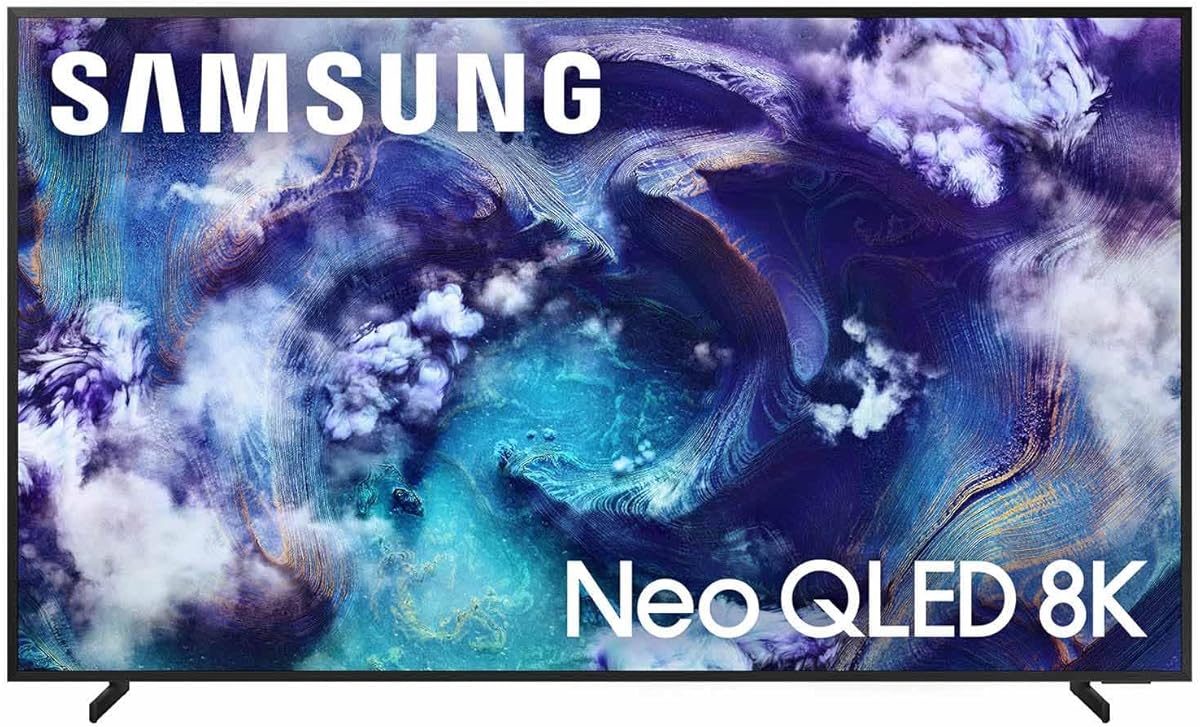
The Samsung QN990F is built for buyers who want both native 8K resolution and unusually high PC gaming refresh rates. Its supplied rating is 3.5, yet the listed capabilities are among the most ambitious in this guide: a 65-inch Neo QLED 8K Mini LED screen, an NQ8 AI Gen3 processor, 768 AI neural networks, and gaming at up to 4K 240Hz. For a PC enthusiast willing to supply appropriate hardware, that combination can produce exceptionally fluid motion while retaining the fine detail of an 8K panel.
We may earn a commission when you buy through this link, at no additional cost to you.
The processor is designed to upscale content and optimize scenes dynamically, which can make lower-resolution games appear cleaner on the large screen. Its AI motion processing targets fast-moving balls, text, and flickering detail, reducing the smeared appearance that often accompanies aggressive frame interpolation. For PC gaming, the most important consideration remains the native refresh capability: the stated 240Hz maximum gives competitive players a much broader range of options than the 120Hz Z9K.
Samsung's Wireless One Connect is unusually practical in a gaming setup. The set-top box, console, and soundbar can remain away from the television, reducing cable clutter around a large display and making wall mounting easier. The Glare Free treatment is also important in bright rooms, where reflections can undermine dark-scene contrast. Smart features include Samsung Vision AI and Alexa, while the Mini LED backlight gives the 8K panel greater control over bright highlights and dark areas than a conventional edge-lit LED arrangement.
The main drawbacks are practical rather than visual. A 65-inch footprint is smaller than the giant 75-inch and 85-inch choices here, which may disappoint buyers who want maximum immersion. Achieving 240Hz requires a powerful PC and a game that can sustain those frame rates; otherwise, the television's headline capability will rarely be used. The supplied 3.5 rating also suggests some inconsistency, so prospective buyers should inspect recent customer feedback carefully. Despite those reservations, the QN990F is a premium choice for a high-end gaming PC, especially for players who want native 8K without surrendering the option of very high refresh rates.
Most high-end gaming displays prioritize extreme refresh rates, while native 8K televisions traditionally offered more restrained gaming rates. The QN990F's listed 4K 240Hz capability makes it a compelling middle ground for a PC that can drive fast frame rates.
Wireless One Connect can move several source devices away from the screen, while the anti-glare surface helps maintain visibility in rooms with windows or strong ambient light. Both features are particularly useful in a dedicated gaming setup.
We may earn a commission when you buy through this link, at no additional cost to you.
This 75-inch QN990F configuration extends Samsung's flagship Neo QLED formula into a particularly immersive footprint. It is a native 8K Mini LED television with AI Upscaling Pro, a 256-neural-network processing platform, Wireless One Connect, and a Glare Free surface according to the supplied listing. The included Amber Protection arrangement and screen-cleaning solution add useful extras, although the set's 2.8 rating is the lowest among the products in this guide and deserves careful attention.
We may earn a commission when you buy through this link, at no additional cost to you.
For PC gaming, the principal attraction is straightforward: a very large 8K canvas. Fine textures in open-world games, sharp desktop text, and compact HUD elements can look refined when the television is viewed from a normal distance. Mini LED backlighting supports deeper blacks and brighter highlights, helping the display preserve contrast in a large room where a smaller OLED or conventional LED might struggle with reflections or washed-out shadow detail.
Wireless One Connect can make a large installation considerably neater by allowing the console, PC-related source hardware, and soundbar to sit away from the display. AI Upscaling Pro is especially relevant because most PC games render below 8K. It can sharpen and reconstruct detail, although the native rendering resolution still determines how much genuine detail exists. The anti-glare surface also helps when sunlight or lamps create reflections across such a large panel.
The listing does not provide the same explicit high-refresh gaming specification as the standard QN990F entry, making it harder to establish the exact ceiling for competitive play. Its low supplied rating may reflect limited reviews, packaging or delivery concerns, or early product experiences; it should not be interpreted automatically as a judgment about image quality. Buyers should confirm the current refresh-rate, VRR, and input-lag details in the full listing. This model is best suited to a large-screen entertainment room where native 8K, clean installation, and strong contrast matter more than chasing the highest possible competitive frame rate.
At 75 inches, the extra native resolution gives PC gamers more screen area for detailed environments, inventory overlays, and desktop tasks. The benefit is most convincing when the graphics card can supply high-resolution rendering or strong source material for AI upscaling.
The package includes a one-year addition to the included manufacturer warranty and a non-ammonia, alcohol-free cleaning solution. These extras can be useful for maintaining a large display, though buyers should confirm coverage terms and eligibility details directly.
We may earn a commission when you buy through this link, at no additional cost to you.
The Samsung QN900F combines a large 75-inch 8K panel with several features directly relevant to PC gaming. Its supplied rating of 4.5 is the highest in the group, and the listing highlights Neo Quantum HDR 8K Pro, Mini LED backlighting, Glare Free treatment, VRR gaming up to 4K 165Hz, and a 256-neural-network processor. The result is a balanced flagship television for users who want generous screen size without moving to the most extreme refresh specifications.
We may earn a commission when you buy through this link, at no additional cost to you.
At 165Hz, the QN900F gives competitive PC games more headroom than a 120Hz panel while remaining less demanding on a graphics card than a 240Hz display. VRR support is important because it allows the television to synchronize its refresh timing with the frame rate delivered by the GPU. This can produce a smoother presentation in games with fluctuating frame rates. The panel's large physical dimensions also make fine 8K detail easier to perceive, particularly in games with intricate scenery and dense user interfaces.
The processor enhances source content up to 8K resolution using 256 neural networks, while AI-assisted motion processing is designed to sharpen moving text and fast subjects. Those features can improve clarity, although gamers should be careful with aggressive motion enhancement because interpolation can introduce an artificial look. Neo Quantum HDR 8K Pro and Mini LED lighting support the contrast needed for dark games, and the anti-reflective treatment is useful in a bright gaming room.
Audio is another differentiator. Object Tracking Sound+ and Dolby Atmos can move sound effects in relation to on-screen action, adding atmosphere to games that do not rely exclusively on a headset. Samsung's flat metal rear design is also intended to look tidy when mounted. The main compromise is the 165Hz ceiling compared with the QN990F and QN900D, which reach 240Hz. For most enthusiast setups, however, 165Hz is more than enough, and the QN900F's combination of rating, size, anti-glare design, and strong gaming support makes it an especially compelling large-screen choice.
A 165Hz panel offers a meaningful upgrade over 120Hz for fast PC games while remaining practical for a broader range of graphics hardware. With VRR, it can also handle variable frame rates more gracefully.
The Glare Free surface addresses one of the common weaknesses of large televisions in bright rooms. Combined with Mini LED contrast and 8K processing, it supports a picture that remains legible during both daylight play and late-night sessions.
We may earn a commission when you buy through this link, at no additional cost to you.
The QN800D is a more attainable entry into the 8K TV category, yet it retains several attributes PC gamers care about. The 65-inch Neo QLED display uses Mini LED backlighting, supports VRR gaming up to 4K 165Hz, and carries an NQ8 AI Gen2 processor. Its supplied rating is 3.4, placing it behind several newer or more premium sets, but the core specification makes it a capable gaming television for buyers who want 8K resolution without moving directly to flagship pricing.
We may earn a commission when you buy through this link, at no additional cost to you.
The panel can upscale content to 8K with help from 512 AI neural networks. Because the majority of current PC games operate below native 8K, this processing is central to the model's real-world appeal. It may sharpen textures and reduce the softness associated with displaying a 4K image on an 8K panel. Mini LED local dimming further improves contrast by providing more precise control over bright and dark regions, which helps games retain visible detail in dim environments.
Motion Xcelerator 165Hz provides a meaningful competitive-gaming ceiling, while the AI Motion Enhancer targets stutter and small moving objects. Real Depth Enhancer Pro analyzes the focal point of a frame and attempts to create a more dimensional image. For a PC, the TV's gaming mode, variable refresh rate support, and relatively high refresh capability are likely to matter more than some cinematic processing features, but the additional tools make the set more versatile for mixed entertainment.
Object Tracking Sound+ and Dolby Atmos can provide an engaging soundstage without requiring a full surround system, though competitive players will probably continue using a gaming headset. The trade-offs are a 3.4 supplied rating, a refresh rate below the available 240Hz models, and the general diminishing returns of 8K when viewed from a typical PC-gaming distance. It is best recommended for gamers who prioritize an 8K panel, 165Hz motion, and strong HDR at a more modest tier than Samsung's highest-end offerings.
Since most games render at 4K or lower, the QN800D's 512-neural-network upscaling is more relevant than raw panel resolution alone. A strong GPU output and careful picture settings can help create a clean, detailed image.
Quantum Matrix Pro uses numerous Mini LED lighting zones to control brightness across the screen. The additional zones can improve shadow detail and reduce the washed-out appearance common to less capable backlights.
We may earn a commission when you buy through this link, at no additional cost to you.
The Samsung QN900D stands out as a particularly capable all-round gaming television. Its supplied rating is 4.1, while the specification list includes native 8K resolution, a Mini LED backlight with 1.5 times as many lighting zones as standard Quantum Matrix technology, VRR gaming at up to 4K 240Hz, Dolby Atmos, and Object Tracking Sound Pro. It is a strong choice for a PC owner who wants high refresh performance without giving up the extra detail of an 8K panel.
We may earn a commission when you buy through this link, at no additional cost to you.
Motion Xcelerator 240Hz is the model's headline gaming feature. It opens the door to extremely fluid motion in competitive games, provided the graphics card can supply the necessary frames. VRR remains valuable even when a game cannot reach the maximum rate because it helps the television maintain a smooth presentation. AI Motion Enhancer Pro focuses on moving objects and text, while the NQ8 AI Gen3 processor and 512 neural networks support 8K upscaling.
Quantum Matrix Pro gives the Mini LED backlight finer control over brightness. In a dark room, that can produce deeper blacks while retaining detail around characters and environmental lighting. In a brighter room, the higher brightness capability helps highlights remain visible. Real Depth Enhancer Pro and Auto HDR Remastering add further processing for compatible content, although careful configuration remains important if the goal is an accurate PC image.
Sound is another strength, with Object Tracking Sound Pro and Dolby Atmos capable of creating a wider presentation than built-in TV speakers typically provide. PC gamers may still favor a headset for directional competitive audio. The primary compromise is cost and system complexity: a television capable of 240Hz output is most useful with a high-end PC, and deploying advanced picture processing without creating an inaccurate image requires some care. Overall, the QN900D is a strong recommendation for enthusiasts seeking a rare combination of 8K detail, 240Hz refresh capability, refined motion processing, and serious HDR contrast.
The 240Hz mode can reduce perceived motion blur and make cursor movement more immediate. Its practical value depends on a capable graphics card, but it gives competitive players more flexibility than a 120Hz or 165Hz television.
Real Depth Enhancer Pro identifies the focus of each frame and adjusts the presentation to suggest depth. AI Motion Enhancer Pro sharpens fast subjects and text, making it useful when the PC is rendering below the panel's native resolution.
We may earn a commission when you buy through this link, at no additional cost to you.
The Hisense E7 Cinema is not an 8K television, but it demonstrates why resolution should not be the only consideration in a PC gaming roundup. At 85 inches, with a native 144Hz panel, Mini LED backlighting, full-array local dimming, and support for Dolby Vision IQ, it can deliver a more immediate and immersive gaming experience than many higher-resolution sets with slower refresh rates. Its supplied rating is 4.4, second only to the QN900F among the listed products.
We may earn a commission when you buy through this link, at no additional cost to you.
A 144Hz native panel is a useful target for PC gaming. It provides a significant advantage over standard 60Hz output and is close enough to the 165Hz tier to satisfy many enthusiasts. Fast movement remains fluid, and the screen is large enough that the extra width can reveal peripheral threats in shooters, racing games, and strategy titles. AI Smooth Motion with MEMC can further reduce blur, though it should be configured carefully so that interpolation does not obscure fine detail.
Mini LED lighting with full-array local dimming provides a major contrast advantage over basic LED televisions. Thousands of precisely controlled zones can deepen shadows and raise bright highlights, improving the visibility of dark environments. Dolby Vision, HDR10+ Adaptive, HDR10, and HLG support gives PC games access to several high-dynamic-range formats, while an AI light sensor adjusts the picture to the surrounding room.
The principal compromise is resolution: games render at 4K or lower and the display does not offer the extra pixel density of a true 8K panel. Its Fire TV platform is also less gaming-centric than some competitor systems, and PC connection details such as VRR ranges and HDMI capabilities should be verified for the exact model. Even so, the E7 Cinema is a compelling alternative for buyers who want a monumental screen, strong HDR contrast, and high refresh performance more than native 8K.
An 85-inch screen makes peripheral detail and large-scale environments feel more enveloping. For some players, that physical scale and 144Hz smoothness can contribute more to immersion than the finer pixel density of a smaller 8K television.
The AI light sensor and Filmmaker Mode provide useful starting points for different environments and content. Dolby Vision IQ and HDR10+ Adaptive can further tailor brightness and contrast to ambient conditions.
We may earn a commission when you buy through this link, at no additional cost to you.
The LG OLED evo C6 is arguably the strongest pure PC gaming display in this list, even though it is a 4K television rather than an 8K model. The 83-inch panel combines a 165Hz refresh rate, a stated 0.1ms response time, NVIDIA G-Sync, and AMD FreeSync Premium. For competitive games, those characteristics can matter more than the extra pixels of an 8K panel because they directly influence motion clarity and input responsiveness.
We may earn a commission when you buy through this link, at no additional cost to you.
OLED technology produces perfect black because each of the more than 8.3 million self-lit pixels can switch off independently. That characteristic gives games exceptional contrast and allows bright interface elements to stand out against deep shadows. The Brightness Booster Pro is designed to improve visibility in well-lit rooms, although OLED brightness and uniformity still require thoughtful placement. Per-pixel lighting also eliminates the blooming and halos that can appear around bright objects on some Mini LED sets.
The a11 AI Processor and AI Director Processing are described as improving picture optimization, graphics performance, and overall speed. For gaming, compatibility is more important: G-Sync and FreeSync Premium support broadens the range of graphics cards and frame rates that can benefit from adaptive synchronization. The TV can therefore pair effectively with both NVIDIA and AMD systems, provided the selected resolution and refresh rate fall within the model's supported input configuration.
The main trade-off is the lack of native 8K, which means the TV cannot show the finer texture detail of the Sony and Samsung 8K models. OLED displays also merit more care because static PC desktop elements can contribute to uneven long-term wear, making the included OLED Care features worth understanding. The C6 is best for competitive PC players, action games, and viewers who value immediate response and perfect blacks over headline resolution.
A 165Hz refresh rate and stated 0.1ms response time produce crisp motion with minimal visible lag. These qualities can help players track small, fast-moving targets more comfortably than on a standard 60Hz television.
Self-emissive pixels switch off completely in black areas, creating exceptional native contrast. That makes dark games look deeper and keeps HUD elements clean, although a bright room can reduce the perceived advantage.
We may earn a commission when you buy through this link, at no additional cost to you.
The 85-inch Sony BRAVIA 3 is a large 4K LED television built around recognizable strengths: a huge screen, Triluminos Pro color, Google TV convenience, and PlayStation 5-oriented features. Its supplied rating of 4.2 is strong, and the set can be an attractive option for a PC gaming room where screen size, mixed entertainment, and brand ecosystem matter more than native 8K resolution.
We may earn a commission when you buy through this link, at no additional cost to you.
The advantage begins with physical scale. At 85 inches, games with expansive environments can feel unusually immersive, while the high resolution keeps interface elements and ordinary desktop content reasonably crisp. Sony's Auto HDR Tone Mapping and Auto Genre Picture Mode are designed to optimize recognizable game genres and can also provide useful picture presets when a PC title does not signal its content type correctly.
Triluminos Pro is claimed to display more than a billion accurate colors, supporting vivid imagery and natural skin tones. The BRAVIA Core app adds access to high-bitrate 4K UHD movies, and Google Assistant provides voice navigation across popular streaming services. These entertainment functions give the television more value beyond gaming, particularly for a household that also watches films and television.
Unlike the dedicated gaming models in this guide, the supplied listing does not identify a high native refresh rate, VRR range, or low input-lag figure. Those omissions matter for competitive PC gaming, where 120Hz or 144Hz output and adaptive synchronization can materially improve the experience. The television should therefore be considered a large-screen 4K generalist rather than a dedicated esports panel. It is best for console-oriented owners who use a PC for gaming as well, or for viewers who prioritize scale, Sony processing, and a capable smart platform over 8K and extreme refresh rates.
An 85-inch panel can make open landscapes, racing views, and strategy maps more immersive. The larger canvas also provides ample space for desktop multitasking after a gaming session.
Google TV, voice control, and broad streaming access make the television easy to use beyond a PC connection. Sony's picture enhancements and movie content add value for a shared entertainment room.
We may earn a commission when you buy through this link, at no additional cost to you.
The Hisense U8 Series combines an 85-inch 4K Mini LED screen with native 165Hz gaming, brightness claimed at up to 5000 nits, and a variable refresh range listed as high as 288Hz. The supplied rating of 4.3 reflects a well-rounded specification, although this is not an 8K television. Its appeal lies in delivering an exceptionally bright, large, high-refresh gaming display with unusually extensive connectivity and audio features.
We may earn a commission when you buy through this link, at no additional cost to you.
Native 165Hz provides a solid foundation for PC gaming, and the VRR range can allow supported games to synchronize with frame rates extending beyond that native figure. AMD FreeSync Premium Pro, Auto Low Latency Mode, and low-latency MEMC are included for smoother, tear-free presentation. The enhanced Game Bar lets users adjust settings and monitor gameplay information from the remote and on-screen display, reducing the need to leave a game for configuration changes.
Mini LED Pro backlighting, up to 5,600 local dimming zones, and high peak brightness give the U8 exceptional highlight capability. This helps bright windows, explosions, snow, and reflective surfaces stand out while retaining deeper blacks around them. Anti-Reflection Pro is especially useful at 85 inches, where a glossy surface can produce conspicuous glare and make a bright room difficult to manage.
Audio is unusually comprehensive for a television, with a 4.1.2 channel configuration that includes surround channels, a built-in subwoofer, and up-firing speakers. Dolby Atmos, IMAX Enhanced, and Filmmaker Mode broaden its entertainment credentials. The trade-offs are 4K rather than 8K resolution, a feature set that may take time to configure, and the reality that very high brightness specifications can create additional heat, power use, or room-reflection concerns. Even so, the U8 is a strong recommendation for PC gamers who prioritize a massive screen, smooth motion, exceptional brightness, and rich HDR over pixel count.
The native 165Hz panel is well suited to high-frame-rate PC gaming, while the listed VRR maximum of 288Hz can provide additional headroom in supported titles. Adaptive synchronization helps maintain smooth pacing when frame rates fluctuate.
High peak brightness and fine local dimming allow highlights to remain vivid while shadows stay controlled. Anti-Reflection Pro further improves visibility where daylight or strong room lighting would otherwise overwhelm the picture.
We may earn a commission when you buy through this link, at no additional cost to you.
The right gaming television depends on the balance between resolution, refresh rate, contrast, latency, and the capabilities of your PC. Use the factors below to identify which specifications genuinely improve your games and which features are less relevant to how you play.
Native 8K provides four times as many pixels as 4K, which can make small text, interface elements, and finely textured environments appear more refined on a sufficiently large television. However, nearly all current PC games render below 8K, so the image usually depends on the quality of the television's upscaling. A strong 4K gaming set may therefore look more natural than a native 8K model if its processing, contrast, and motion behavior are better suited to the game. Consider your viewing distance and monitor size as well: the benefit of extra pixels becomes harder to appreciate when the television is viewed from across a room.
Refresh rate determines how many times the screen updates each second. A 120Hz panel already feels considerably more responsive than 60Hz, while 144Hz, 165Hz, and 240Hz provide increasingly smooth motion when the PC and game can supply enough frames. Competitive shooters, racing games, and fast-paced action benefit most from high refresh rates, whereas slower strategy titles and many single-player games place less emphasis on the difference. Check whether the quoted maximum is native, requires a specific picture mode, or applies only at 4K.
VRR synchronizes the television's refresh timing with the frame rate delivered by the graphics card, helping reduce tearing and maintain smoothness when frame rates fluctuate. It works best when the game uses a frame rate within the television's supported VRR range. Input lag is equally important because every delay affects how directly controls translate to on-screen movement. Prefer models with a manufacturer-stated low-latency figure and verify that PC mode or game mode is activated. ALLM can also help a television switch to the appropriate input automatically when a console or PC wakes.
Mini LED uses numerous small backlight zones to improve contrast while retaining high brightness, making it effective for mixed-light rooms and HDR gaming. OLED pixels switch off individually, producing perfect blacks and very fast response times, though sustained brightness and long-term care deserve attention. Conventional LED sets are generally less precise, but they may still be adequate in bright rooms or when the PC is the primary source. The best technology depends on whether you prioritize maximum brightness, perfect blacks, rapid response, or a balanced approach.
HDR can add visible brightness, color volume, and contrast, but only when the game, graphics card, and television support the same format. Dolby Vision and HDR10 are common, while HDR10+ Adaptive, IMAX Enhanced, and other vendor-specific tools can further refine compatible content. Windows and modern graphics cards can output HDR through compatible applications, although the PC's output settings must be configured correctly. A bright television makes HDR effects easier to appreciate, yet excessive brightness can also reveal black-level limitations or create reflections.
Because most games are rendered below native 8K, upscaling quality is central to image clarity. AI-based processors can sharpen texture, reduce noise, and reconstruct detail, but they vary widely in their naturalness. Motion enhancement can make fast action smoother, though interpolation may create ghosting or alter the intended look. For competitive play, frame generation and motion enhancement should be treated as optional filters rather than substitutes for high refresh rates. Compare the television with motion features both enabled and disabled before settling on a setting.
The best gaming television should also be convenient outside games. Google TV, Fire TV, Samsung Tizen, and LG webOS provide access to streaming applications, voice assistants, and recommendations. Consider the availability of your preferred PC-related functions, remote-control navigation, and support for accessories such as a soundbar. Wireless One Connect or comparable peripheral routing can simplify a large installation by moving source devices away from the display. Verify the number and type of HDMI ports, especially if you plan to connect a PC, console, capture device, and receiver.
A larger television can make PC games more immersive, but it does not automatically make them more comfortable. Games with small HUD elements may benefit from a moderate size, while racing, flight, sports, and open-world titles can make excellent use of 75-inch and 85-inch screens. The listing may recommend an ideal viewing distance, and your own room geometry should guide the final choice. Also account for reflections, furniture, wall-mount support, cable routing, and whether the image will be viewed by people seated at different angles.
Connect the PC with a certified cable that supports the intended resolution and refresh rate, then enable the correct display mode in Windows and the graphics-card control panel. Select the television's PC or Game Mode, activate VRR when both the GPU and game support it, and use the fastest common refresh rate available for the selected resolution. Update the graphics driver and television firmware before detailed calibration, because compatibility and Auto Low Latency Mode behavior can improve over time.
Start with the picture and gaming menus at their factory defaults, then make small adjustments rather than enabling every enhancement. Choose a game preset with low-latency processing, disable unnecessary motion interpolation for competitive titles, and use the TV's HDR and VRR settings only when the PC output is correctly configured. Keep brightness appropriate for the room, and avoid leaving sharp static PC icons onscreen for long periods, especially on OLED models.
For large panels, clean with a soft lint-free cloth and use only manufacturer-approved solutions. The included Hisense bundle contains a non-ammonia, alcohol-free cleaner, but the same general precautions apply to every television. Avoid spraying liquid directly onto the screen, let cleaning fluid settle on the cloth, and keep the panel away from direct heat and prolonged sunlight. Dust around vents, manage cables carefully, and follow the manual's mounting and ventilation requirements.
An 8K TV can show finer detail and display more interface information clearly on a large screen. However, most PC games render below 8K, so the final picture depends heavily on upscaling, contrast, motion handling, and the output resolution. A well-tuned 4K OLED or Mini LED gaming set may look more natural and responsive than a higher-resolution model with weaker gaming specifications.
At least 120Hz is desirable for modern PC gaming, especially in competitive titles. A 144Hz or 165Hz television provides a smoother step up when the graphics card and game can support it, while 240Hz benefits the most competitive players. Your monitor size, graphics hardware, and preferred resolution should guide the choice, and VRR can make lower frame rates feel more consistent.
VRR can significantly improve smoothness by synchronizing the television's refresh behavior with the frame rate produced by the graphics card. It is especially useful in games whose frame rates fluctuate. The feature requires compatible PC hardware, an appropriate connection, a supported game, and a television whose VRR range covers the frame rate you are targeting.
Mini LED is generally the stronger choice for maximum brightness, strong HDR highlights, and mixed-light rooms. OLED is usually preferable for perfect blacks, extremely fast response, excellent contrast, and competitive gaming. The ideal selection depends on your room, screen size, sensitivity to static-image wear, and whether you value brightness or pixel-level control more.
Only if the graphics card, drivers, cables, and television support the desired 8K mode. In practice, many PCs will run games at 4K because 8K rendering is extremely demanding, while the television's upscaler handles the lower-resolution image. Verify the supported resolution and refresh-rate combinations before purchasing.
A gaming monitor usually provides a smaller pixel density, faster response, and a shorter viewing distance, making it ideal for competitive desktop play. A television offers a much larger image, cinematic presentation, and built-in streaming, which suits console-style games, racing, sports, and living-room use. Some enthusiasts use both, with the television selected for larger, slower games and the monitor for competitive sessions.
A large television's built-in speakers may be adequate for general entertainment, but a soundbar or surround system can provide substantially better cinematic audio. Competitive PC players may still prefer a headset for positional cues. The Hisense U8's listed 4.1.2 configuration is an exception that includes surround channels, a subwoofer, and up-firing speakers.
Use the correct PC input, enable the lowest-latency game mode, and configure the resolution and refresh rate in both the PC and television. VRR should be enabled when supported, while unnecessary motion processing can be disabled for competitive play. HDR should be tested with games that support it, and brightness should be adjusted to the room rather than set at an extreme.
The Sony Z9K stands out for buyers who want native 8K detail, low latency, and polished PlayStation integration, while the Samsung QN990F combines flagship 8K processing with a very high 240Hz gaming ceiling. For a more balanced large-screen option, the QN900F pairs 8K resolution with a strong supplied rating, anti-glare treatment, and 165Hz VRR gaming. The QN800D provides a more attainable route into 8K gaming with Mini LED contrast and useful AI upscaling.
The rest of the list demonstrates that native resolution is not the only route to an exceptional PC gaming setup. The Hisense E7 provides an enormous 144Hz canvas, the LG OLED evo C6 pairs a large OLED panel with exceptional response, the BRAVIA 3 prioritizes scale and mixed entertainment, and the Hisense U8 combines high brightness, 165Hz gaming, and extensive local dimming. Prioritize the features your games, graphics card, room, and competitive habits actually demand before focusing on the resolution badge.
Finally, confirm the exact model number and current specification details before ordering, especially for refresh rates, VRR ranges, input latency, and HDMI support. Retailer bundles, firmware, and promotions can change, and prices fluctuate over time. With those checks completed, you can choose a television that balances sharp visuals, smooth motion, low latency, and dependable PC connectivity without relying on resolution alone.