
SANDISK 256B Extreme microSD Card
4.7Editor score
Up to 245MB/s read speed
Up to 170MB/s write speed
U3 and V30 performance
Broad durability protections
SD Card ASUS ROG Ally guide comparing 10 storage and accessory options for speed, capacity, compatibility, durability, and everyday gaming use on the handheld.
An SD card can turn an ASUS ROG Ally into a much more practical portable game library, but the right choice depends on capacity, speed class, device support, and how often you move games. A useful card should load titles reliably, handle sustained transfers, and still fit the limits of the handheld or microSD-equipped device you use.
This guide compares ten products relevant to expanding or protecting an ASUS ROG Ally setup, including high-capacity UHS-I microSD cards, a microSD Express option, and a model-specific protective case. We evaluated the supplied specifications, compatibility claims, ratings, speed figures, endurance features, and practical value rather than claiming hands-on testing.
The picks show where capacity matters most, which specifications suit everyday game storage, and when a faster card or dedicated accessory adds value. Ratings and technical details reflect the supplied product information, while availability and pricing can change. Always confirm the current card format, capacity, and device compatibility before ordering.
4.7Editor score

4.4Editor score

4.7Editor score
The comparison covers ten supplied options for expanding or protecting an ASUS ROG Ally setup. It places the cards side by side by capacity, speed, performance class, compatibility, and durability, while distinguishing general-purpose UHS-I storage from the microSD Express option and the model-specific ROG Ally case.

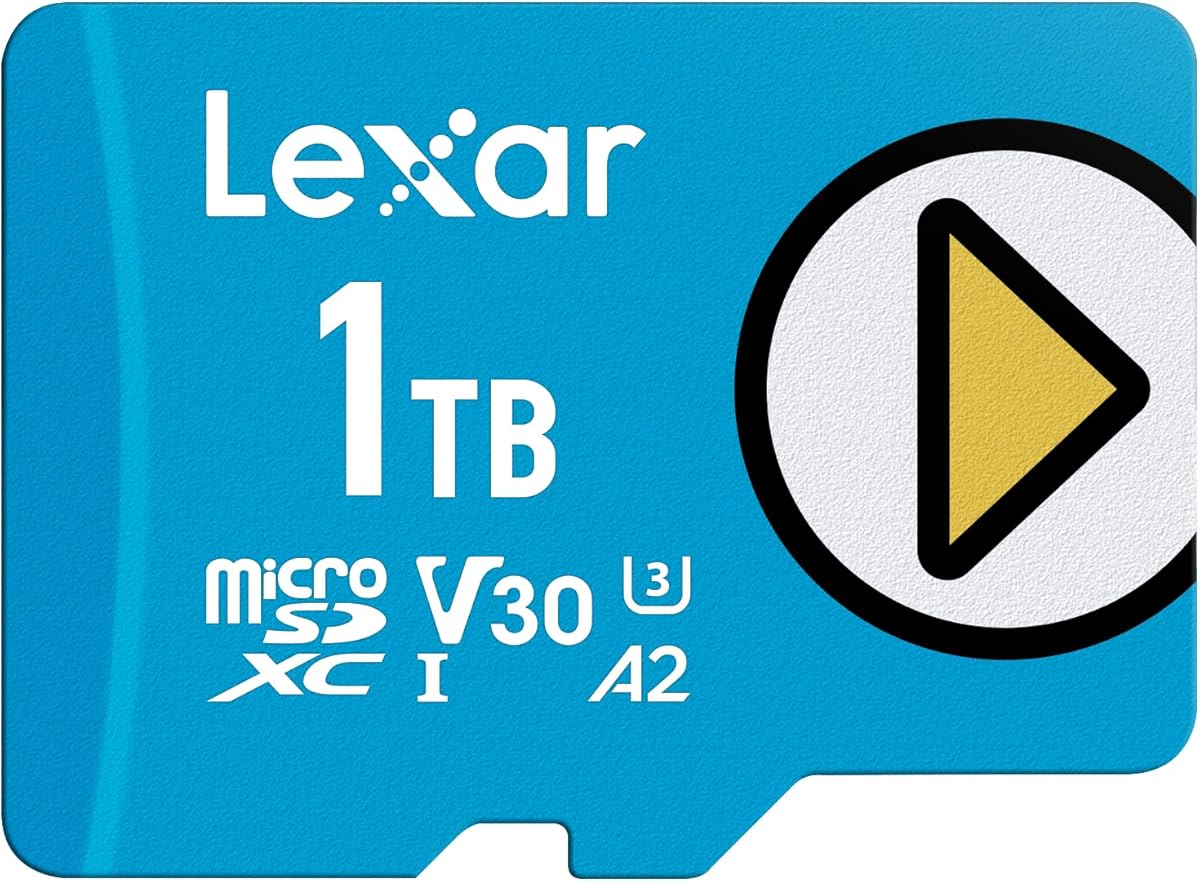

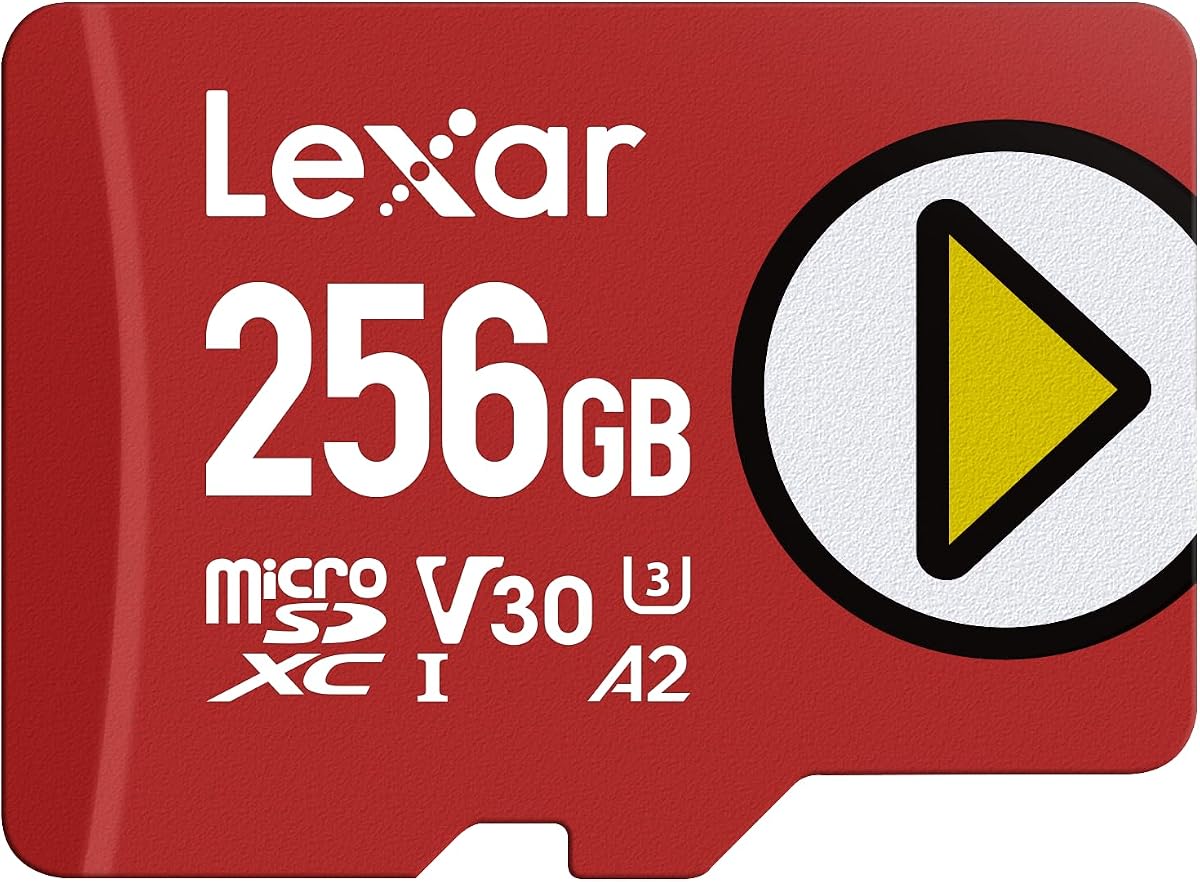
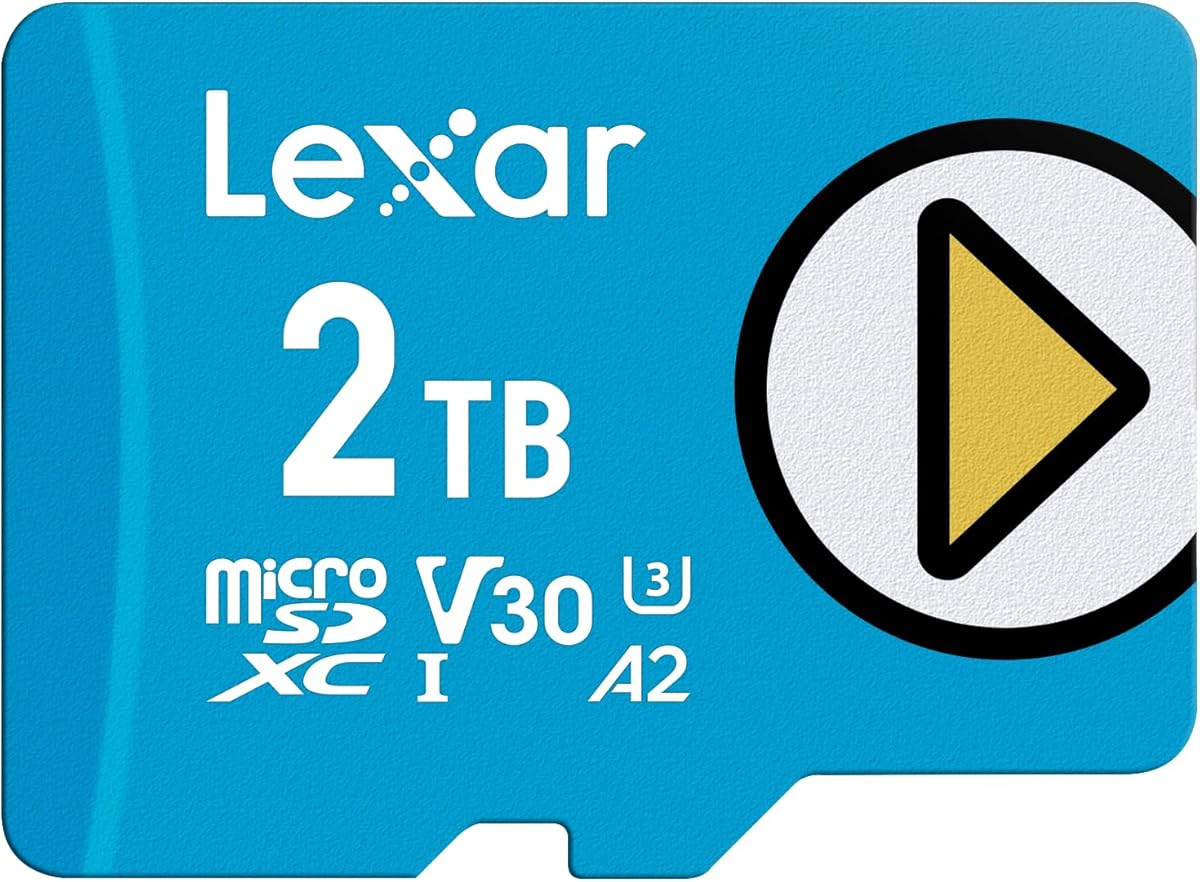


The Lexar 1TB Play Micro SD combines substantial capacity with one of the stronger read-speed figures in this guide. Its listed 205MB/s read speed, 140MB/s write speed, and A2 rating make it a credible all-round card for portable gaming, tablets, smartphones, and compatible microSD-equipped devices. The supplied customer rating is 4.3, reflecting generally positive feedback without claiming hands-on testing.
We may earn a commission when you buy through this link, at no additional cost to you.
Capacity is the central advantage for an ASUS ROG Ally user. A 1TB card provides ample room for a broad selection of games alongside video, music, and other files. The V30 rating supports Full HD and 4K capture and playback, while A2 performance is relevant when the card is used for app access in compatible devices. Its stated compatibility with portable gaming devices also makes it more broadly useful than a card designed for one specific use.
The practical trade-off is that advertised maximum speeds represent ideal conditions rather than guaranteed ROG Ally performance. Host hardware, file size, card reader quality, and the chosen interface can all limit results. It is also not compatible with Nintendo Switch 2 according to the supplied information, so buyers with newer devices should not treat the product description as universal.
This is a strong recommendation for someone who wants a generous portable library without moving to the largest capacity in the list. Choose it when capacity, sustained classification, read performance, and warranty coverage all matter. Confirm that the device and card reader support the standard format and performance class you need before purchasing.
The 1TB capacity reduces the need to delete completed games or carry several smaller cards. That convenience is especially useful for travel, commutes, and gaming sessions away from a desk, where convenient access to a larger collection matters more than using the absolute smallest card.
The V30, UHS-I, and A2 combination gives the card a more balanced profile than a basic storage option. Those classifications support sustained media tasks and faster app access on compatible hosts while retaining the familiar microSD form used by many portable devices.
We may earn a commission when you buy through this link, at no additional cost to you.
The Lexar 1TB Play Blue is a high-capacity card aimed at users who want room for games and media without moving between multiple storage devices. It offers a listed read speed of up to 160MB/s, a V30 rating, UHS-I support, and A2 application performance. Its supplied rating of 4.5 gives it a slightly stronger customer feedback profile than the first-ranked Play card.
We may earn a commission when you buy through this link, at no additional cost to you.
The enduring features are also a meaningful part of the proposition. The card is described as resistant to temperature, water, X-rays, and other demanding conditions, which can provide confidence during daily transport or use across several devices. A capacity of 1TB makes it practical for storing a large handheld collection, saved media, and files that are inconvenient to keep on the device's built-in storage.
Compared with the first-ranked Lexar Play card, this model has a lower listed maximum read speed. That distinction may matter when transferring unusually large files, though actual game-loading results depend on the host and reader. The Play Blue also lacks a separately stated write-speed figure in its supplied information, making the specification comparison less complete for buyers who prioritize sustained writes.
This card is a good fit for an ASUS ROG Ally owner who values capacity, durability, and A2 support over having the highest possible headline read speed. It should serve as a capable everyday expansion card for compatible equipment. Verify device support, especially if the card may also be used with a Nintendo Switch 2.
The one-terabyte capacity provides a generous library without reaching the largest option in the guide. At the same time, the listed environmental protections make it better suited to a mobile setup than an unprotected basic card with similar storage.
A2 performance can improve application access on hosts that support the rating. The benefit is most relevant when the card stores applications or launchers, although the exact difference will depend on the handheld, operating system, and workload.
We may earn a commission when you buy through this link, at no additional cost to you.
The Lexar 512GB Play Blue offers a useful middle ground between small convenience cards and very high-capacity storage. It delivers a listed read speed of up to 160MB/s while retaining V30, UHS-I, and A2 classifications. Its 4.5 supplied rating is among the strongest in the list, and the inclusion of Lexar Recovery Tool access adds a useful data-management consideration.
We may earn a commission when you buy through this link, at no additional cost to you.
For an ASUS ROG Ally user, 512GB can hold a meaningful collection of games without creating an oversized storage solution. It may also be easier to organize by title than a very large card containing many unrelated files. The A2 class is useful on compatible hosts, while V30 supports high-resolution media workflows that may accompany an expanded portable setup.
This option does not escape the limitations associated with its stated compatibility. It is not designed for Nintendo Switch 2, and its headline read speed is below that of the 205MB/s Lexar Play card. Buyers who consistently move enormous files may favor the faster model, while those who only add games will find 512GB a more moderate capacity.
The card is recommended for players who want a balanced collection size and strong customer feedback without moving to one or two terabytes. Its warranty and recovery-tool support further improve the ownership experience. Confirm current compatibility with every device in your setup before ordering.
A 512GB card is easier to fill selectively and can serve as a dedicated game library. That makes it a versatile middle option for owners who want meaningful capacity without filling every available storage location.
Lifetime access to Lexar Recovery Tool is included in the supplied feature list. Although no software can prevent every type of data loss, a recovery utility may help retrieve mistakenly deleted files or data stored on a formatted card.
We may earn a commission when you buy through this link, at no additional cost to you.
The Lexar 256GB Play Micro SD pairs a compact capacity with an impressive listed read speed of up to 205MB/s. It also offers up to 140MB/s write speed, V30 and UHS-I classifications, and A2 application performance. The 4.3 supplied rating indicates positive customer reception, making this one of the more performance-focused conventional microSD choices.
We may earn a commission when you buy through this link, at no additional cost to you.
Its 256GB capacity is particularly useful for a focused collection rather than a complete console library. An ASUS ROG Ally owner might use it for a handful of favorites, portable media, or a separate work-and-play card. The two speed figures are stronger than those listed for several higher-capacity alternatives, which can be helpful when copying complete game folders to and from a PC.
The central disadvantage is limited capacity. Large modern game installations can consume a meaningful portion of 256GB, so buyers may need to remove older titles more frequently. It also remains incompatible with Nintendo Switch 2 according to the supplied information. Real-world transfer results will depend on the reader and device, so maximum figures should be treated as specifications rather than guaranteed handheld loading speeds.
Choose this card when a moderate amount of storage, strong headline transfer rates, and a five-year warranty are the priorities. It is less suitable for someone building the largest possible portable library. For compact storage with strong UHS-I performance, it remains a convincing recommendation.
The card offers enough capacity for a curated set of games while preserving more useful speed figures than many larger alternatives. It is a sound match for users who prefer to carry a small, performance-oriented selection.
Listed read and write speeds can shorten large transfers when the reader also supports those rates. Because the handheld and card reader both influence results, buyers should avoid expecting the maximum rating in every environment.
We may earn a commission when you buy through this link, at no additional cost to you.
The Lexar 2TB Play Blue is the maximum-capacity conventional microSD option in this guide. It provides two terabytes of space alongside a listed 160MB/s read speed, V30 classification, UHS-I support, and A2 application performance. Its supplied 4.5 rating adds confidence for buyers comparing it with smaller Lexar cards.
We may earn a commission when you buy through this link, at no additional cost to you.
For an ASUS ROG Ally setup, the 2TB capacity can reduce the frequency of deleting and replacing games. It is suited to owners who want one card to hold an extensive library or combine games with video, music, and other media. The listed environmental protections and five-year limited warranty support long-term ownership, while Recovery Tool access can assist with common file mistakes.
More capacity does not automatically mean a better experience for every buyer. Moving several terabytes of data can require substantial time even at the stated read speed. The card also lacks a separately listed write-speed figure in the provided information and is not compatible with Nintendo Switch 2. Users who only need a few games may carry unused capacity unnecessarily.
This model is best for dedicated collectors and travelers who want to minimize card changes. If maximizing capacity is the leading requirement and the device supports the standard microSD format, it offers the most room in the group. For more modest libraries, a one-terabyte or 512GB model remains easier to manage.
Two terabytes reduces the chance of exhausting storage during a trip or major gaming session. It also lets the card serve as a consolidated home for games and media, provided the selected device supports cards of this capacity.
The warranty, durability claims, and recovery-tool access complement the unusually high capacity. Together they target owners who expect the card to remain in regular service rather than being replaced after every short journey.
We may earn a commission when you buy through this link, at no additional cost to you.
The SANDISK 256B Extreme stands out through its supplied 4.7 rating and the highest listed read speed among the conventional microSD products here. It is rated for up to 245MB/s reads and 170MB/s writes at the stated 256GB-to-1TB capacities, with U3 and V30 video speed classes.
We may earn a commission when you buy through this link, at no additional cost to you.
For large game folders, the strong transfer figures are the most appealing feature. A fast card can reduce the waiting involved in copying files between a computer, card reader, and portable device, provided each part of the chain supports the relevant speed. The adapter included with the product also makes it easier to use the card with larger equipment.
SANDISK also lists extensive protection against temperature, humidity, water, shock, drops, magnets, X-rays, and wear-out. Memory Zone software assists with backing up, organizing, and transferring photos and videos. These features make the card attractive for users who want storage to handle mixed gaming and media duties rather than merely hold game files.
The main trade-off is capacity. A 256GB card cannot provide the breathing room of the one- and two-terabyte Lexar options, and some buyers may not need the adapter once the card is in the handheld. Even so, the card is a premium choice for fast transfers, strong durability claims, and a particularly high supplied rating.
A 245MB/s maximum read rating can make a meaningful difference when copying complete game folders, although a compatible card reader is essential. The figure describes the card's potential rather than the speed every ROG Ally workflow will achieve.
The wide range of listed environmental protections is reassuring for portable media. It makes the card more compelling for mixed use involving travel, photography, video capture, and frequent transfers between devices.
We may earn a commission when you buy through this link, at no additional cost to you.
The TEAMGROUP A2 Pro Plus 1TB is a conventional gaming card with a balanced specification set. It offers up to 160MB/s read and 110MB/s write speeds, along with UHS-I, U3, V30, and A2 classifications. Its supplied customer rating is 4.3, and the included adapter adds convenience for use with full-size slots.
We may earn a commission when you buy through this link, at no additional cost to you.
The one-terabyte capacity is highly relevant for a portable gaming setup. It can hold a substantial number of titles while maintaining enough room for media, while the stated read and write figures support responsive file handling in compatible equipment. The product title specifically mentions Nintendo Switch, Steam Deck, gaming devices, tablets, and smartphones, which demonstrates an intent to serve multiple handheld formats.
One caveat is that ROG Ally is not explicitly named in the supplied compatibility details. Buyers should confirm the relevant port and storage support before assuming it will work as intended. The card also shares the same headline 160MB/s read figure as the Lexar Play Blue, although the addition of a listed 110MB/s write speed provides a clearer view of its sustained performance.
This TEAMGROUP card is recommended for buyers who want one-terabyte capacity, A2 support, and clearly stated read and write figures in a broad portable-device card. It is particularly useful for Nintendo Switch or Steam Deck owners who want an adapter included, and it remains a sensible microSD expansion option for compatible ASUS setups.
Stating both 160MB/s read and 110MB/s write performance gives buyers a clearer picture of the card's intended use. That balance helps when copying games, moving camera files, and running mixed media workloads.
The listed support for several gaming handhelds, tablets, and smartphones makes the card versatile. Owners who rotate between devices can benefit from a shared storage format, provided each device supports the standard and capacity involved.
We may earn a commission when you buy through this link, at no additional cost to you.
The 256GB microSD Express Card is the only product in the list explicitly named for the ASUS ROG Ally. It advertises read speeds up to 880MB/s and write speeds up to 600MB/s through microSD Express technology. Its supplied rating is 4.4, and it is presented as a high-speed option for compatible handhelds, cameras, and other devices.
We may earn a commission when you buy through this link, at no additional cost to you.
The headline performance is the reason this card stands apart. Faster sequential reads could shorten the copying of large game folders, while the stated 600MB/s write capability is intended to support demanding 4K or 8K capture workflows. Built-in thermal management is also listed, which is relevant because sustained high-speed transfers can generate heat in compact storage hardware.
The critical limitation is that extraordinary card speeds do not automatically translate into equal handheld performance. The device, card reader, interface, and workload must all support the relevant standard. Although the product remains backward compatible with standard microSD UHS-I slots, it will operate only at the maximum level supported by the host. The listed 256GB capacity also offers less space than the larger UHS-I alternatives.
For an ROG Ally owner specifically researching a compatible fast card, this is the most directly aligned choice in the guide. It is best for buyers willing to verify their exact device and reader support and who value transfer potential over maximum capacity. For a conventional microSD workflow, the more affordable standard options may be more practical.
ROG Ally appears directly in the product description, making this easier to shortlist for the target handheld. That does not eliminate the need to check the exact device revision and storage interface before purchase.
The advanced thermal management claim is relevant for prolonged transfers. Even high-speed cards can lose consistency as they heat up, so stable sustained performance is as important as the maximum figure printed on the package.
We may earn a commission when you buy through this link, at no additional cost to you.
The SANDISK 128GB Ultra is a compact, value-oriented card with a surprisingly strong supplied 4.7 rating. It supports up to 195MB/s reads and carries V10, U1, C10, and A1 classifications. That makes it appropriate for everyday storage, Full HD video, app access, and a smaller selection of games.
We may earn a commission when you buy through this link, at no additional cost to you.
Its affordability-oriented role comes from combining a familiar UHS-I design with a 195MB/s maximum read figure. SANDISK states that this speed can be achieved when the card is used with its QuickFlow microSD UHS-I Card USB-A Reader. Memory Zone software is also available for backing up, organizing, and transferring photos and videos.
The 128GB capacity is the clear limitation. Modern game files can fill that space quickly, particularly if the card is used for a mixed library rather than a few portable favorites. A1 is also a more basic application-performance class than A2, and the card's specifications are less oriented toward demanding 4K capture than several premium alternatives.
This is the best budget-oriented pick for buyers who want to try removable storage or maintain a small, curated game collection. It also suits users who need reliable everyday media storage across compatible phones, tablets, and laptops. Those wanting a broad ROG Ally library should step up to 512GB or 1TB instead.
The card provides familiar UHS-I performance and broad device support without the complexity of Express technology. It is a practical first card for a smaller game selection or mixed set of portable media.
The listed 195MB/s read figure depends on using a compatible reader, including the specified SANDISK option. With an older or slower reader, transfers will be limited by that connection rather than the card alone.
We may earn a commission when you buy through this link, at no additional cost to you.
The JSAUX PC0109 ModCase is not an SD card, but it is directly relevant to an ASUS ROG Ally storage setup. It is a protective, model-specific case for the 2023 ROG Ally with a detachable front cover that includes four built-in microSD card slots. Its supplied rating is 4.6.
We may earn a commission when you buy through this link, at no additional cost to you.
The ability to organize up to four cards is a useful feature for owners who divide games, media, and system files across multiple capacities. Keeping those cards together reduces the chance of leaving one at home or misplacing it during travel. The protective back shell and front cover also help shield the console, screen, and thumbsticks from scratches, dust, and everyday bumps.
Compatibility is extremely specific. The case is made only for the 2023 ASUS ROG Ally and is explicitly not compatible with ROG Ally X, ROG Xbox Ally, or ROG Xbox Ally X models. It also does not increase storage, improve transfer speed, or provide any performance class; its purpose is protection and organization.
This accessory is recommended for a 2023 ROG Ally owner who uses several microSD cards and wants a dedicated place to carry them. It is not a substitute for choosing a capable card, but it can complement one by improving organization and physical protection. Verify the handheld model carefully before ordering.
Four dedicated slots make it easier to separate libraries by capacity, game type, or media. The system is especially helpful for users who regularly exchange cards or travel with more than one storage option.
The protective shell, detachable front, anti-slip texture, and accessible cutouts support everyday use. The strict model limitation makes checking the exact ROG Ally version essential before purchase.
We may earn a commission when you buy through this link, at no additional cost to you.
Choosing storage for an ASUS ROG Ally involves balancing device compatibility, card capacity, speed class, transfer workflow, and reliability. The most important distinction is whether the handheld actually accepts removable microSD storage in the configuration you plan to use, because no card can expand a device that does not provide the necessary storage path.
Also consider where games will actually be stored. Some gaming setups are designed around internal storage, while removable storage is useful for selected titles, backups, media, or sharing content. Confirm the expected workflow before buying so the card serves a clear purpose.
Choose a capacity that leaves room for future growth. A card filled to its limit can perform less predictably during large writes and offers little margin for media or updates.
Prioritize sustained write performance when moving complete game folders. Prioritize read performance when loading stored content, and prioritize both if you regularly switch between the handheld and a computer.
For an everyday game card, UHS-I with a suitable video class is usually the central baseline. For mixed media or demanding transfers, U3, V30, and A2 provide a more balanced specification set.
The reader also determines how quickly you can back up a card before a trip or after installing several games. Treat the complete transfer path as one system rather than judging only the card in isolation.
Durability is especially important for high-capacity cards because replacing one means transferring a large amount of data. Even so, maintain a separate backup of important files rather than treating the card as the only storage location.
Good file management reduces the chance of losing saved games, downloads, and media. Keep the card's contents synchronized with a trusted backup before making significant changes.
For owners using one card, a simple labeled sleeve may be sufficient. For multi-card users, a dedicated case can make it easier to see which library is present and which card needs to be moved next.
Before inserting a card, confirm the correct format, supported capacity, and file-system expectations for your exact ROG Ally configuration. Power the handheld down completely before opening the card slot and avoid removing the card while the system is reading or writing files. Insert it in the orientation indicated by the slot or device guide, then lock the cover securely before starting the console.
Format the new card through the device or computer rather than relying on an unknown partition layout. Copy only one complete game or media collection at a time, and avoid unplugging a card reader while files are still transferring. A conservative transfer method can reduce the chance of partial files, corrupted installations, or interrupted saves.
Keep important data backed up separately, eject the card cleanly from the computer before removal, and avoid exposing it to moisture, extreme heat, impact, or magnetic fields. Inspect the contacts if transfers become unstable, and retire a card that produces repeated errors. Firmware updates, game patches, and changing device requirements can also affect storage performance, so check current compatibility information whenever major system changes occur.
The correct choice depends on the exact ROG Ally model and storage configuration. Confirm that the device supports removable microSD storage and check the maximum supported capacity and file system before buying. A standard UHS-I card is different from a microSD Express card, even though both may use the familiar microSD shape. The Express product in this guide is explicitly positioned for ROG Ally, but its highest speeds require compatible host hardware.
No. A faster card can improve file transfers when the handheld, reader, and interface support the higher speed, but game-loading behavior also depends on the device and installed title. Capacity and sustained write performance often matter more for everyday library management. Choose based on your transfer habits rather than the largest advertised number alone.
It depends on the games you want to keep installed because modern titles can vary greatly in size. A 128GB card is better suited to a small curated selection, while 512GB and 1TB provide more room for a broader library. The 2TB option is aimed at owners who want to minimize card changes. Check each game's required storage before deciding.
The supplied microSD Express listing states that the card remains backward compatible with standard UHS-I slots. It will use the fastest mode supported by the host, meaning a UHS-I reader will not unlock the card's full Express performance. Confirm that the card reader and device support the expected standard before purchasing for a particular workflow.
A1 and A2 are application-performance classes for compatible devices, with A2 representing the higher class. They are most relevant when a microSD card is used for app or launcher access rather than only sequential game files. The ROG Ally's actual behavior can depend on its operating system and storage configuration, so these ratings should be treated as an additional compatibility signal.
A 1TB card is generally more balanced for many owners because it offers substantial room with a manageable backup size. A 2TB card makes more sense for large collections or users who want to carry one card for games and media. Larger capacities also take longer to fill, copy, and back up, so the theoretical maximum is not automatically the most convenient choice.
Use a compatible card reader and a transfer method that confirms the copy has completed before ejecting the card. Copy complete folders, verify the destination, and keep a backup of important data. Insert the card into the powered-off handheld, lock the slot, and allow the system to recognize it before launching games or moving additional files.
Yes. Its detachable front cover includes built-in storage for up to four microSD cards, which helps organize different game or media collections. The case is designed exclusively for the 2023 ASUS ROG Ally and is not compatible with ROG Ally X, ROG Xbox Ally, or ROG Xbox Ally X. It is an organizational accessory, not a substitute for an actual storage card.
The strongest overall balance in this guide comes from the Lexar 1TB Play Micro SD, which combines generous capacity, a 205MB/s listed read speed, A2 performance, and a five-year warranty. The SANDISK 256B Extreme is the premium transfer option, while the SANDISK 128GB Ultra serves buyers who want a smaller and more affordable starting point. Each suits a different library size and transfer priority.
Prioritize exact device compatibility first, then choose enough capacity for your actual game collection. Consider the card reader and sustained write performance if you frequently install or move complete titles, and favor A2 or U3 classifications when mixing gaming with media. The microSD Express card is the most directly ROG Ally-focused option, but its headline speeds require compatible hardware and it offers less capacity than the larger standard cards.
Prices, availability, product revisions, and device support can change, so review the current listing and ASUS compatibility information before ordering. Use the supplied product links to compare the latest details, and choose the card whose capacity, specifications, warranty, and intended workflow best match how you actually use your handheld.