
Thermaltake View 380 TG ARGB
4.7Editor score
Dual-chamber cable separation
Four ARGB fans included
Supports 360mm radiators
Compatible with hidden connectors
Our Dual System PC Cases guide compares ten enclosures for airflow, expansion, cooling, cable routing, compatibility, and two-system setups in 2026 today.
Dual system PC cases are specialized enclosures designed around either two fully independent computers in one chassis or a dual-chamber layout that separates power, storage, and cooling zones. The right model can provide useful airflow, cleaner cable routing, and room for more demanding components without forcing builders to maintain separate cases.
This guide compares ten cases based on the supplied specifications, focusing on genuine two-system capability, chamber separation, motherboard support, radiator clearance, included cooling, fan capacity, graphics card support, and cable-management features. It also distinguishes purpose-built dual-system models from premium dual-chamber designs that serve a similar organizational purpose.
Each review explains who benefits most from the enclosure and where it may fall short. The first entries provide the strongest options for parallel systems, high-airflow builds, and premium dual-chamber configurations, while the remaining picks cover compact, budget-conscious, and showcase-oriented needs. Product availability and prices can change, so confirm current details before buying.
4.7Editor score

5.0Editor score
The comparison below highlights motherboard support, system organization, cooling capacity, and practical expansion features, helping distinguish true dual-computer enclosures from dual-chamber cases designed primarily for cleaner airflow and cable routing.


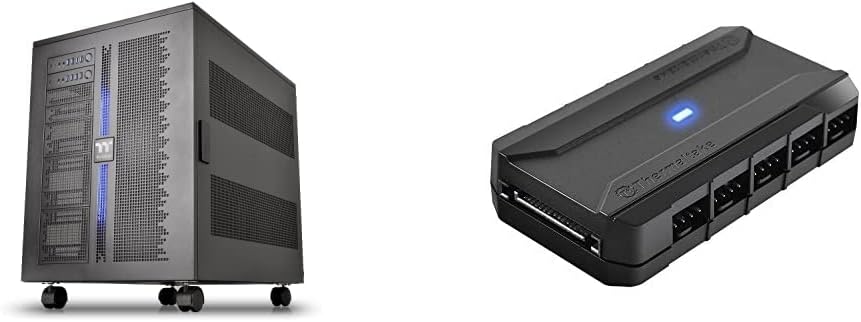
The Thermaltake Core W200 is the most literal answer to the dual system PC case category because it is built to contain two separate computers rather than merely divide one standard build into two chambers. Its back-to-back configuration can accommodate two motherboards, two power supplies, and two graphics cards. No customer rating is provided in the source data, so the decision should rely on its unusually specific and substantial feature set.
We may earn a commission when you buy through this link, at no additional cost to you.
The chassis supports up to two 600mm radiators, making it relevant to builders who want extensive custom liquid cooling in each half. It also has a completely modular, dismantlable construction, allowing sections to be configured during the build process. The included Commander FP hub can power as many as ten PWM fans directly from the power supply, and its reusable ties and hook-and-loop tabs help control the considerable wiring involved in a two-computer setup.
The major trade-off is complexity. This is not a conventional mid-tower with a decorative second chamber; it is a specialized enclosure whose size and design may be excessive for a single gaming PC. The lack of an available rating also means there is no customer feedback signal here. Even so, for someone who specifically wants two operating systems or two independent workstation computers, few alternatives are as direct in purpose.
Choose the Core W200 if the goal is to consolidate two complete systems without relying on virtual machines or two separate desks. It is especially appropriate for parallel workstation tasks, testing environments, and elaborate custom cooling projects. For an ordinary high-end PC, a dual-chamber model will usually be simpler, while buyers who need two independent mATX systems may find the more compact Capo X easier to accommodate.
The Core W200 can hold two motherboards, two power supplies, and two graphics cards in a back-to-back arrangement. That physical separation makes it practical to run two operating systems, maintain separate workloads, or keep a primary and secondary computer inside one enclosure.
Support for two 600mm radiators provides substantial liquid-cooling potential, while the bundled Commander FP drives up to ten PWM fans. Reusable ties and hook-and-loop tabs are particularly useful in a chassis where cable density can otherwise obscure the components.
We may earn a commission when you buy through this link, at no additional cost to you.
The Cooler Master HAF II 500 has a 4.8 customer rating and is built around high airflow rather than a literal pair of independent computers. Its Mighty40 cooling system includes two 220 x 40mm front intake fans and one 180 x 40mm rear exhaust fan. Large ventilation openings reduce resistance, making this a compelling enclosure for powerful air-cooled configurations.
We may earn a commission when you buy through this link, at no additional cost to you.
The split-level cable-management layout creates space for the unusually large rear exhaust fan without forcing a severe compromise in cable routing. MasterRail supports several fan and radiator sizes at the top and front. Its Dual-Mode GPU Holder can secure a single graphics card or two cards of up to 3.6 slots, or 72mm, each, providing flexibility as workstation needs change.
This is not a dedicated dual-system case in the sense of supporting two motherboards, so buyers expecting that feature will be disappointed. Its full-tower proportions and oversized cooling hardware can also complicate installation in confined spaces. Even so, the HAF II 500 focuses on a different version of the category's appeal: spacious organization and strong thermal performance for a single high-output system.
The HAF II 500 is an excellent match for builders who use the term dual system broadly and prioritize airflow, large fans, and graphics card flexibility. It suits enthusiasts with substantial cooling hardware and room for a full tower. Those who need two independent computers should choose the Core W200 or Capo X, while smaller-footprint builders may prefer the NZXT H6 RGB+.
Two 220mm front intakes and a 180mm rear exhaust move more air than a conventional trio of 120mm or 140mm fans. The low-resistance ventilation layout helps that volume of air reach the components without relying on unusually restrictive internal ducting.
The adjustable GPU holder accommodates either one card or two cards with substantial thickness, while the flexible drive cage supports 3.5-inch and 2.5-inch storage in orientations determined by power supply length. These choices help the full-tower adapt to changing component inventories.
We may earn a commission when you buy through this link, at no additional cost to you.
The NZXT H9 Flow RGB+ combines polished aesthetics with a practical dual-chamber layout. It separates the main components from the power supply and drives, which can improve thermal organization and hide cables. Its 4.7 rating places it among the strongest all-around picks in this guide, although it is a single-system enclosure rather than a carrier for two complete PCs.
We may earn a commission when you buy through this link, at no additional cost to you.
Perforated steel panels and angled front-right fans support a deliberate cooling path. The case includes two F420 RGB Core single-frame fans, one F120 RGB Core case-version fan, and an NZXT Control Hub. Mounting capacity extends to nine 140mm fans plus one 120mm rear fan. The top and front-right areas can each accommodate a 420mm radiator, and the wraparound tempered glass preserves a clean showcase view.
Some buyers may want PWM control rather than the three-pin DC connection used by the included case-version RGB fans. It is also worth remembering that the two chambers divide one build rather than operating as two separate computers. Otherwise, the generous cable channels, built-in hook-and-loop straps, tie-down points, and rear-connect motherboard compatibility make the H9 particularly tidy and easy to configure.
The H9 Flow RGB+ is ideal for a single gaming or workstation PC that benefits from separated zones, substantial cooling, and a polished appearance. It is a stronger general-purpose choice than the Core W200 or Capo X because it focuses on everyday usability. Pick one of those instead when physical isolation of two operating systems is non-negotiable.
Keeping the power supply and drives out of the main chamber reduces visual competition and provides a natural location for excess wiring. Wide channels, hook-and-loop straps, and dedicated tie-down points help maintain that tidy separation throughout the build.
Two 420mm radiator positions and support for as many as ten fans give users a broad cooling canvas. The included single-frame RGB fans provide immediate illumination, while the control hub simplifies fan management for the installed configuration.
We may earn a commission when you buy through this link, at no additional cost to you.
The Antec Flux Pro is a high-airflow full tower designed for builders who want extensive cooling hardware and E-ATX flexibility. Its 4.7 rating reflects a strong overall reception. The case combines metal, glass, and wood materials, but its most important feature is the removable cooling-bracket system, which gives users freedom to reconfigure the top, front, and power supply shroud.
We may earn a commission when you buy through this link, at no additional cost to you.
Six PWM fans are included: three Tranquil 140 PWM front fans, two P12R PWM reverse fans on the power supply shroud, and one Tranquil 140 PWM rear fan. Total mounting capacity reaches twelve fans. The case can also run a 420mm radiator and a 360mm radiator simultaneously, making it suitable for air-cooled, liquid-cooled, or mixed configurations.
Its major limitation is scale. A full tower requires more room than a mid tower or compact dual-chamber design, and the supplied fan count does not guarantee that every configuration will be entirely silent. Although the CPU and graphics card dual temperature display is useful, this is still a single-computer enclosure rather than a two-system case.
The Flux Pro makes sense for enthusiasts with room for a large chassis and a plan to use several radiators or high-density cooling. It is particularly attractive when a builder wants a complete initial fan package. If desk space is tight or the purpose is truly hosting two independent systems, the NZXT H6 RGB+, Thermaltake Capo X, or Thermaltake Core W200 offers a better-defined path.
Removable brackets at the top, front, and power supply shroud allow the cooling configuration to evolve as component sizes and radiator plans become clear. That flexibility is valuable in a large enclosure where the factory layout may not match every build.
The CPU and graphics card dual temperature display gives at-a-glance information about two major heat sources. The innovative 90-degree power supply mounting option can also improve the organization of the full-tower interior.
We may earn a commission when you buy through this link, at no additional cost to you.
The ASUS TUF Gaming GT502 uses a true dual-chamber arrangement to divide the interior into a main chamber and a rear chamber. Rather than operating two computers, it creates independent cooling zones for the processor and graphics card. Its 4.6 rating makes it a well-regarded option for builders who want a structured, accessible mid-tower design.
We may earn a commission when you buy through this link, at no additional cost to you.
Graphics card mounting is especially flexible. The included vertical mount can display a card upright, while a bundled support bracket handles a conventionally mounted card and helps prevent sag. Tool-free side panels open by pressing a button at the rear of the chassis, improving service access without requiring tools for routine panel removal. Tempered glass at the front and side provides a tinted showcase view.
The supplied information does not list included fans or radiator sizes, so cooling hardware must be considered separately. The front connectivity is strong, with USB 3.2 Gen 2 Type-C, two USB 3.0 ports, and an RGB control button. The GT502 is also not intended to contain two complete PCs, making it a dual-zone cooling solution rather than a true dual-computer enclosure.
Choose the GT502 when the central goal is clean separation of CPU and GPU airflow in a manageable mid-tower. It is particularly useful for a gaming system with a large graphics card that may benefit from a vertical presentation. If the requirement is two independent operating systems, select the Capo X or Core W200 instead.
The main and rear chambers allow the builder to treat processor and graphics card airflow as separate zones. This design makes it easier to direct cooling toward each major heat source while keeping power connections and other secondary components out of the primary chamber.
Users can install the graphics card vertically with the included mount or use the conventional slot with the bundled support bracket. Tool-free side panels make it easier to reach the card and adjust the build without repeatedly removing screws.
We may earn a commission when you buy through this link, at no additional cost to you.
The ASUS ROG Strix Helios II is a premium showcase enclosure with dual tempered glass side panels, an aluminum front panel, and a diamond-grille design. Its 4.3 rating is solid, though not the highest in this comparison. The case is intended for visually polished E-ATX builds where the internal components deserve to remain visible from more than one angle.
We may earn a commission when you buy through this link, at no additional cost to you.
Four 140 x 28mm performance fans are preinstalled to establish airflow immediately. The chassis supports E-ATX motherboards, graphics cards as long as 450mm, and radiators up to 420mm. A graphics card slot clamp and rear detachable power supply bracket help with both component support and installation. These allowances provide serious headroom for long graphics cards and elaborate cooling configurations.
It does not physically support two complete systems, despite its dual tempered glass and the broader appeal of a dual-chamber aesthetic. The premium materials and large display panels also make it more specialized than a straightforward dual-chamber ATX case. However, the multifunction cover, graphics card holders, power supply shroud, cable cover, and rear cable clips create a highly organized interior when those features are used well.
The advanced input-output panel includes two USB 20Gbps Type-C ports, four USB-A 3.0 ports, an ARGB lighting control, and a fan-speed PWM control. The Helios II is best for builders who value presentation, long graphics card support, and premium organization. Those needing literal parallel systems should look to Thermaltake's dedicated dual-system cases.
Dual tempered glass side panels reveal both sides of the main chamber, while the structured aluminum front panel adds a distinctive finished appearance. This makes the enclosure better suited to a visible desk or entertainment setup than a hidden workstation.
Graphics card support extends to 450mm, and radiators up to 420mm can be installed. The included slot clamp and detachable rear power supply bracket assist with stability and access even when large components make the interior more difficult to work on.
We may earn a commission when you buy through this link, at no additional cost to you.
The HAVN HS 420 stands out for a hybrid dual-chamber design and exceptionally broad cooling capacity. It can accommodate eleven 140mm fans and radiators up to 420mm at the top, right, and bottom. The result is a mid-tower designed to offer nearly the flexibility of a much larger enclosure while maintaining a more conventional case ratio.
We may earn a commission when you buy through this link, at no additional cost to you.
Its balanced airflow is intended to bring cool air from the bottom intake toward a centrally positioned graphics card, one of the most heat-intensive components in a modern gaming PC. Custom panel ventilation supports that strategy. The three-way adjustable GPU support bracket accommodates cards of different shapes and sizes, and vibration-isolating rubber pads on the fan brackets help limit resonance.
The heat-formed glass panel uses a tight curve to reduce visual distortion, while the SimpliCable routing system provides grooved guides running from top to bottom. A built-in fan hub and included VESA display mount add further flexibility. As with other dual-chamber designs, it organizes one system rather than running two. The supplied specifications also do not confirm that any fans or radiators are included.
The HS 420 is ideal for a builder who wants the cooling freedom of a full tower without immediately accepting its footprint. Its bottom-to-GPU airflow path and large radiator support are particularly attractive for powerful graphics cards. For two independent operating systems, however, the Thermaltake Capo X and Core W200 are the more relevant choices.
The hybrid chamber directs bottom-intake air toward the centrally mounted graphics card, helping the system that often produces the most heat receive a direct stream of cooler air. The architecture is therefore more purposeful than a basic divider panel.
Eleven 140mm fan positions and three 420mm radiator locations offer many possible cooling combinations. Flexible rubber pads beneath the fan brackets help isolate the mounting structure from the chassis, reducing the chance of resonance becoming a noticeable issue.
We may earn a commission when you buy through this link, at no additional cost to you.
The NZXT H6 RGB+ brings the dual-chamber concept to a compact ATX enclosure. It separates the power supply and cable area from the main build, while angled front-right fans provide targeted airflow. The 4.4 rating is respectable, and the design appeals particularly to builders who want organized cable management in a smaller footprint.
We may earn a commission when you buy through this link, at no additional cost to you.
A single piece of curved tempered glass provides a nearly seamless view of the internals. Ultra-fine mesh across the top, front-right, and right panels supports airflow, and a removable nylon filter beneath the bottom intake helps limit dust. Standardized mounting positions across the top, front-right, bottom, and rear provide room for ten 120mm fans, allowing builders to create their own cooling and lighting arrangement.
The enclosure ships without fans, which makes the cooling configuration entirely up to the user but also means the case is not ready to operate immediately. It also accommodates one system rather than two independent PCs. As with the H9 Flow RGB+, dual-chamber organization should not be confused with a true dual-system architecture.
The H6 RGB+ is a good fit for a smaller desk where a conventional full tower is impractical but a complete ATX system is desired. It suits builders who want to choose every fan and light themselves and value a clean glass presentation. Choose the Capo X instead when the defining requirement is two independent mATX computers.
The secondary chamber isolates the power supply and cables from the primary components, making the compact chassis easier to manage visually. This separation is particularly helpful when the same desk must accommodate the computer, monitor, and other work equipment.
Ten standardized 120mm fan positions let users choose the exact mix of intake, exhaust, RGB, and high-performance fans. The absence of bundled fans favors builders who already have a cooling plan or want complete control over the final appearance and acoustics.
We may earn a commission when you buy through this link, at no additional cost to you.
The Thermaltake Capo X is a purpose-built dual-computer chassis with a 5.0 rating, the highest listed score in this guide. Its cross-platform architecture allows two independent mATX systems to operate simultaneously in one chassis. It therefore meets the dual system definition more directly than cases that merely separate the power supply and drives from a single set of core components.
We may earn a commission when you buy through this link, at no additional cost to you.
Cooling is unusually flexible for a dual-system case. The chassis supports up to thirteen 120mm fans, 420mm and 360mm radiators, and air coolers as tall as 180mm. Extra cutouts accommodate hidden-connector motherboards from ASUS, MSI, and GIGABYTE, allowing each system to maintain a cleaner front panel when supported components are used.
Two detachable clamp graphics card braces attach directly to the chassis frame and support the top and bottom of the graphics cards. Each system receives its own I/O panel with power and reset controls, HD audio, two USB 3.0 Type-A ports, and a USB 3.2 Gen 2 Type-C port. This duplication is one of the chassis' strongest practical features because both computers can be operated independently.
The main limitation is motherboard format: both systems require mATX boards rather than full-size ATX. A second complete build also requires a second processor, memory kit, graphics card, storage, and operating system. For a compact workstation needing parallel environments, the Capo X is exceptionally well aligned with the task. The Core W200 is the alternative for buyers who need a larger and more modular dual-system design.
The Capo X can run two independent mATX platforms in parallel, making it suitable for separate operating systems, dedicated workloads, testing, or a compact two-user workstation. Each system operates like a separate computer rather than merely occupying a divided internal zone.
Separate I/O panels include power, reset, HD audio, two USB Type-A connections, and a USB Type-C port for each system. Dedicated controls make daily operation more convenient than repeatedly reaching into a shared front panel or changing cable targets.
We may earn a commission when you buy through this link, at no additional cost to you.
The Thermaltake View 380 TG ARGB is a value-oriented dual-chamber ATX case with a 4.7 rating. Its pillarless front and side tempered glass panels provide a broad view of the internal components, while a separate chamber keeps the power supply and related connections visually organized. It is especially useful for buyers who want a cleaner build without the expense of a premium showcase chassis.
We may earn a commission when you buy through this link, at no additional cost to you.
Four hydraulic-bearing 120mm ARGB Lite fans are preinstalled, so the case arrives with both cooling and illumination in place. A removable bottom nylon filter helps reduce dust intake. The front I/O includes one USB 3.2 Gen 2 Type-C port, two USB 3.0 ports, and HD audio, providing a practical connection set without crowding the panel.
Cooling support is capped at a 360mm radiator, which is less generous than the 420mm and dual-radiator capabilities of several premium picks. Graphics card clearance reaches 415mm, a useful figure for most modern cards. As with the H6 and other conventional dual-chamber cases, it does not house two motherboards or two complete computers.
The View 380 TG ARGB is a strong starting point for a single gaming PC with a polished appearance and a tidy layout. It is the most approachable choice here for builders who want dual-chamber organization and bundled ARGB fans. Those whose central goal is running two independent systems should select the Capo X or Core W200 instead.
Pillarless tempered glass panels reduce visual interruption and reveal the internal layout from the front and side. The result is a more expansive showcase effect than many conventional cases without relying on a premium aluminum or wood enclosure.
Four preinstalled 120mm ARGB Lite fans provide an immediate basis for airflow and illumination. A removable dust filter and support for a 360mm radiator make the case practical for a standard air-cooled or moderately liquid-cooled build.
We may earn a commission when you buy through this link, at no additional cost to you.
The most important distinction is whether you need two independent computers or one computer with a divided interior. Beyond that, consider motherboard format, cooling, graphics card dimensions, storage, cable routing, available desk space, and the amount of physical access you require during and after assembly.
A true dual-system case can operate two independent sets of core components, including two motherboards, processors, power supplies, and graphics cards. The Thermaltake Core W200 and Capo X fit this definition. A dual-chamber case divides one standard build so that the main components are separated from the power supply, drives, or a dedicated cooling zone. Dual-chamber designs are easier to find and generally better suited to ordinary single-computer builds, but they do not replace the second computer.
Confirm that the seller describes literal parallel operation when that is your requirement. A divider, separate PSU chamber, or dual tempered glass panels alone do not establish that a case can boot two systems.
The Core W200 supports two complete systems in a back-to-back configuration, while the Capo X is designed around two mATX systems. A conventional dual-chamber ATX case generally accepts one ATX board and separates only supporting hardware. Check the board size, number of power supplies, expansion slots, and I/O requirements before assuming that two internal zones will function as two computers.
Choose the format that supports the hardware you already own. Mixing a full ATX requirement with a model designed for mATX can require a costly board replacement.
A useful dual-chamber layout does more than divide the enclosure. It should create a deliberate path for cool intake air to reach the processor and graphics card while allowing warm air to exhaust. The HAVN HS 420 specifically directs bottom intake air toward a centrally positioned GPU, while the NZXT H9 Flow RGB+ uses angled front-right fans and perforated panels. The Core W200 gives each back-to-back system a distinct physical zone.
Prioritize cases with clearly described intake and exhaust positions, adequate fan placement, and removable dust filters. A visually divided interior is less useful if air is trapped or recirculated.
Cooling capacity should match both the case dimensions and the components inside it. The Core W200 supports two 600mm radiators, the H9 Flow RGB+ accepts 420mm radiators at the top and front-right, and the Flux Pro can run a 420mm radiator and a 360mm radiator simultaneously. The H6 RGB+ provides ten standardized 120mm positions but ships without fans, while the View 380 TG ARGB includes four 120mm ARGB fans and supports radiators up to 360mm.
Count mounting locations, thickness allowances, and included fans separately. A high maximum radiator size is valuable only if the case has the actual mounting points and internal clearance to use it.
Modern graphics cards can be long, heavy, and thick, so case specifications need to be checked alongside the exact card model. The ROG Strix Helios II supports cards up to 450mm, the View 380 TG ARGB reaches 415mm, and the HAF II 500 accommodates two cards of up to 72mm each. Many cases also provide an anti-sag bracket or vertical mount to protect the card and motherboard area.
Check length, slot thickness, power connector access, and bracket clearance together. A vertical display mount can look attractive, but it may interfere with side panels, fans, or adjacent expansion hardware.
Cable clutter is especially difficult in a dual-system enclosure because it contains twice the usual number of power and data connections. The NZXT H9 Flow RGB+ provides wide channels, hook-and-loop straps, and tie-down points. The HAVN HS 420 uses grooved SimpliCable guides, while the Core W200 includes reusable ties and hook-and-loop tabs with its fan hub. The Capo X keeps its two systems separated and gives each one a dedicated I/O panel.
Choose a case with routes, clips, and removable covers that match how you manage cables. Also consider whether the panels can be removed without tools, since easier access reduces the temptation to route cables poorly simply to complete assembly faster.
A second system or a modern gaming build can require several solid-state drives, while a dual-chamber arrangement creates additional options for organizing them. The HAF II 500 has a flexible storage cage for 3.5-inch and 2.5-inch drives in orientations based on power supply length. Other models separate drives into the secondary chamber, freeing the main area for cooling and display components. Check whether the case supports the quantity, interface, and physical sizes you need.
Favor a layout that keeps storage accessible where possible. A drive mounted behind a shroud or beneath a chamber may be convenient visually but frustrating during maintenance.
Dual-system cases tend to require more room, and full towers demand the most. The H6 RGB+ offers a compact route to a dual-chamber ATX build, while the Core W200, HAF II 500, Flux Pro, and Helios II are better treated as full-size installations. Measure the available area under a desk, around a monitor, or beside other equipment before ordering. Leave enough clearance for panel removal, fan installation, and cable routing.
Also consider component transport. A larger chassis with removable modules may be convenient internally but awkward to carry between rooms. Plan the assembly location before the machine is fully populated.
Before installing components, map the intended airflow and assign each system or cooling zone to a clear function. For a true dual-system model, connect each motherboard, processor, memory, graphics card, and storage device to its own platform rather than treating the chassis as one shared build. Position the selected intake and exhaust fans so cool air crosses the processor and graphics card, then confirm that no cable blocks a fan or radiator.
Install power supplies, storage, and the graphics cards before finalizing the smaller cables. Route each bundle through the case's dedicated channels and secure it with the supplied straps, clips, or ties. Keep data and power cables separated where practical, maintain GPU support, and avoid leaving excess cable loops that interfere with fans. Fit dust filters only after confirming that airflow remains unobstructed.
For routine care, power down and disconnect the system before removing panels or filters. Clean removable filters outside the case and use gentle, dry methods on fan surfaces; avoid pulling loose dust toward the electronics. Check that no fan has stopped, and that the visible filters remain clear, especially in a dual-system chassis where one neglected intake can affect both installed computers. Confirm current case and motherboard documentation before making compatibility changes.
A dual system PC case can operate two independent computer platforms, each with its own motherboard, processor, power supply, and other essential components. A dual-chamber case usually contains only one complete system and separates the power supply, drives, or cooling area from the main components. The Thermaltake Core W200 and Capo X are dedicated dual-system designs, while most other cases in this guide use dual-chamber organization.
Not by itself. A dual-chamber layout may make it easier to install two complete systems, but it generally does not provide two independent motherboard areas, power supplies, and I/O panels. Running two operating systems simultaneously in one ordinary case would normally require a single motherboard with virtualization support or an unusually extensive custom arrangement. Check the exact product description before assuming that a second chamber equals a second computer.
The Thermaltake Capo X is explicitly designed for two independent mATX systems and includes separate I/O for each. It supports substantial cooling, two detachable graphics card braces, and 420mm radiators, making it a strong fit for parallel workstation tasks. The Core W200 offers a more modular back-to-back configuration but is a substantially larger and more specialized enclosure.
They can, but only if the airflow path is designed around the graphics card. The HAVN HS 420 explicitly directs bottom intake air toward a centrally positioned GPU, while several NZXT and ASUS designs use dedicated chamber geometry to keep secondary hardware away from the main cooling path. Simply placing a divider in a generic case does not guarantee better GPU temperatures.
That depends on the exact fan and its connection. The NZXT H9 Flow RGB+ includes F120 RGB Core case-version fans with three-pin DC connections, while other RGB fans in the guide use different control methods. Check the listed fan specifications and the NZXT Control Hub before purchase if synchronized lighting or direct motherboard control is important.
Compare the card's exact length and thickness with the case's published clearance. The ROG Strix Helios II supports cards up to 450mm, while the HAF II 500 can hold two cards of up to 72mm each. Also check side-panel clearance, power connector orientation, and whether the included support bracket or vertical mount fits the chosen card.
That depends on the model and your cooling plan. The NZXT H6 RGB+ ships without fans, while the View 380 TG ARGB includes four ARGB fans and the HAF II 500 includes three large front, one large rear, and two reverse shroud fans. Confirm included hardware, fan dimensions, radiator size, and control connections before assembling the system.
They can be more involved because each platform has its own power, data, cooling, and I/O connections. Cases with independent I/O panels, modular construction, removable panels, and clearly separated cable routes make servicing easier. The Capo X's dedicated controls and the Core W200's dismantlable design both aim to simplify access, but careful labeling of the two systems remains essential.
The Thermaltake Capo X is the most persuasive recommendation for a literal dual-computer setup because it runs two independent mATX platforms, supplies separate I/O, and provides extensive cooling choices. The Thermaltake Core W200 is the stronger specialized option for a larger, modular back-to-back installation with two 600mm radiator positions. For a conventional single PC that still benefits from divided zones, the NZXT H9 Flow RGB+ offers an excellent balance of organization, cooling, and appearance.
Prioritize the meaning of dual system before comparing fans or styling. If you need parallel operating systems, focus on true two-system cases, independent I/O, separate power supplies, and support for the exact motherboard format. If you simply want cleaner airflow and cable routing in one computer, choose among the dual-chamber models according to radiator capacity, graphics card clearance, included fans, and available space.
Finally, check the current product listing and compatibility details before ordering, especially for motherboard size, graphics card dimensions, radiator thickness, fan connections, and hidden-connector support. Product specifications and prices can change, and a case that looks ideal on paper still needs to fit both the components and the space where it will live.